


Listen to the article
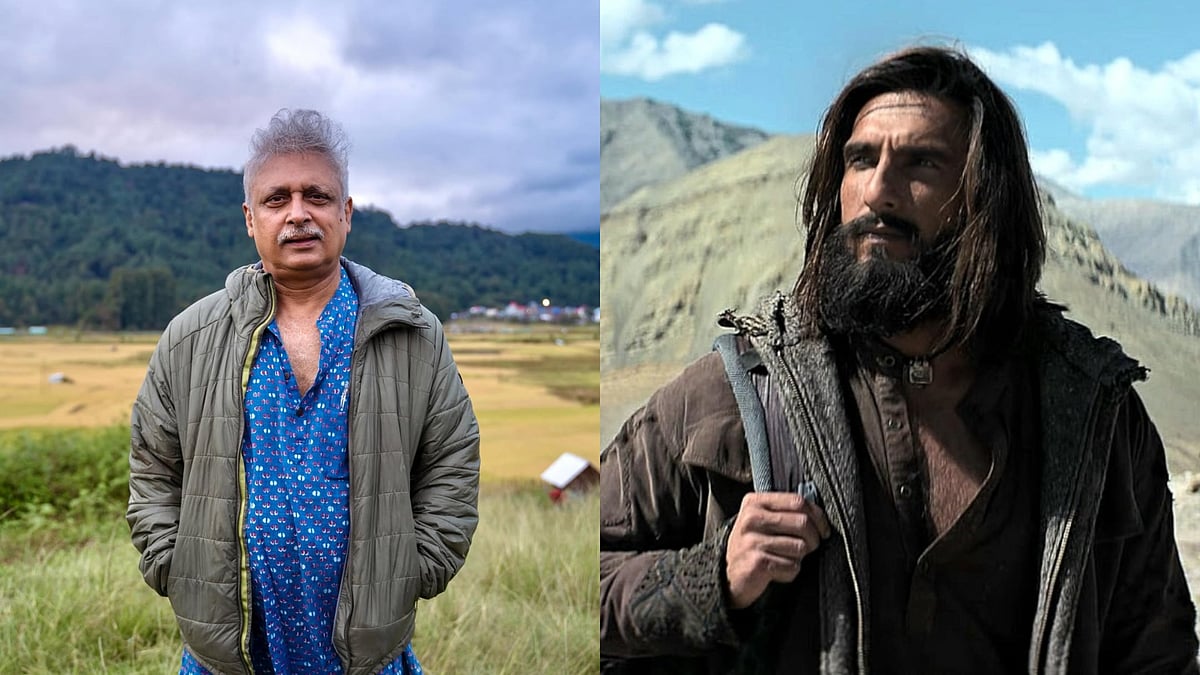
Veteran actor and musician Piyush Mishra has stepped into the ongoing debate surrounding “Dhurandhar,” defending the controversial film against accusations of propaganda. The film, which has sparked heated discussions across political and cultural circles, continues to divide audiences and critics alike.
“It’s not propaganda; it’s just a film,” Mishra stated firmly during a recent media interaction. His comments come at a time when “Dhurandhar” faces intense scrutiny for its portrayal of sensitive historical events and political undertones that some critics claim distort reality to serve a particular narrative.
Mishra, known for his outspoken nature and versatile career spanning theater, cinema, and music, elaborated on his stance by emphasizing the distinction between artistic expression and political messaging. “Filmmakers have the creative license to tell stories from their perspective. Not everything needs to be labeled as propaganda simply because it may not align with certain political viewpoints,” he explained.
The controversy surrounding “Dhurandhar” reflects a growing trend in Indian cinema where historical and political films increasingly become battlegrounds for ideological disputes. Industry analysts note that the line between entertainment and political messaging has blurred significantly in recent years, with films becoming powerful tools for shaping public opinion.
Film critic Rajiv Menon observes that this phenomenon isn’t unique to India. “Globally, we’re seeing cinema becoming more politically charged. The debate around ‘Dhurandhar’ mirrors similar controversies we’ve seen with films in Hollywood and European cinema that touch on divisive historical or political subjects,” Menon said.
The film’s director, who has remained relatively quiet during the controversy, previously stated that “Dhurandhar” aims to present a perspective that has been “historically overlooked” in mainstream narratives. This justification has done little to quell criticism from opposition groups who claim the film deliberately misrepresents historical events.
Political analysts point out that the timing of the film’s release, coinciding with a politically charged atmosphere in the country, has only intensified the scrutiny it faces. “Films don’t exist in a vacuum. The current political climate inevitably influences how audiences and critics interpret and respond to content dealing with historical or political themes,” noted political commentator Sarika Mehta.
The Box Office performance of “Dhurandhar” has been surprisingly robust despite—or perhaps because of—the controversy. Industry reports indicate the film has performed well in several regions, suggesting that controversy might have amplified public interest.
This isn’t the first time Indian cinema has found itself at the center of political controversy. In recent years, several historical dramas and biopics have faced similar accusations of propaganda, with some facing censorship challenges or public boycotts.
Mishra’s defense of the film also highlights the complex relationship between art, commerce, and politics in contemporary Indian cinema. “Artists should be allowed to express their vision without being immediately branded as propagandists,” he argued, while acknowledging that all art inherently carries the perspectives and biases of its creators.
Film industry veteran and producer Anjali Kapoor points to a concerning trend: “The immediate polarization of opinions whenever a film touches on history or politics creates an environment where nuanced storytelling becomes increasingly difficult. Filmmakers find themselves either self-censoring or deliberately leaning into controversy for publicity.”
The debate around “Dhurandhar” raises important questions about artistic freedom, historical representation, and the responsibilities of filmmakers when dealing with sensitive subjects. It also reflects broader tensions in Indian society regarding competing narratives of national identity and history.
As the controversy continues to unfold, Mishra’s intervention offers a perspective that attempts to separate artistic merit from political intent—a distinction that many find increasingly difficult to maintain in India’s current cultural landscape.
Whether “Dhurandhar” will be remembered primarily for its artistic contributions or its role in political discourse remains to be seen, but the conversation it has sparked underscores cinema’s enduring power to shape and reflect society’s most contentious debates.
Fact Checker
Verify the accuracy of this article using The Disinformation Commission analysis and real-time sources.

22 Comments
Interesting update on Piyush Mishra Defends ‘Dhurandhar’, Says It’s Just a Film, Not Propaganda. Curious how the grades will trend next quarter.
Silver leverage is strong here; beta cuts both ways though.
Good point. Watching costs and grades closely.
Good point. Watching costs and grades closely.
Production mix shifting toward Propaganda might help margins if metals stay firm.
Good point. Watching costs and grades closely.
I like the balance sheet here—less leverage than peers.
Good point. Watching costs and grades closely.
Uranium names keep pushing higher—supply still tight into 2026.
If AISC keeps dropping, this becomes investable for me.
The cost guidance is better than expected. If they deliver, the stock could rerate.
Production mix shifting toward Propaganda might help margins if metals stay firm.
Good point. Watching costs and grades closely.
Good point. Watching costs and grades closely.
Interesting update on Piyush Mishra Defends ‘Dhurandhar’, Says It’s Just a Film, Not Propaganda. Curious how the grades will trend next quarter.
Good point. Watching costs and grades closely.
Good point. Watching costs and grades closely.
I like the balance sheet here—less leverage than peers.
Good point. Watching costs and grades closely.
Interesting update on Piyush Mishra Defends ‘Dhurandhar’, Says It’s Just a Film, Not Propaganda. Curious how the grades will trend next quarter.
Good point. Watching costs and grades closely.
Good point. Watching costs and grades closely.