


Listen to the article
In a move that has raised eyebrows across Washington, Defense Secretary Pete Hegseth shared motivational advice from a controversial former Marine officer during an address to military personnel on Saturday.
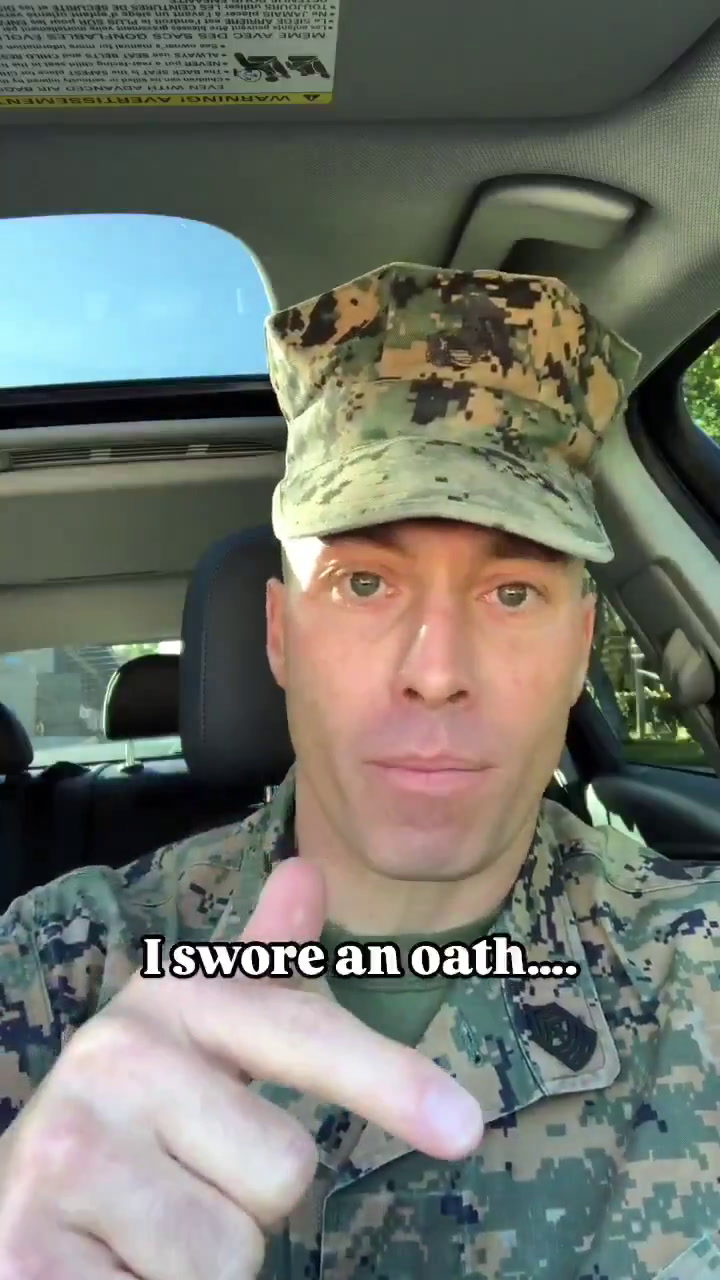
Hegseth circulated an older video featuring Christian Barry Bull, a Marine who had previously been relieved of his command after military leadership reportedly “lost confidence in his ability to lead.” The video shows Bull advising service members to “leave their feelings at home” if deployed to combat zones.
The Defense Secretary’s decision to showcase Bull’s message aligns with his ongoing campaign to reshape military culture since taking office in the Trump administration. Hegseth has repeatedly emphasized what he describes as a “warrior ethos” – a philosophical stance he contrasts with what he characterizes as “woke” influences within the armed forces.
Military analysts note that Hegseth’s leadership approach represents a significant shift from previous Pentagon heads. His tenure has been marked by frequent calls for cultural transformation within the military ranks, often framing modern warfare as requiring a return to more traditional martial values.
The timing of Hegseth’s message comes amid heightened tensions with Iran. Over the past three weeks, the Defense Secretary has emerged as one of the administration’s most vocal advocates for military action against the Middle Eastern nation, consistently supporting President Trump’s confrontational stance in public statements and policy meetings.
Defense Department insiders, speaking on condition of anonymity, suggest that Hegseth’s messaging strategy reflects broader administration efforts to prepare both military personnel and the American public for potential escalation of conflict in the region. The Iran situation has dominated Pentagon briefings, with officials developing contingency plans for various scenarios.
Bull’s controversial history adds an unusual dimension to Hegseth’s choice of motivational material. Military leadership removed Bull from his command position after a series of incidents that raised questions about his judgment and leadership style. While the specific circumstances remain partially classified, defense officials indicated at the time that his removal stemmed from concerns about unit cohesion and operational readiness.
Veterans’ organizations have expressed mixed reactions to Hegseth’s approach. Some traditional military advocacy groups have praised the emphasis on combat readiness and warrior mentality, while others have cautioned that complex modern conflicts require diverse skill sets beyond traditional combat orientation.
Political observers note that Hegseth’s messaging aligns with broader culture war themes that have characterized the administration’s approach to governance. The “anti-woke” positioning has become a consistent element of policy framing across multiple departments.
The Pentagon’s approach to Iran represents a significant foreign policy challenge for the administration. Regional experts warn that military confrontation carries substantial risks, including potential disruption of global energy markets and regional destabilization. Iran’s military capabilities, while not matching U.S. strength, include asymmetric warfare tactics that could complicate any conflict.
Hegseth, a former Fox News personality and Army National Guard veteran who served in Iraq and Afghanistan, has long been an outspoken critic of what he perceives as excessive political correctness in military institutions. His appointment to head the Defense Department signaled the administration’s intent to bring ideological realignment to the Pentagon’s approach.
As tensions continue to simmer with Iran, defense analysts will be closely monitoring how Hegseth’s cultural messaging translates into operational policy. The Pentagon’s readiness posture in the Middle East has been significantly enhanced in recent weeks, with additional naval assets deployed to the Persian Gulf and air force capabilities augmented in neighboring friendly states.
Whether Hegseth’s invocation of Bull’s combat philosophy signals imminent action or represents part of a broader psychological preparation campaign remains unclear as administration officials continue deliberations on next steps in the evolving situation.
Fact Checker
Verify the accuracy of this article using The Disinformation Commission analysis and real-time sources.

8 Comments
This video and the Defense Secretary’s decision to showcase it certainly raises some eyebrows. I appreciate the aim to instill a ‘warrior ethos’, but I wonder if this approach risks alienating some service members who may have different views on the role of emotions in combat situations.
This is certainly a controversial decision by the Defense Secretary. I appreciate the aim to instill traditional martial values, but I wonder if this approach risks oversimplifying the complex realities of modern warfare and the diverse needs of today’s service members.
Interesting development on the military culture debate. The Pentagon’s decision to circulate this controversial video from a former Marine officer seems to reflect a shift towards a more ‘warrior ethos’ philosophy. I’m curious to hear more perspectives on how this aligns with ongoing efforts to reshape military culture.
The Pentagon’s move to circulate this video reflects an interesting shift in military culture. I’m curious to hear more about how this ‘warrior ethos’ philosophy is being received within the ranks and how it may impact training, morale, and overall operational effectiveness.
This decision by the Defense Secretary certainly reflects a significant shift in the Pentagon’s approach to military culture. While the aim to foster a ‘warrior ethos’ is understandable, I’m curious to see how this plays out in terms of recruitment, retention, and overall operational effectiveness.
I’m intrigued by this move to circulate a controversial video from a former Marine officer. While I appreciate the goal of instilling a strong warrior mentality, I wonder if this approach risks oversimplifying the complex realities of modern warfare and the diverse needs of today’s service members.
While I can understand the desire to foster a strong warrior mentality, I question whether completely disregarding one’s emotions is truly the best approach, especially in high-stress combat environments. There may be value in finding a balance between discipline and acknowledging the human elements of warfare.
The circulation of this controversial video by the Pentagon is certainly an interesting development. I’m curious to hear more about how this ‘warrior ethos’ philosophy is being received by service members and military analysts, and how it may impact the future direction of the armed forces.