


Listen to the article
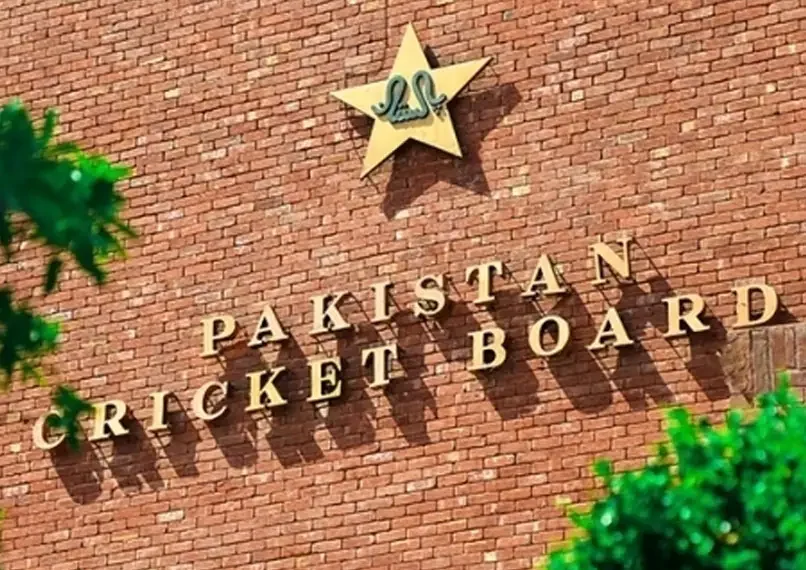
In a swift response to circulating reports, the Pakistan Cricket Board (PCB) has firmly denied approaching the International Cricket Council (ICC) regarding the upcoming Pakistan-India match scheduled for February 15 at R. Premadasa Stadium in Colombo.
PCB spokesperson Amir Mir issued a statement via the social media platform X late Saturday, categorically rejecting claims made by sections of the Indian media. “I categorically reject the claim by Indian sports journalist Vikrant Gupta that PCB approached the ICC. As usual, sections of Indian media are busy circulating fiction. A little patience and time will clearly show who actually went knocking and who didn’t,” Mir stated.
The clarification comes amid growing speculation that Pakistan might boycott the ICC T20 World Cup fixture against India. Reports suggest that the potential boycott stems from Pakistan’s dissatisfaction with the ICC’s perceived favoritism toward the Board of Control for Cricket in India (BCCI) and what they view as the politicization of cricket by ICC chair Jay Shah.
Sources close to the matter indicate that the Pakistan government may have directed the cricket board to avoid competing against India in the T20 World Cup. This development marks a significant escalation in the already tense cricket relations between the neighboring countries.
The underlying tensions between the two cricket boards have been building over several incidents in recent months. During the Asia Cup 2025, the Indian team reportedly refused to shake hands with their Pakistani counterparts, a move that Pakistani officials interpreted as politically motivated. Further complicating matters, India’s team declined to receive the winner’s trophy from Asian Cricket Council (ACC) President Mohsin Naqvi, who also serves as the PCB Chairman.
Pakistan has also expressed frustration over what they perceive as inconsistent treatment by the ICC regarding tournament participation. They specifically pointed to Bangladesh’s situation, where the Bangladesh Cricket Board (BCB) allegedly requested their T20 World Cup matches be moved from India to Sri Lanka citing security concerns, only to have their request denied and subsequently face exclusion from the tournament.
This stands in stark contrast to the ICC’s decision regarding the Champions Trophy 2025, originally scheduled to be hosted by Pakistan. When the BCCI refused to send their team to Pakistan citing security reasons, the ICC accommodated India by relocating their matches to the United Arab Emirates—a decision that has evidently rankled Pakistani cricket authorities.
The ongoing dispute highlights the complex intersection of politics and sports in the subcontinent, where cricket matches between India and Pakistan transcend mere sporting contests and often become proxies for broader geopolitical tensions. With billions of viewers across both nations, India-Pakistan cricket matches are among the most-watched sporting events globally.
Cricket diplomacy has historically played a significant role in bilateral relations between the two countries. However, in recent years, political tensions have increasingly affected sporting ties, with bilateral series between the teams suspended since 2012-13, except for meetings in multi-nation tournaments organized by the ICC or ACC.
As the February 15 fixture approaches, cricket administrators, fans, and diplomats will be watching closely to see whether the match proceeds as scheduled or whether the reported tensions will lead to an unprecedented boycott of one of cricket’s most anticipated rivalries.
The PCB’s firm denial of approaching the ICC suggests they are awaiting further developments before making any official announcements regarding their participation in the fixture.
Fact Checker
Verify the accuracy of this article using The Disinformation Commission analysis and real-time sources.

9 Comments
It’s good to see the PCB spokesperson swiftly and firmly refuting the claims made by the Indian media. Cricket should stay out of politics as much as possible.
I agree, the politicization of cricket is concerning. Both sides need to focus on the sport itself rather than using it for political posturing.
The politicization of cricket is troubling. I hope the PCB and BCCI can find a way to put aside their differences and focus on the sport itself, for the sake of the fans.
While I’m curious to learn more about the PCB’s perspective, I’m skeptical of claims of ICC bias. The governing body should strive to be fair and objective across all its member nations.
This back-and-forth between the PCB and BCCI is disappointing. As a fan, I just want to see high-quality cricket matches without all the off-field drama.
Absolutely. The ICC should remain impartial and focus on developing the sport, not getting caught up in geopolitical tensions.
It’s understandable that the PCB is frustrated with perceived favoritism toward the BCCI. However, boycotting matches is rarely the best solution. Hopefully, they can work this out diplomatically.
This is a complex issue with valid concerns on both sides. The ICC should mediate impartially and encourage the PCB and BCCI to find a mutually agreeable solution.
As a fan, I just want to see great cricket matches between Pakistan and India. I hope the boards can work through their differences and put the sport first.