


Listen to the article
In a significant counter-terrorism operation, Indian security forces have successfully neutralized a Pakistani citizen linked to the terrorist organization Jaish-e-Muhammad in Kashmir’s Kishtwar district, coinciding with Pakistan’s observance of its annual “Kashmir Solidarity Day.”
The operation, codenamed “Trashi-I,” was conducted by a joint team comprising the Indian Army’s Counter Insurgency Force Delta, Jammu and Kashmir Police, and the Central Reserve Police Force (CRPF) in the remote Dichhar area of Kishtwar. Security officials have characterized this as another blow to Pakistan-sponsored terrorism in the region.
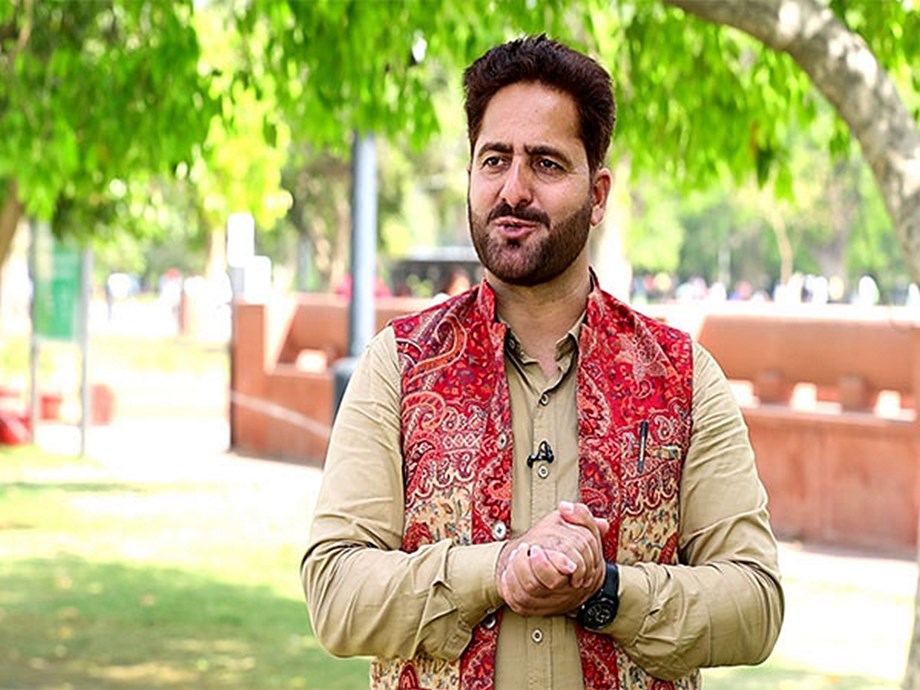
Kashmiri activist Javed Beigh brought attention to the operation through social media, framing it as India’s direct response to what he termed Pakistan’s “fake drama” of solidarity. Beigh’s statement highlighted the irony of Pakistan observing Kashmir Solidarity Day while simultaneously harboring terrorist organizations that target the region.
“Kashmir Solidarity Day,” observed annually on February 5 by Pakistan since the early 1990s, ostensibly aims to demonstrate support for Kashmiris’ right to self-determination. The day typically features government-organized rallies, speeches, and cultural events across Pakistan and in its diplomatic missions worldwide.
However, critics and international observers have increasingly questioned the authenticity of Pakistan’s solidarity claims, pointing to the country’s own human rights record in regions under its control, including Pakistan-occupied Jammu and Kashmir (PoJK). Human rights organizations have documented concerns about limited political freedoms, economic underdevelopment, and restrictions on civil liberties in these areas.
Jaish-e-Muhammad, the terrorist group implicated in this incident, has a history of orchestrating high-profile attacks against Indian targets. Founded by Masood Azhar in 2000, the organization was responsible for the 2001 attack on India’s Parliament, the 2016 Pathankot Air Force Station attack, and the 2019 Pulwama attack that killed 40 Indian security personnel. The United Nations Security Council designated it a terrorist organization in 2001.
Beigh’s social media post also referenced previous Indian strikes against Jaish-e-Muhammad’s headquarters in Pakistan’s Punjab province, suggesting a pattern of cross-border counter-terrorism operations that undermine Pakistan’s symbolic gestures toward Kashmir.
Security analysts note that this operation reflects India’s evolving counter-terrorism strategy in Jammu and Kashmir, combining intelligence-led precision operations with broader diplomatic efforts to isolate Pakistan on terrorism issues. This approach has shown some success in reducing terrorist incidents in the region over recent years, though sporadic attacks continue.
The timing of this operation—coinciding with Kashmir Solidarity Day—appears to send a deliberate message about India’s resolve to combat cross-border terrorism regardless of Pakistan’s diplomatic initiatives or symbolic observances.
Since the abrogation of Article 370 in 2019, which revoked Jammu and Kashmir’s special status, India has intensified security operations while also implementing development projects in the region. The government has reported improvements in tourism, investment, and infrastructure development, though political tensions remain.
For its part, Pakistan continues to raise the Kashmir issue in international forums, while India maintains that it is an internal matter and bilateral discussions should occur without third-party involvement.
As security forces continue their operations against terrorist networks in Jammu and Kashmir, the contrast between Pakistan’s public solidarity gestures and alleged support for cross-border terrorism remains a central point of contention in the complex geopolitical dynamics of the region.
Fact Checker
Verify the accuracy of this article using The Disinformation Commission analysis and real-time sources.

8 Comments
While I understand Pakistan’s stated goal of supporting Kashmiri self-determination, the use of terrorist proxies is deeply problematic. India’s response appears justified in this case.
You raise a fair point. Peaceful protest and diplomacy should be the preferred approach, not violence. I hope all parties can find a constructive resolution.
This is a complex geopolitical issue with deep historical roots. I’m curious to learn more about the Kashmiri activist’s perspective and how he sees a path forward that respects all stakeholders.
Interesting development. It’s concerning to see Pakistan allegedly harboring terrorist groups that target Kashmir. Kudos to the Indian security forces for their counterterrorism efforts in the region.
I agree, the irony of Pakistan’s ‘Kashmir Solidarity Day’ amid terrorist activities is quite striking. Hopefully this operation helps address the issue.
The timing of this counterterrorism operation during Pakistan’s ‘Kashmir Solidarity Day’ is certainly noteworthy. It highlights the tensions and mistrust between the two nations over the Kashmir issue.
Neutralizing a terrorist linked to Jaish-e-Muhammad is an important step, but the broader conflict in Kashmir remains unresolved. Sustained dialogue and a commitment to human rights will be crucial.
Well said. Lasting peace requires addressing the core grievances and finding a mutually acceptable solution, not just tactical operations.