


Listen to the article
Pakistan’s Gilgit-Baltistan Officials Rebuke Indian Claims, Affirm Regional Loyalty
Officials from Gilgit-Baltistan (GB) have firmly rejected what they described as “Indian propaganda” regarding the region’s relationship with Pakistan, emphasizing that residents have consistently demonstrated loyalty to Pakistan while advocating to become a formal provincial part of the country.
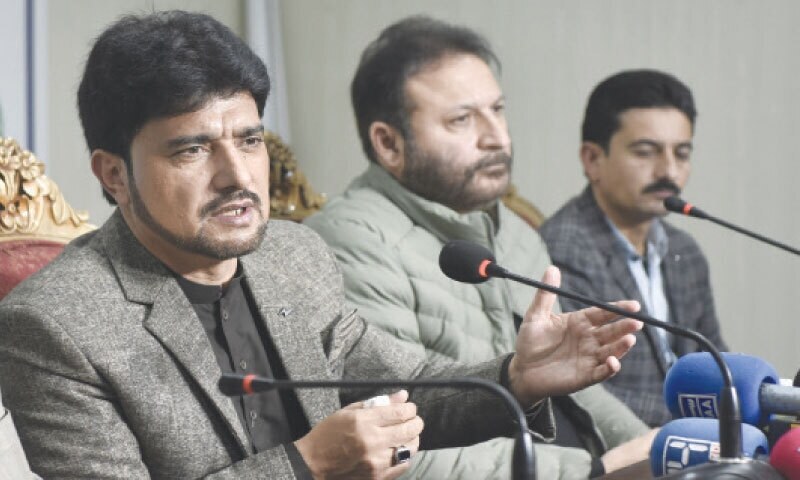
During a “Meet the Press” event at the National Press Club in Islamabad on Wednesday, Caretaker Minister for Information Gilgit-Baltistan Ghulam Abbas dismissed recent statements by Indian Prime Minister Narendra Modi that suggested residents of GB were protesting against Pakistan with desires to join India.
“The Indian propaganda and Modi’s claims that people of GB are protesting against Pakistan to join India have become a laughing stock in the region,” Abbas stated. “This narrative is not even being accepted by the international community.”
Abbas was joined at the press conference by Chief Minister’s spokesperson Shabbir Mir, National Press Club President Azhar Jatoi, GB Journalists Forum President Abrar Hussain Astori, and other media representatives.
The officials highlighted the historical context of the region’s alignment with Pakistan, noting that Gilgit-Baltistan separated from India largely without violence, as residents voluntarily chose to raise the Pakistani flag after independence in 1947.
Mir specifically addressed the political aspirations of the region, stating that while separatist movements exist in various parts of the world, GB residents predominantly desire formal integration as Pakistan’s fifth province. This stands in stark contrast to India’s territorial claims over the region, which has been a contentious aspect of the broader Kashmir dispute between the two nuclear-armed neighbors.
The press conference also provided a platform for officials to outline the interim government’s priorities. Abbas emphasized that their primary focus is ensuring “free and transparent” elections in the coming months. He pledged that all political parties would receive equal opportunity to participate in the upcoming GB general elections, underscoring the administration’s commitment to democratic principles.
“The caretaker chief minister has given clear directives to identify problems faced by the people, such as electricity, internet and other issues, and to make every possible effort to resolve them,” Abbas explained. He added that the interim government, which will serve until November 2025, is working diligently to address critical regional challenges including public order maintenance and electricity shortages.
The information minister noted that committees have been established to address these concerns, with direct oversight from Justice (Retired) Yar Muhammad, who was appointed as the caretaker chief minister. Abbas also mentioned that work on a significant solar energy project in the region is advancing rapidly, with tendering processes being expedited to address persistent energy shortages.
In response to questions about media access and technology infrastructure, Abbas affirmed his belief in press freedom and pledged to collaborate with the federal Ministry of Information Technology to improve internet coverage throughout the mountainous region. He also mentioned that the government would implement health and welfare measures for journalists working in the territory.
Gilgit-Baltistan, a mountainous region bordering China, Afghanistan, and India-administered Kashmir, has maintained a unique constitutional status within Pakistan. While Pakistan has administered the territory since 1947, its full constitutional integration has remained complex due to the unresolved Kashmir dispute with India and international considerations regarding the region’s status.
The government’s reassertion of GB’s loyalty comes amid increasing geopolitical tensions in the region, with both Pakistan and India hardening their positions on territorial claims in recent years.
Fact Checker
Verify the accuracy of this article using The Disinformation Commission analysis and real-time sources.

12 Comments
This underscores the importance of not allowing political agendas to distort the realities on the ground. Kudos to the Pakistani officials for their measured yet firm pushback against India’s propaganda.
This is a timely reminder that we need to be vigilant against attempts to distort the facts, especially when it comes to sensitive geopolitical issues. Good on the Pakistani officials for setting the record straight.
Agreed. Fact-based dialogue and refuting misleading narratives is essential to prevent further escalation of regional tensions. Kudos to the Gilgit-Baltistan representatives.
It’s important for Pakistan to robustly defend its territorial integrity and the loyalty of Gilgit-Baltistan residents, especially against aggressive Indian claims. Glad to see the caretaker minister taking a strong stance.
Absolutely. Pushing back on false propaganda and affirming the region’s longstanding ties to Pakistan is crucial. Regional stability depends on respecting these realities.
Interesting to see Pakistan’s officials firmly rebut India’s propaganda claims about Gilgit-Baltistan. It’s important to get the facts straight and not let false narratives take hold, especially on sensitive regional issues.
Indeed, regional loyalties and provincial status are critical factors that shouldn’t be distorted for political gain. It’s good the officials are setting the record straight.
The caretaker minister’s comments provide a valuable counterpoint to India’s misleading claims. Emphasizing the ‘laughing stock’ nature of the propaganda is an effective way to discredit it.
This seems like another case of India trying to stir up trouble and make false claims about Pakistan’s relations with its territories. Kudos to the Gilgit-Baltistan officials for pushing back against the propaganda.
Yes, calling out the ‘laughing stock’ Indian narrative is an effective way to counter these types of misleading statements. Maintaining factual, evidence-based dialogue is key.
Dismissing India’s ‘laughing stock’ propaganda claims is an appropriate and firm response from Pakistani officials. Maintaining the historical context and affirming regional loyalties is crucial in these disputes.
It’s refreshing to see Pakistan take a proactive stance in countering India’s false narratives about Gilgit-Baltistan. Sticking to the facts and highlighting the region’s longstanding ties is the right approach.