


Listen to the article
Pakistani Man Falsely Linked to Bondi Shooting Condemns Media Misinformation
A Pakistani expatriate living in Sydney has vehemently denied any connection to the recent shooting incident at Bondi, after his images and identity were falsely circulated across social and mainstream media platforms linking him to the attack.
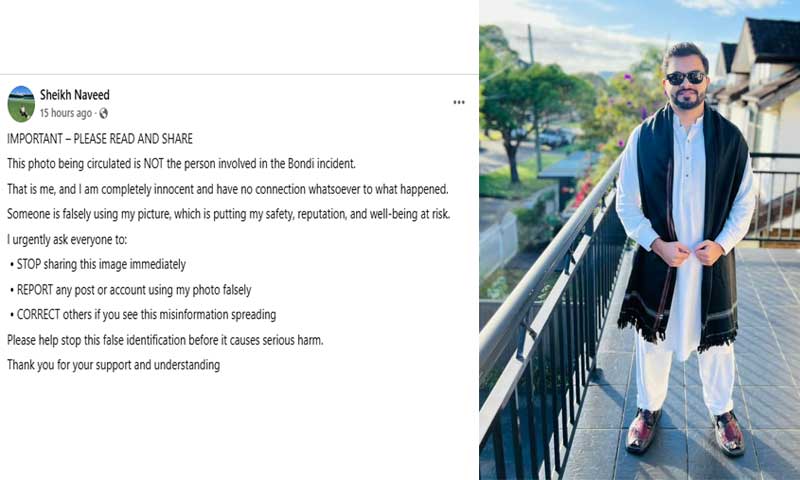
Sheikh Naveed, originally from Lahore, Pakistan, found himself at the center of a distressing case of mistaken identity when several Indian, Afghan, and Israeli media outlets wrongly associated him with the suspect arrested in connection with the Bondi attack. According to Naveed, numerous news channels and social media accounts not only misidentified him but went as far as broadcasting his photographs while reporting on the arrested individual.
“My photographs were taken from my Facebook account and circulated as those of the accused,” Naveed stated in a video message released on social media to counter the spreading misinformation. In his statement, he strongly condemned the Bondi attack while clarifying that he had absolutely no involvement in the incident and had not been arrested.
The misidentification comes amid heightened tensions following the shooting incident in Bondi, one of Sydney’s most popular beach suburbs. The false reports appear to have gained traction across international media outlets before any verification of the suspect’s identity was conducted, highlighting growing concerns about responsible journalism in the digital age.
Naveed expressed serious concern about the potential consequences of this misreporting, warning that the unauthorized use and broadcast of his photographs had placed his life at significant risk. “This irresponsible reporting and spread of false information endangers innocent people,” he emphasized in his public statement.
The incident underscores the increasingly problematic nature of rapid information dissemination in crisis situations, where the pressure to break news stories can sometimes override basic journalistic principles of fact-checking and verification. Media experts note that such cases of mistaken identity can have severe repercussions for individuals caught in the crossfire of international reporting, especially in incidents with potential religious or ethnic dimensions.
Community members have rallied around Naveed, with many supporters commenting on his Facebook post to condemn the misinformation campaign. Several social media users described the false reporting as “deplorable” and called for greater accountability from media organizations.
In his appeal to media outlets and social media users, Naveed stressed the importance of verifying news and images before publication. “A lack of due diligence can cause irreparable harm to innocent individuals,” he said, highlighting the personal toll such misinformation can take.
This case reflects a growing trend of misinformation spreading rapidly across borders during high-profile incidents, with potentially dangerous consequences for those wrongly implicated. Media analysts point out that cross-border reporting often lacks the nuance and verification standards that might be applied to domestic coverage, creating opportunities for false narratives to take hold.
Australian authorities have not commented specifically on Naveed’s case, but police officials have previously urged the public and media to rely on official statements regarding ongoing investigations rather than unverified reports circulating online.
As the actual investigation into the Bondi shooting continues, this case serves as a stark reminder of the responsibilities held by both traditional and social media platforms in crisis reporting, and the real-world impact that rushed or inaccurate journalism can have on innocent bystanders.
Fact Checker
Verify the accuracy of this article using The Disinformation Commission analysis and real-time sources.

10 Comments
This is a clear example of why we must be cautious about blindly believing and sharing information, especially from unverified sources. I’m glad the Pakistani man was able to swiftly address the false claims and clear his name. Responsible journalism and fact-checking are critical to prevent such damaging cases of mistaken identity.
This is a concerning case of mistaken identity and irresponsible media coverage. Spreading unverified information, especially around a violent incident, can have serious consequences. I hope the authorities investigate the source of these false claims and hold those responsible accountable.
Agreed, it’s crucial that the media and public verify information before sharing. Jumping to conclusions and propagating misinformation only serves to inflame tensions and undermine the truth.
This is a troubling case of how quickly false narratives can take hold, especially in the age of social media. I’m glad the Pakistani man was able to directly address the misinformation and assert his innocence. Responsible reporting and fact-checking are essential to prevent the spread of damaging propaganda, regardless of the source.
The misidentification and subsequent spread of misinformation in this case is deeply concerning. It’s crucial that the media and public exercise caution and verify information before amplifying it, to avoid perpetuating harmful narratives and damaging innocent lives. Kudos to the Pakistani man for his quick response to set the record straight.
Troubling to see false accusations and propaganda spreading so quickly online. Glad the Pakistani man was able to swiftly condemn the misinformation and clarify his innocence. Responsible reporting and fact-checking are crucial, especially on sensitive issues like this.
The swift spread of misinformation and unverified claims in this case is deeply concerning. It’s crucial that the media and public remain vigilant and take the time to properly investigate and verify information, rather than jumping to conclusions. The Pakistani man’s response to condemn the false propaganda is commendable.
The Pakistani man’s swift response to deny any involvement and condemn the false propaganda is commendable. In today’s digital age, the spread of misinformation can be rapid and damaging. Fact-checking and responsible reporting are essential to prevent such harmful incidents.
Absolutely. It’s worrying to see how quickly unverified claims can circulate, especially on sensitive topics. Proper investigation and transparency are needed to combat the spread of misinformation and ensure justice is served.
This case highlights the urgent need for greater media accountability and public skepticism when it comes to unverified information, especially around sensitive issues. I’m glad the Pakistani man was able to swiftly address the false claims and assert his innocence. Responsible reporting and fact-checking must be the priority to prevent the spread of harmful propaganda.