


Listen to the article
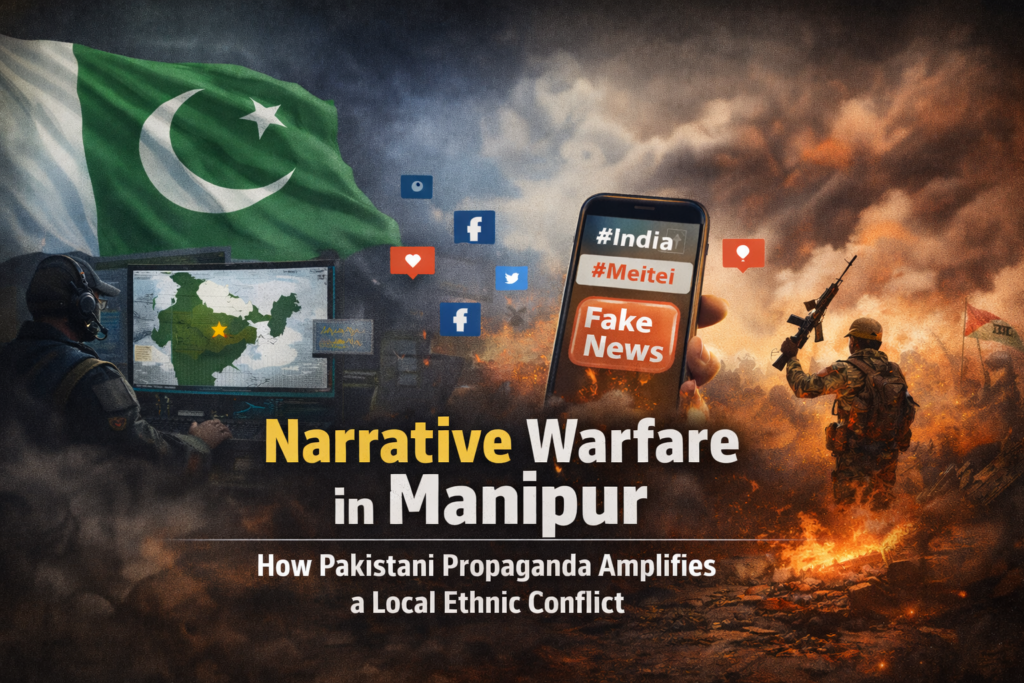
The Manipur crisis has become a digital battleground where ethnic conflict meets sophisticated information warfare, according to recent analysis by experts monitoring the situation. What originated as a localized conflict between ethnic groups has transformed into a global propaganda ecosystem, with evidence pointing to coordinated efforts to amplify and weaponize narratives.
Since violence erupted in Manipur, researchers have documented an explosion of online activity, including over 100 newly created social media accounts in the early days of unrest. Many of these accounts appeared designed to frame events for international audiences rather than serve local communities, suggesting deliberate narrative positioning rather than organic discourse.
“The rapid account creation we’re seeing suggests pre-planned information operations rather than spontaneous community response,” said one regional security analyst who requested anonymity due to the sensitive nature of their work.
Independent monitors have identified significant patterns of coordinated behavior across social media platforms. Of particular concern are Pakistan-based and Pakistan-linked accounts on X (formerly Twitter) and Facebook that have amplified anti-Meitei and anti-Indian government narratives. These accounts demonstrate synchronized posting patterns, shared media assets, and coordinated hashtag usage—hallmarks of structured information campaigns.
While the presence of such accounts is verifiable through public data, experts caution against jumping to conclusions about direct state involvement. “We can document Pakistan-based accounts among key amplifiers and identify coordination patterns, but establishing direct state orchestration requires forensic platform data not publicly available,” explained Dr. Shujaat Ali Quadri, who has analyzed the digital dimensions of the conflict.
The amplification mechanisms follow a sophisticated playbook. When violent incidents occur, dozens of new accounts emerge simultaneously, sharing graphic imagery and emotionally charged captions designed for virality. This content doesn’t remain isolated—it rapidly spreads across multiple platforms with slightly modified messaging to test engagement levels.
Some foreign-based handles present themselves as journalists or human rights observers, lending a veneer of legitimacy that helps their content penetrate mainstream discourse. Through coordinated hashtag campaigns and synchronized retweet bursts, specific narratives can be artificially elevated into trending topics, where algorithms then extend their reach exponentially.
The most effective propaganda doesn’t rely solely on fabrication. Instead, authentic footage is frequently paired with misleading captions or decontextualized claims—a hybrid approach that enhances plausibility while maximizing emotional impact.
Pakistan-linked networks often situate developments in Manipur within broader geopolitical frameworks, connecting them to issues like Kashmir or Assam. This reframing nationalizes and internationalizes what began as a localized conflict, attracting attention from audiences far removed from the original context.
The implications for conflict resolution are significant. Digital propaganda heightens political stakes, hardens ethnic and religious identities, and complicates efforts at mediation. The emotional contagion spreads faster than fact-checking can follow, creating entrenched narratives that resist correction.
Addressing these challenges requires more than account takedowns or attribution debates. Experts recommend investments in resilient local journalism, particularly multilingual reporting that can reach affected communities. Transparent verification mechanisms, digital literacy initiatives, and increased platform accountability are also essential components of any comprehensive response.
“The Manipur crisis illustrates how local ethnic tensions can become theaters for transnational information warfare,” noted Quadri. “The solution lies not just in identifying malign actors but in strengthening the integrity of our information ecosystem so that trust can be restored more quickly than falsehoods can spread.”
As the physical conflict continues, stakeholders must recognize that the digital battlefront requires equal attention. Without addressing both dimensions simultaneously, sustainable peace in Manipur may remain elusive.
Fact Checker
Verify the accuracy of this article using The Disinformation Commission analysis and real-time sources.

10 Comments
The use of Pakistan-based accounts to amplify narratives in the Manipur conflict raises red flags. Cross-border propaganda warfare can further inflame local tensions. Impartial reporting is essential to provide context.
You’re right, this points to a broader geopolitical dimension to the conflict. Identifying the sources and motives behind these information operations will be critical.
This is a concerning development. Ethnic conflicts often get co-opted by outside actors pushing their own agendas. Careful analysis is needed to understand the full scope of these information operations.
I agree, the rapid creation of social media accounts suggests a coordinated effort to shape the narrative. Proper monitoring and fact-checking are crucial to counter disinformation.
The digital battleground in the Manipur conflict is a concerning development. Careful monitoring and analysis are required to understand the full scope of these information operations and their potential impact.
Sophisticated information warfare tactics being deployed in the Manipur crisis are concerning. Careful monitoring and analysis are needed to understand the full scope and impact of these coordinated efforts.
Agreed, the rapid proliferation of accounts suggests a deliberate attempt to shape the narrative. Fact-checking and verifying sources will be key to countering the spread of disinformation.
This is a complex situation where ethnic tensions are being exploited for geopolitical gain. Impartial reporting and fact-checking are essential to counter the spread of disinformation and provide much-needed context.
Narrative warfare tactics being deployed in the Manipur crisis highlight the need for greater media literacy and fact-checking. Audiences must be wary of coordinated efforts to amplify certain perspectives over others.
The involvement of Pakistan-linked accounts in the Manipur conflict is troubling. Ethnic tensions can easily be exploited for geopolitical gain. Impartial reporting and analysis are crucial to cut through the propaganda.