


Listen to the article
In the midst of Manipur’s ongoing ethnic tensions and violence, a sophisticated information war is unfolding on social media platforms, with coordinated efforts to spread misinformation and inflame an already volatile situation.
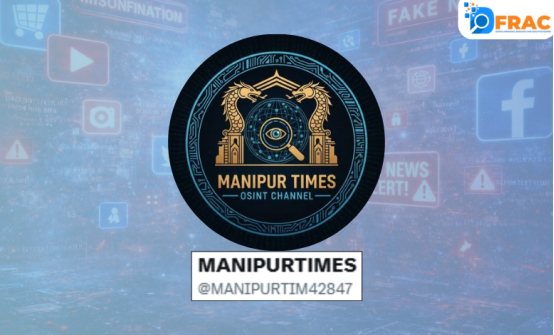
An investigation by the Digital Forensics Research and Analytics Centre (DFRAC) has revealed that an X account (formerly Twitter) called “Manipur Times” is part of a coordinated propaganda campaign with direct links to Pakistan, despite claiming to represent local news from the northeastern Indian state.
While “Manipur Times” presents itself as a legitimate news source covering regional developments in Manipur, closer scrutiny paints a troubling picture. Created in March 2026, the account claims in its biography to be operated from Florida, USA. However, X’s transparency tools show that the account is actually being operated from Pakistan – a significant discrepancy that raises serious questions about its true purpose.
The investigation found that “Manipur Times” is connected to several other accounts known for spreading misleading information about India, including “Manipur Post,” “Markhor,” and “Hezbollah.” Notably, the Indian government has already banned “Manipur Post” for disseminating false and misleading content.
The DFRAC team identified several instances of dangerous misinformation being spread by the network. In one viral post, “Manipur Times” falsely claimed that more than 200 people had been killed in firing by the Indian Army in Manipur. Fact-checking by DFRAC confirmed this claim was entirely fabricated, with Manipur Police issuing an official statement confirming no such incident had occurred.
In another case, the account shared a video allegedly showing the Indian Army and Assam Rifles attacking civilians with tear gas during protests against harassment and arson. Upon verification, researchers discovered the video was actually depicting a protest related to the National Register of Citizens (NRC) issue in Manipur and had been deliberately taken out of context to portray security forces in a negative light.
The network also attempted to stoke religious tensions by circulating a video claiming to show a Muslim woman tied to a tree and beaten by locals in India. DFRAC’s investigation revealed this claim was false. The footage actually dated back to 2021 and showed a young woman from a tribal community being assaulted by her own family members – with no religious dimension to the incident whatsoever.
This pattern of deception represents a sophisticated attempt to manipulate public perception and deepen existing divisions in an already fragile region. By masquerading as a local news outlet while operating from abroad, these accounts gain a veneer of credibility that makes their disinformation more effective and potentially dangerous.
The situation in Manipur has remained particularly sensitive since ethnic violence erupted in May 2023, resulting in more than 200 deaths and displacing thousands. The northeastern state, which borders Myanmar, has a complex ethnic makeup with various communities including Meiteis, Nagas, and Kukis living in close proximity.
Security analysts note that external actors have increasingly focused on exploiting internal tensions within India, with social media becoming a primary battlefield for information warfare. Pakistan has previously been implicated in disinformation campaigns targeting India, particularly around sensitive issues like Kashmir.
As digital platforms continue to evolve as primary sources of information, the findings underscore the crucial importance of media literacy and source verification. The case highlights how seemingly legitimate news sources can be weaponized to spread propaganda aimed at destabilizing sensitive regions.
Social media companies face growing pressure to improve their monitoring and transparency tools to combat such coordinated inauthentic behavior, particularly in conflict-prone regions where misinformation can have real-world consequences.
Fact Checker
Verify the accuracy of this article using The Disinformation Commission analysis and real-time sources.

5 Comments
This is a complex and delicate issue. While freedom of expression is important, the use of social media to spread disinformation that could incite violence is highly problematic. Careful scrutiny of the sources and motivations behind such accounts is warranted to protect vulnerable communities.
The alleged links between this ‘Manipur Times’ account and Pakistan are troubling. Cross-border propaganda campaigns can have serious real-world consequences, particularly in sensitive regions experiencing ethnic tensions and violence. Objective, impartial reporting is essential in such situations.
Absolutely. Efforts to manipulate local news and narratives for geopolitical agendas are very concerning. Maintaining journalistic integrity and public trust is vital to de-escalating conflicts, not exacerbating them.
This is concerning. The use of social media to spread misinformation and propaganda is worrying, especially when it involves regional conflicts. It’s important to carefully verify the sources and motivations behind such accounts to ensure accurate reporting and prevent further inflaming of tensions.
I agree. Transparency around the origins and operations of these accounts is crucial. Rigorous fact-checking is needed to counter the spread of misleading narratives.