


Listen to the article
Humanitarian Crisis Unfolds in Tirah Valley as Government Preparedness Falls Short
The Tirah Valley migration crisis of January 2026 has emerged as one of Khyber Pakhtunkhwa’s most significant humanitarian challenges in recent years, exposing critical gaps in provincial governance and emergency response mechanisms.
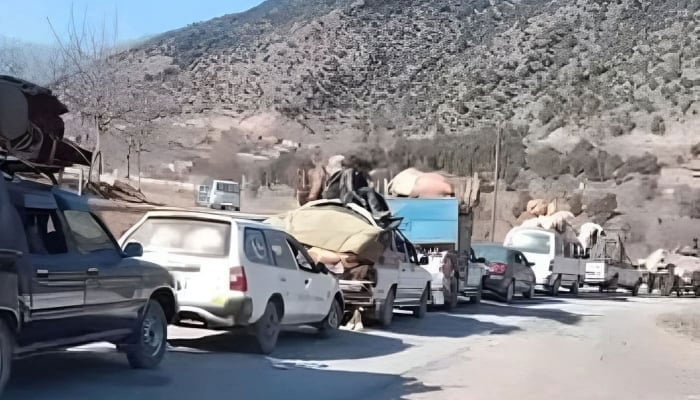
What began as a planned, voluntary seasonal migration quickly deteriorated into chaos when thousands of residents found themselves stranded in heavy snowfall, facing acute shortages of food, shelter, and transportation. The crisis has sparked intense debate about government accountability and the politicization of disaster management in Pakistan’s northwestern frontier.
Situated in the Khyber district of KPK, Tirah Valley has long contended with complex security challenges due to its rugged terrain and proximity to the Afghan border. The region has experienced periodic intelligence-based operations (IBOs) targeting militant groups like Tehreek-e-Taliban Pakistan (TTP), making security a persistent concern for local communities.
In late 2025, traditional tribal jirgas began discussing a temporary, voluntary relocation of residents during the harsh winter months – a common practice in the region’s seasonal migration patterns. Official records confirm that as early as October 28, 2025, the Deputy Commissioner of Khyber formally notified the provincial government about this planned migration, outlining specific preparations needed: transportation arrangements, food supplies, cash assistance, and registration facilities for displaced families.
The migration, scheduled to commence on January 10, 2026, provided the provincial administration with over two months to prepare adequate infrastructure and support systems. On December 26, authorities declared a state of emergency in Khyber district under the National Disaster Management Act, authorizing the Provincial Disaster Management Authority (PDMA) to coordinate relief efforts alongside district officials.
Financial support appeared substantial, with the federal government allocating over Rs. 4 billion for the initiative. This included Rs. 700,000 per family for relocation expenses, Rs. 8 million for families with fully destroyed homes, and Rs. 4 million for those with partially damaged residences. Additional commitments included infrastructure improvements and essential services development.
Despite these preparations on paper, implementation fell catastrophically short. When heavy snowfall blanketed the region in early January, thousands of migrants found themselves trapped on blocked mountain roads without shelter or basic necessities. Families with young children and elderly members endured sub-zero temperatures without adequate protection, creating what relief workers described as a preventable humanitarian emergency.
“The provincial government had ample warning and resources but failed to establish proper infrastructure before the migration began,” said a senior disaster management official who requested anonymity. “Registration points were inadequate, transportation arrangements insufficient, and emergency services virtually nonexistent when they were needed most.”
The crisis was further clarified during a major jirga held in Peshawar on December 31, 2025, chaired by the Chief Secretary with participation from the Inspector General of Frontier Corps. This meeting reaffirmed the voluntary nature of the migration and established community consensus on the approach. Notably, military leadership was not directing the initiative, contradicting later claims that would emerge about forced evacuation.
When the situation deteriorated, military forces ultimately intervened on humanitarian grounds, providing emergency food distribution, transport assistance, and medical evacuations for stranded families. Witnesses reported soldiers helping families trapped in the blizzard conditions, distributing blankets, and creating temporary shelters – actions that contrasted sharply with subsequent political narratives.
The provincial government’s response to criticism has proven controversial. Rather than addressing administrative shortcomings, provincial officials launched what analysts describe as a coordinated information campaign alleging that the migration was a forced “depopulation” ordered by security forces. Social media platforms saw a proliferation of claims linking the displacement to military operations, despite explicit denials from federal authorities.
“What we’re witnessing is the politicization of a humanitarian crisis,” said Dr. Samina Khan, a conflict resolution specialist at Peshawar University. “The evidence clearly shows this was a planned, voluntary migration endorsed by local jirgas that turned disastrous due to administrative failures. The attempt to reframe it as military overreach appears designed to deflect accountability.”
The implications for Khyber Pakhtunkhwa extend beyond immediate humanitarian concerns. By fostering division between local populations and security institutions, analysts warn that such narratives could undermine stability in a region already vulnerable to extremist influence. For the displaced residents, promised a safe return within two months with compensation, uncertainty now compounds their hardship.
As recovery efforts continue, calls for transparency and accountability grow louder. Civil society organizations are demanding investigations into the management of allocated funds and the implementation failures that transformed a routine seasonal migration into a crisis that exposed thousands of citizens to preventable suffering.
For the people of Tirah Valley, the immediate concern remains basic survival as they navigate displacement during winter’s harshest months. The broader questions of governance, accountability, and the responsible management of human security in Pakistan’s frontier regions will likely resonate long after the snow has melted.
Fact Checker
Verify the accuracy of this article using The Disinformation Commission analysis and real-time sources.

12 Comments
The politicization of disaster management is a worrying trend that can undermine effective emergency response. Ideally, humanitarian aid and crisis relief should be depoliticized and focused solely on addressing the urgent needs of affected populations, regardless of political affiliations or agendas.
This situation in the Tirah Valley sounds like a complex humanitarian crisis exacerbated by security challenges and governance gaps. It’s good that the government and local leaders were trying to coordinate a voluntary seasonal migration, but the execution seems to have fallen short, leaving many residents stranded. Hopefully lessons can be learned to improve emergency response capabilities in the region.
Agreed, the lack of preparedness is concerning. Proper contingency planning and coordination between authorities and local communities is crucial for managing these types of seasonal migrations safely, especially in remote, conflict-prone areas.
The Tirah Valley migration crisis seems to be a complex issue with security, governance, and humanitarian dimensions. It’s important that any analysis or reporting on this situation remains objective and factual, without getting caught up in political narratives or accusations.
Agreed, maintaining impartiality and focusing on the facts on the ground is crucial for understanding the nuances of this crisis and identifying constructive solutions, rather than getting mired in partisan rhetoric.
It’s concerning to hear about the acute shortages of food, shelter, and transportation that the stranded residents faced during the crisis. Ensuring adequate logistical and resource planning is crucial for supporting vulnerable populations during seasonal migrations and other emergencies.
Absolutely. Proactive stockpiling of essential supplies, coordinating transportation, and pre-establishing shelters could have gone a long way in mitigating the hardships experienced by the displaced residents in the Tirah Valley.
The recurring security operations in the Tirah Valley region are concerning and likely contributing to the instability and vulnerability of local populations. Addressing the root causes of the militancy in a more holistic manner, beyond just security responses, could help bring more lasting stability and improve humanitarian conditions for residents.
That’s a good point. A more comprehensive approach addressing the region’s complex socioeconomic and political dynamics, not just the security aspects, may be needed to achieve sustainable solutions and prevent future crises.
The article highlights the need for stronger emergency response mechanisms and better coordination between authorities and local communities in the Tirah Valley region. Investing in disaster preparedness and building trust-based partnerships could help prevent similar humanitarian crises from unfolding in the future.
The article raises important questions about government accountability and the need for improved disaster management capabilities in the Tirah Valley region. Strengthening early warning systems, enhancing coordination between different agencies, and investing in community-based resilience could help mitigate the impacts of future crises.
The Tirah Valley migration crisis seems to be a prime example of the interconnected challenges that remote, conflict-affected regions often face – security threats, seasonal vulnerabilities, and gaps in governance and emergency response. Addressing these multifaceted issues will require a holistic, collaborative approach involving various stakeholders.