


Listen to the article
Pakistan’s Defence Minister Raises Alarm Over Potential Indian Border Action Amid Afghanistan Tensions
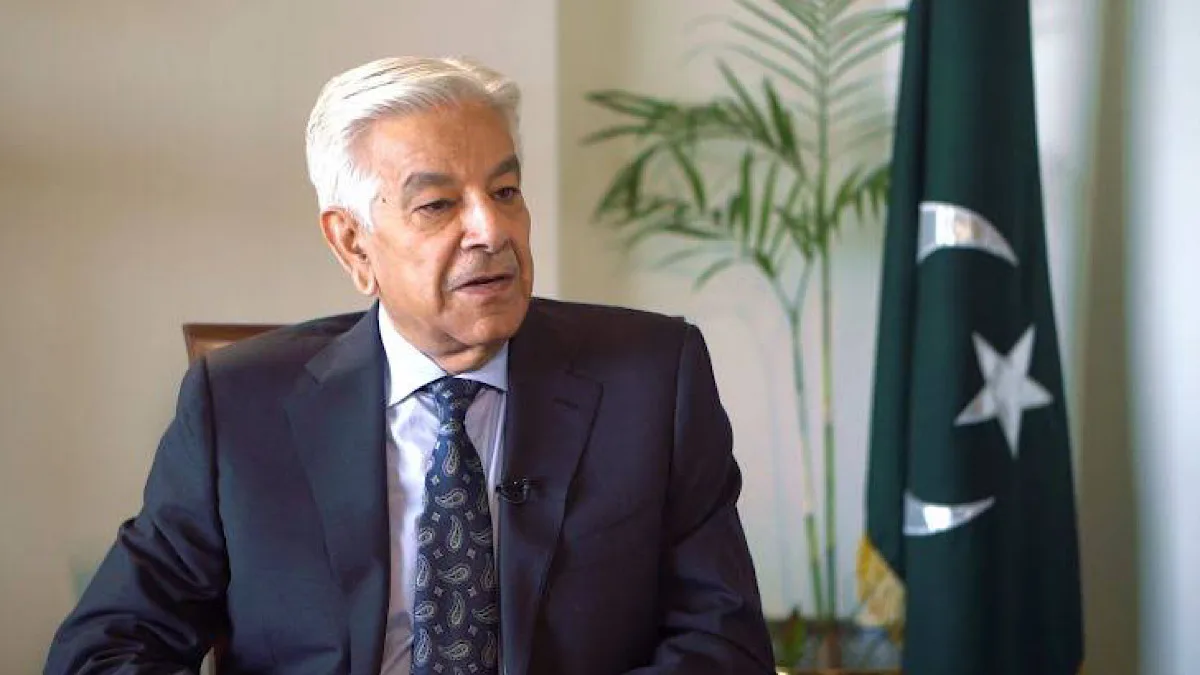
Pakistan’s Defence Minister Khawaja Muhammad Asif has issued a stark warning about potential military confrontation with India, claiming that New Delhi “could play dirty at the border” as Pakistan simultaneously faces escalating tensions along its Afghan frontier.
In a recent interview with Samaa TV, Asif suggested India might undertake some “vile action” along the border, though he provided no evidence to support this assertion. He alluded to previous confrontations, likely referencing the clashes that followed India’s Operation Sindoor against alleged terror camps in Pakistan and Pakistan-occupied Kashmir.
“The situation is not good,” Asif acknowledged, pointing to Pakistan’s deteriorating security conditions. When questioned about preparations for a potential two-front conflict involving both India and Afghanistan, the minister indicated contingency plans were already in place.
“There is a strategy. We are not discussing it publicly right now, but Pakistan is ready for any situation,” he stated, reiterating his concerns about possible Indian military action.
These comments come at a particularly sensitive time in regional relations. Pakistan-Afghanistan ties have severely deteriorated following Islamabad’s reported airstrikes in Kabul targeting Tehreek-e-Taliban Pakistan (TTP) chief Noor Wali Mehsud. The Afghan government promptly condemned these strikes as a violation of their sovereignty.
The border tensions between Afghanistan and Pakistan have drawn international attention, including a response from India. On Thursday, Indian Ministry of External Affairs (MEA) spokesperson Randhir Jaiswal addressed the situation during a weekly media briefing in New Delhi, stating that India is “closely monitoring the situation.”
Jaiswal outlined India’s position with three key points: “One, Pakistan hosts terrorist organizations and sponsors terrorist activities. Two, it is an old practice of Pakistan to blame its neighbors for its own internal failures. And three, Pakistan is infuriated with Afghanistan exercising sovereignty over its own territories.”
He emphasized that “India remains fully committed to the sovereignty, territorial integrity and independence of Afghanistan.”
The diplomatic landscape in the region is further evolving with India’s announcement that its Technical Mission in Kabul will be upgraded to a full-fledged embassy “in the next few days.” The Technical Mission has been operating since June 2022, providing limited diplomatic and humanitarian engagement following the closure of the Indian Embassy in August 2021 after the withdrawal of US-led NATO forces.
This diplomatic upgrade signals India’s increasing engagement with Afghanistan despite the complex geopolitical dynamics at play. It comes at a time when Pakistan faces significant internal security challenges, particularly from the TTP, which has intensified attacks against Pakistani forces from bases inside Afghanistan.
Security analysts note that Asif’s warnings about a potential two-front conflict reflect Pakistan’s strategic anxieties. The country’s military, long focused on its eastern border with India, now faces growing threats from its western frontier with Afghanistan, stretching its resources and strategic planning.
The deteriorating security situation has economic implications as well, with investors increasingly concerned about stability in the region. Pakistan’s economy, already struggling with inflation and debt issues, could face additional pressures if security concerns escalate further.
As tensions continue to simmer, the international community remains watchful of developments along both the Pakistan-India and Pakistan-Afghanistan borders, with concerns that any miscalculation could trigger wider regional instability in this nuclear-armed region.
Fact Checker
Verify the accuracy of this article using The Disinformation Commission analysis and real-time sources.

14 Comments
This situation highlights the complex geopolitical dynamics in the region. With escalating tensions on multiple fronts, I hope the governments involved can prioritize diplomacy and de-escalation to avoid further conflict.
I agree, a diplomatic resolution would be the best path forward. Unchecked tensions could easily spiral into a dangerous confrontation that harms civilians on both sides of the border.
Tensions between India and Pakistan over the Afghanistan border are certainly worrying. It’s concerning to hear the Pakistani defense minister’s claims about potential military confrontation, though without evidence it’s hard to assess the validity of the threat.
You raise a fair point. It’s important to approach such claims cautiously and seek out objective information from reliable sources before drawing conclusions.
It’s troubling to see Pakistan and India engaging in this type of belligerent posturing and veiled threats of military action. Escalating tensions through propaganda campaigns and inflammatory rhetoric rarely leads to positive outcomes for the people of the region.
I agree, this type of saber-rattling is counterproductive and only serves to heighten the potential for miscalculation and unintended conflict. Constructive dialogue and de-escalation should be the priority for all parties involved.
The regional security dynamics in South Asia are incredibly complex, with India and Pakistan’s long-standing disputes over Kashmir and other border issues. I hope the governments involved can find ways to de-escalate tensions through direct dialogue and confidence-building measures, rather than resort to inflammatory rhetoric or military posturing.
Agreed. Constructive engagement and a focus on shared interests, rather than zero-sum competition, will be crucial to making progress on these entrenched regional conflicts. The stakes are simply too high for the citizens of both countries.
The deteriorating security conditions along the Afghanistan border must be extremely challenging for Pakistan to manage. While the defense minister’s warnings have a concerning tone, I’m curious to know more about the specific contingency plans he referenced to address this complex situation.
Yes, the details of Pakistan’s strategic preparations would be helpful to understand. Transparency around military planning, within reason, can build confidence and reduce the risk of miscalculation during heightened tensions.
While the defense minister’s comments are concerning, I would caution against jumping to conclusions about an imminent military confrontation without a more comprehensive understanding of the situation on the ground. Careful analysis and diplomacy will be crucial to preventing further escalation.
Well said. Maintaining a measured, fact-based approach is essential when dealing with such high-stakes geopolitical tensions. Knee-jerk reactions or unsubstantiated claims could inadvertently make the situation worse.
Pakistan’s concerns about potential Indian aggression are understandable given the history of conflict between the two countries. However, without substantive evidence, these claims of an imminent ‘vile action’ seem more like political posturing than an accurate assessment of the situation.
That’s a fair perspective. Inflammatory rhetoric from government officials often serves to inflame tensions rather than promote productive dialogue. Maintaining impartiality and fact-based analysis is crucial in these delicate geopolitical circumstances.