


Listen to the article
Pakistan Rejects Taliban Claims of Military Post Capture, Calls It “Fabricated Propaganda”
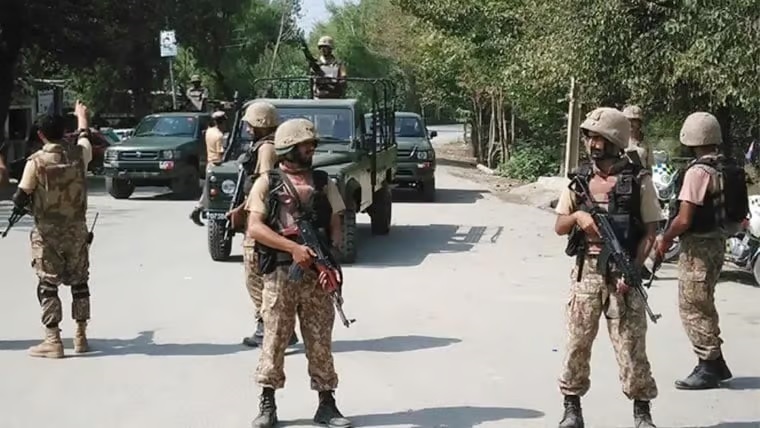
Pakistan’s Ministry of Information and Broadcasting has firmly rejected claims by the Afghan Taliban that they had captured a Pakistani military outpost, calling the allegations “fabricated propaganda” designed to mislead public opinion within Afghanistan.
The ministry issued a statement through its fact-checking account on social media platform X on Saturday, responding to a post by the Afghan Ministry of Defence that claimed Taliban forces had captured a Pakistani military position and that 14 Pakistani soldiers had been killed in the incident.
“The claim is false as always, fabricated and designed to mislead Afghan internal public opinion,” the Pakistani ministry stated, suggesting that the narrative aims to divert attention from losses suffered by militant groups during Pakistan’s ongoing counterterrorism operations in the region.
Pakistani officials emphasized that they have been regularly providing updates with supporting evidence on the damages and losses incurred by what they term the “master proxy Afghan Taliban and their extension Fitna al Khawarij” — a term used by Pakistani authorities to refer to militants belonging to the banned Tehreek-e-Taliban Pakistan (TTP).
The ministry noted that video and photographic evidence of operations against militant hideouts is being shared with media where applicable, highlighting their commitment to ensuring timely dissemination of credible information regarding targeted operations against militant infrastructure in Afghan territory.
Pakistani officials further alleged that Taliban claims are primarily amplified by militant networks and Indian media or social media platforms, while asserting that no credible or verifiable evidence has emerged to support these repeated claims.
Federal Information Minister Attaullah Tarar also weighed in on the matter, dismissing the Taliban’s assertion as “another false claim” lacking factual basis. “All damages and losses being incurred by the Afghan Taliban and their extension Fitna al Khawarij are being regularly updated by the Ministry of Information with irrefutable pictorial and video evidence,” Tarar stated in a post on X.
IT Minister Shaza Fatima Khawaja added her voice to the official rejection, stating that “propaganda cannot shield terrorist networks” and affirming that Pakistan’s operations against militants would continue. “Taliban propaganda collapses when confronted with facts. Pakistan’s operations against Fitna al Khawarij remain focused, relentless and decisive. Terror sanctuaries will not survive,” she declared.
The Prime Minister’s spokesperson for foreign media, Mosharraf Zaidi, criticized the Taliban administration, suggesting they were “spending more time weaving fantasies than eliminating terrorist organizations enjoying sanctuary in Afghanistan.” Zaidi emphasized that Pakistan’s counterterrorism operations would continue until militant groups operating from Afghan territory are dismantled.
The exchange comes amid escalating security tensions between Pakistan and Afghanistan following the launch of Operation Ghazab Lil Haq, which Pakistani authorities initiated after what they described as unprovoked firing by Taliban forces across the border. Officials have reported that the operation included overnight air strikes targeting militant positions and support facilities in multiple Afghan provinces including Kabul, Kandahar, and Paktia.
This latest diplomatic confrontation highlights the deteriorating relationship between Islamabad and Kabul since the Taliban returned to power in Afghanistan in 2021. Pakistan has consistently urged the Taliban administration to dismantle militant sanctuaries on Afghan soil, particularly those linked to the Tehreek-e-Taliban Pakistan, which has carried out numerous attacks inside Pakistan. Pakistani officials contend that these demands have gone largely unaddressed by the current Afghan leadership.
The dispute over the alleged military post capture represents another flashpoint in the increasingly complex security dynamics of the Afghanistan-Pakistan border region, where cross-border militancy continues to pose significant challenges to regional stability.
Fact Checker
Verify the accuracy of this article using The Disinformation Commission analysis and real-time sources.
