


Listen to the article
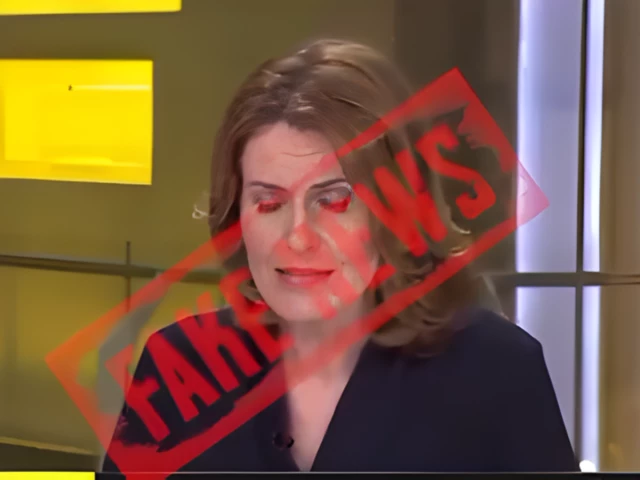
Pakistani social media users have forced British broadcaster Sky News to retract a false report claiming Afghanistan launched air strikes against Pakistan, highlighting growing concerns about media accuracy in the region’s complex conflict dynamics.
The broadcaster faced an immediate backlash after publishing the erroneous claim that Afghanistan’s Air Force had conducted retaliatory strikes against Pakistan. Radio Pakistan reported that thousands of Pakistani users quickly challenged the report, pointing out a critical fact: Afghanistan currently does not maintain an operational Air Force capable of executing such strikes.
The incident escalated rapidly on social media, with users posting evidence contradicting Sky News’ report. Under mounting pressure, the broadcaster ultimately deleted its post on X (formerly Twitter), though questions about the network’s fact-checking protocols remain.
“This isn’t the first time Sky News has been criticized for its coverage of Pakistan,” said a security analyst who requested anonymity. “Many Pakistanis view certain international media outlets as having predetermined narratives about their country, especially regarding military operations.”
Some Pakistani social media users specifically called out Afghan-origin anchor Yalda Hakim, alleging a pattern of biased reporting on Pakistan-related issues. The criticism highlights the sensitive nature of cross-border news coverage in a region marked by historical tensions and complex geopolitical dynamics.
The controversy unfolded against the backdrop of Pakistan’s ongoing “Operation Ghazab Lil Haq,” which has involved airstrikes targeting Taliban military installations in Kabul, Kandahar, and Paktia. Security sources confirmed that Pakistani aircraft conducted precision strikes and subsequently patrolled Kandahar’s airspace, demonstrating Pakistan’s readiness to respond to perceived threats from across the border.
Pakistani forces are also reportedly conducting operations against Taliban forces near the Torkham border crossing, a vital economic and strategic point between the two countries.
The false reporting incident comes at a particularly sensitive time for Pakistan-Afghanistan relations. Since the Taliban regained control of Afghanistan in August 2021, border tensions have periodically flared between the neighboring countries. Pakistan has repeatedly expressed concerns about terrorist groups operating from Afghan territory, while the Taliban government has denied harboring such groups.
Media experts emphasize that accurate reporting is crucial in conflict situations. “When major news organizations make factual errors about military operations, it can have real-world consequences,” explained Dr. Aisha Khan, a media studies professor at Quaid-i-Azam University in Islamabad. “It not only misinforms the public but can potentially inflame already tense situations between countries.”
The incident has also reignited discussions about media literacy and the role of social media in fact-checking traditional news outlets. Pakistani social media users’ rapid mobilization to correct the record demonstrates how digital platforms can serve as effective tools for accountability in the media ecosystem.
For Pakistan, which has long complained about negative portrayals in international media, the incident reinforces concerns about foreign reporting on its internal and regional affairs. Government officials have frequently urged international media to maintain objectivity when covering Pakistan, particularly regarding security operations.
As tensions continue along the Pakistan-Afghanistan border, accurate and balanced reporting will remain essential for regional stability and informed public discourse. The Sky News incident serves as a reminder of the responsibilities media organizations bear when covering complex international conflicts.
Fact Checker
Verify the accuracy of this article using The Disinformation Commission analysis and real-time sources.

14 Comments
This incident is a reminder that media outlets must be extremely cautious when reporting on military and security-related issues, particularly in regions with longstanding tensions. Fact-checking and due diligence should be the top priorities to avoid spreading misinformation.
The public backlash against Sky News for this erroneous report highlights the growing scrutiny that international media faces, particularly in regions with complex conflicts. Rebuilding trust will require a renewed commitment to accuracy and impartiality.
You make a good point. Media outlets need to be proactive in addressing concerns about bias and inaccuracies, especially when covering sensitive topics like military operations. Transparency and accountability are key to maintaining credibility.
It’s concerning to see international media outlets accused of having ‘predetermined narratives’ about Pakistan. Fair and objective coverage is essential, particularly on issues related to military operations and regional conflicts.
I agree. Preconceived notions can lead to biased reporting. Media outlets need to make a concerted effort to understand diverse perspectives and report the facts accurately, without agenda.
This incident underscores the importance of fact-checking and the need for media outlets to be more vigilant about verifying information, especially on sensitive geopolitical issues. Transparency and accountability should be the top priorities.
The public backlash against Sky News for this erroneous report is understandable. Maintaining accuracy and impartiality should be the top priorities for media outlets, especially when covering sensitive topics like military operations and regional conflicts.
Absolutely. Media outlets must be vigilant in their fact-checking and ensure that they are not inadvertently spreading misinformation, even if unintentional. Rebuilding trust will require a renewed commitment to journalistic integrity and transparency.
It’s concerning to see that some Pakistanis view certain international media outlets as having predetermined narratives about their country. This underscores the need for more balanced and nuanced reporting, free from biases or agendas.
I agree. Media outlets need to make a concerted effort to understand diverse perspectives and report the facts objectively, without any preconceived notions or agendas. Rebuilding public trust will require a renewed commitment to journalistic integrity.
This incident highlights the complex dynamics of media coverage in regions with ongoing conflicts and geopolitical tensions. Media outlets must be extremely cautious and thorough in their reporting to avoid exacerbating these delicate situations.
This incident is a stark reminder that media outlets must be extremely careful when reporting on sensitive geopolitical issues, particularly those involving military operations and regional conflicts. Accuracy and impartiality should be non-negotiable.
This is a troubling incident that highlights the need for rigorous fact-checking, especially in sensitive geopolitical contexts. Media outlets must be vigilant to avoid spreading misinformation, even inadvertently.
You’re right. Sky News should have verified the facts before publishing such a claim. Accountability and transparency are crucial for building public trust in media reporting.