


Listen to the article
Opposition leaders have sharply criticized the recently released trailer for “Kerala Story 2,” denouncing it as propaganda amid growing controversy surrounding the film’s depiction of Islamic extremism and religious conversion in India.
The trailer, which purports to expose the activities of the Islamic State (ISIS) in Kerala and allegations of forced religious conversions, has ignited a fierce political debate across the country. Released just weeks before several key state elections, the timing has raised questions about potential political motivations behind the film.
“Kerala Story 2” follows the commercial success of its predecessor, which sparked similar controversies last year when it claimed to document stories of Hindu women allegedly converted and recruited by Islamic extremist organizations. The first film generated substantial box office returns despite—or perhaps because of—the heated public discourse surrounding its content.
Critics of the film, particularly from opposition parties, argue that it presents a distorted view of Kerala’s Muslim community and could potentially inflame communal tensions in a country already grappling with religious polarization. They suggest the film deliberately conflates isolated incidents with broader community behavior.
“This is nothing but an attempt to demonize an entire community through sensationalized storytelling disguised as exposé journalism,” said a prominent opposition spokesperson during a recent press conference. “Releasing such content just before elections reveals the clear propaganda intentions behind the project.”
Supporters of the film, however, maintain that it highlights real security concerns and social issues that deserve public attention. They argue that criticism of the film represents an attempt to suppress uncomfortable truths for political convenience.
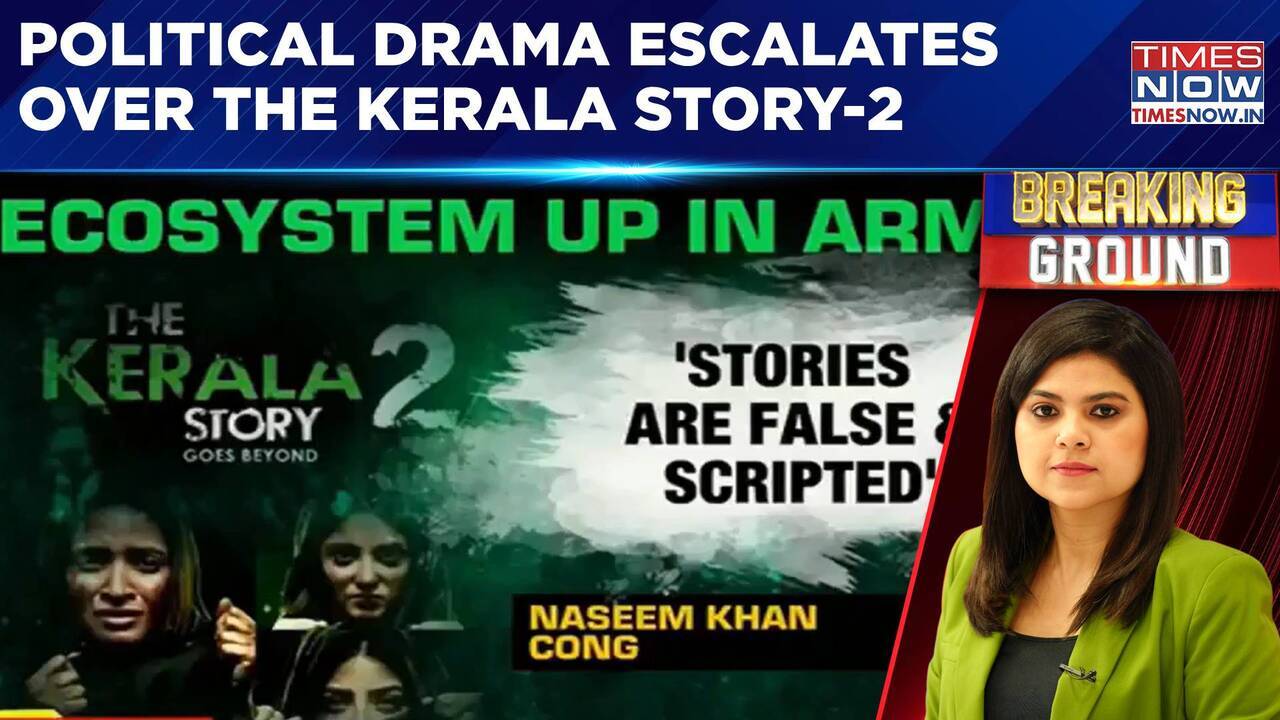
The controversy has played out extensively across television media, with Times Now’s program “Breaking Ground,” hosted by Swati Joshi, featuring heated debates between political representatives, film industry figures, and social analysts regarding the film’s content and potential impact.
Media and cultural experts note that this controversy exemplifies the increasingly blurred lines between entertainment, political messaging, and news in contemporary India. Films tackling sensitive socio-political topics have become battlegrounds for competing ideological narratives, particularly as digital media amplifies public discourse around controversial content.
Kerala, the southern Indian state at the center of the film’s narrative, has historically maintained relatively harmonious interfaith relations despite its religious diversity. With a significant Muslim population of over 26 percent, alongside Hindu, Christian, and other communities, the state has been praised for its social development indicators while occasionally facing scrutiny over reports of religious extremism.
Intelligence agencies have previously acknowledged concerns about ISIS recruitment attempts in parts of Kerala, with several individuals from the state reportedly joining the terrorist organization in Syria and Afghanistan between 2016 and 2019. However, security analysts emphasize that such cases represent a tiny fraction of Kerala’s population and should not be used to stigmatize entire communities.
The Central Board of Film Certification’s approval of the film has also drawn criticism from those who question whether adequate consideration was given to the potential societal impact of its content, especially in a country where cinema exerts significant cultural influence.
As the release date approaches, civil society organizations have called for measured public discourse and responsible media coverage to prevent the film from exacerbating communal divisions. Legal challenges to the film’s release are also being considered by some groups who allege it contains factual misrepresentations and potentially violates laws against promoting enmity between religious communities.
The controversy surrounding “Kerala Story 2” reflects broader tensions in Indian society about freedom of expression, religious sensitivity, and the responsibilities of filmmakers when addressing complex social issues with significant potential for public impact.
Fact Checker
Verify the accuracy of this article using The Disinformation Commission analysis and real-time sources.

14 Comments
This film sounds like it could be a divisive and politically-charged piece of work. While freedom of expression is important, I hope the filmmakers strive for objectivity and nuance in their portrayal of such a sensitive topic.
I agree. Handling issues of religious extremism and conversion requires great care to avoid inflaming tensions and promoting harmful stereotypes.
The controversy surrounding this film highlights the delicate balance between freedom of expression and the responsibility to avoid inciting division. I hope the filmmakers and critics can engage in constructive dialogue to find a way forward.
Well said. Addressing complex societal issues requires thoughtful discourse, not knee-jerk reactions. Mutual understanding should be the goal, even when viewpoints differ.
As someone interested in understanding the full context, I would encourage the filmmakers and their critics to engage in open and transparent discussions. Presenting multiple perspectives can help foster more informed and balanced discussions.
Absolutely. A diversity of voices and viewpoints is crucial when dealing with sensitive topics that have the potential to impact social cohesion. Nuance and empathy should be the guiding principles.
The claims made in this film seem to be quite contentious and politically charged. I hope that all parties involved can approach this issue with a spirit of objectivity and a genuine desire to understand the complexities at play.
Well said. Productive dialogue and a willingness to consider different perspectives are essential when navigating sensitive topics that have the potential to inflame communal tensions.
Religious extremism and forced conversions are serious issues that deserve scrutiny. However, the portrayal of an entire community in a negative light could backfire and worsen communal tensions. A more measured approach may be warranted.
I agree. Inflammatory rhetoric and biased portrayals are unlikely to lead to productive solutions. Nuance and empathy should be the guiding principles.
I’m curious to learn more about the specific allegations and claims made in the film. Are they supported by credible evidence, or is there a risk of distortion and exaggeration? Nuanced discussions are needed on these complex issues.
Well said. It’s important to have open and thoughtful dialogues, rather than simply resorting to accusations of propaganda from either side.
The timing of the film’s release is certainly curious, given the upcoming state elections. One has to wonder about the potential political motivations behind it. A balanced and fact-based approach would be ideal.
Absolutely. With such a charged topic, it’s critical that the filmmakers avoid sensationalism and focus on presenting the facts as objectively as possible.