


Listen to the article
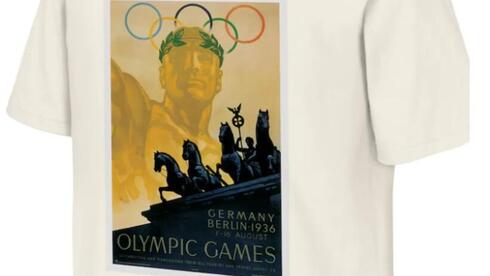
Olympic merchandising sparked controversy this week as the International Olympic Committee faced intense criticism over a T-shirt featuring imagery from the 1936 Berlin Games, an event widely recognized as a propaganda showcase for Adolf Hitler’s Nazi regime.
The shirt, which was available through the IOC’s official online fan shop as part of their Olympic heritage collection, featured a male figure wearing a laurel wreath positioned above Berlin’s Brandenburg Gate. More controversially, the design included a rider on horseback holding a pole topped with an eagle and swastika, alongside text reading: “Olympic Games 1936, Berlin, Germany.”
German politicians and historians were quick to condemn the merchandise. Clara Schädlich, sports policy spokesperson for the Green Party faction in Berlin’s House of Representatives, expressed dismay at the IOC’s decision to commercialize imagery from this contentious period without proper historical framing.
“The 1936 Games were a central propaganda tool of the Nazi regime,” Schädlich told German news agency DPA. “By doing this, the IOC is not reflecting the historical narrative. It is an inappropriate choice without context.”
The 1936 Olympics occupy a unique and troubling place in both sports and world history. While the Games are remembered for African American athlete Jesse Owens’ four gold medals that undermined Nazi racial theories, they primarily served as a carefully orchestrated international platform for Hitler to present a sanitized image of the Third Reich to the world. Behind this façade, the Nazi regime had already begun implementing antisemitic policies and laying groundwork for what would become the Holocaust.
Holocaust education advocates have long emphasized the importance of contextualizing Nazi-era imagery rather than presenting it in isolation, particularly in commercial products that could normalize or trivialize the regime’s symbols.
The IOC defended the merchandise in a statement, explaining that the shirt was part of a broader collection celebrating 130 years of Olympic design history. “We recognize the historical issues surrounding Nazi propaganda,” the statement read. “At the same time, the Berlin Olympics featured 4,483 athletes from 49 countries, including Jesse Owens.”
The committee further noted that the collection includes symbols, pictograms, posters and mascots from all editions of the Olympic Games throughout history, and emphasized that the historical context of the Berlin Olympics is addressed comprehensively at the Olympic Museum in Lausanne, Switzerland.
However, critics argue that a commercial product lacks the educational framework necessary when dealing with Nazi imagery. Unlike a museum exhibit with explanatory text and historical interpretation, a T-shirt worn in public exists without context and risks normalizing symbols associated with one of history’s darkest chapters.
This controversy emerges as sports organizations worldwide increasingly grapple with how to acknowledge problematic aspects of their histories. From team names with racist connotations to venues built through exploitative labor practices, sporting institutions face growing pressure to reckon with complex legacies rather than presenting sanitized versions of their past.
Despite the backlash, the IOC noted that only a limited quantity of the 1936-themed shirts was produced, and they quickly sold out online. The rapid sales suggest there remains a market for Olympic memorabilia regardless of historical associations, raising questions about responsible merchandising practices for global sporting organizations.
The incident highlights the ongoing tension between commercial interests and historical sensitivity, particularly as the Olympic movement prepares for the 2024 Paris Games. As an organization that promotes international unity and respect, the IOC’s merchandising decisions face heightened scrutiny, especially when they intersect with painful historical episodes.
Sports historians note that while the Olympic movement has evolved significantly since 1936, this controversy serves as a reminder that the Games have never existed in isolation from the political and social contexts in which they take place.
Fact Checker
Verify the accuracy of this article using The Disinformation Commission analysis and real-time sources.

12 Comments
I’m curious to hear the IOC’s rationale for including this Nazi-themed merchandise in their online store. While preserving Olympic history is important, this specific design seems to glorify a dark and oppressive regime without proper context.
That’s a good point. The IOC should provide a clear explanation for why they chose to feature this imagery, and how they plan to address the understandable backlash and concerns from the public.
This is a concerning move by the IOC. The 1936 Berlin Olympics were a showcase for Nazi propaganda, and selling merchandise featuring those problematic symbols without proper historical framing is a major misstep.
I agree. The IOC needs to be more thoughtful and responsible in how it represents the Olympic legacy, especially when it comes to such a fraught and unethical period in history.
While I appreciate the IOC’s efforts to showcase Olympic history, this particular merchandise is highly problematic. Selling Nazi propaganda imagery without proper historical context is extremely tone-deaf and concerning.
I couldn’t agree more. The IOC needs to re-evaluate this decision and consider the harmful implications of commercializing such a sensitive topic in this way.
I’m surprised the IOC approved this t-shirt design. The 1936 Berlin Olympics were used as a propaganda tool by the Nazis, and this shirt seems to glorify that history without any nuance or condemnation.
Exactly. The IOC should be more thoughtful about how it presents the Olympic legacy, especially when it comes to darker historical events. This is a poor call on their part.
Wow, the IOC really dropped the ball on this one. Commercializing Nazi propaganda imagery with no historical context is a major misstep. They should know better than to whitewash such a dark period.
Agreed. The IOC needs to take responsibility and properly frame this merchandise, not just profit off it. Educating the public on the true history is crucial.
The IOC’s decision to sell this t-shirt is a disappointing misstep. They should know better than to profit off of Nazi propaganda, even if it’s under the guise of “Olympic heritage.” This requires a serious reckoning.
Absolutely. The IOC has a responsibility to uphold the values of the Olympic movement, which this merchandise clearly undermines. They need to make this right.