


Listen to the article
In a candid assessment of the New Patriotic Party’s recent electoral defeat, Kennedy Ohene Agyapong, the former Member of Parliament for Assin Central and unsuccessful NPP flagbearer aspirant, has pointed to internal propaganda as a key factor in the party’s poor performance at the 2024 polls.
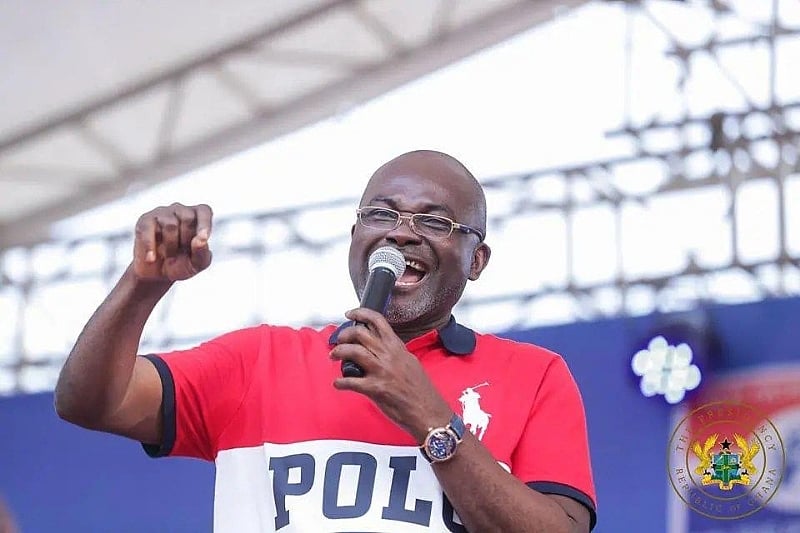
Speaking during a campaign tour in Ghana’s Northern Region, Agyapong told party delegates in Gushegu constituency that the NPP’s campaign strategy had been significantly undermined by members who prioritized personal attacks and misinformation over substantive policy discussions.
“Instead of telling the people what they can do for them, some are still engaging in propaganda. They did the same thing, and we lost miserably. If they want us to lose again, then they should continue with that,” Agyapong stated, his remarks reflecting growing concerns about the party’s campaign approach.
The businessman and media owner’s comments come at a critical juncture for the NPP, which is conducting a post-mortem of its electoral performance after losing the presidency to the opposition National Democratic Congress (NDC). Political analysts have noted that the NPP’s defeat marks a significant setback for a party that had positioned itself as Ghana’s most effective economic manager during its eight-year tenure.
Agyapong, who contested the NPP’s presidential primary in 2023 but lost to then Vice President Mahamudu Bawumia, also addressed allegations that he abandoned the party’s campaign after his primary defeat. He firmly rejected these claims, detailing his substantial contributions to the party’s campaign efforts.
“Now let me clarify this: when I lost the election, I campaigned for our candidate and the party. I went to some constituencies, gave candidates GH₵100,000, and provided streetlights, sewing machines, and necklaces to support their work,” he revealed.
The former MP, known for his outspoken nature and entrepreneurial success, expressed disappointment that despite his financial and logistical support, no acknowledgment had been forthcoming from party leadership in the aftermath of the electoral loss.
Ghana’s political landscape has been significantly reshaped by the 2024 election results, with power shifting back to the NDC after the NPP’s eight-year rule. Economic challenges, including high inflation, currency depreciation, and the aftermath of a contentious debt restructuring program, are widely believed to have contributed to voter dissatisfaction with the ruling party.
Political commentators suggest that Agyapong’s remarks highlight deeper factional divisions within the NPP that may have affected campaign cohesion. His emphasis on internal propaganda points to communication failures that prevented the party from effectively articulating its achievements and vision to the electorate.
The NPP’s internal dynamics have been complex since the 2023 primary, with various factions supporting different candidates. Agyapong, who came second in that contest, commands significant grassroots support, particularly among youth and business communities who admire his entrepreneurial background and straight-talking approach.
His current campaign tour suggests he remains actively engaged in party affairs and potentially positions himself for a future leadership role. Political observers note that his criticisms may resonate with NPP members seeking to rebuild the party’s electoral strategy after this significant defeat.
The aftermath of Ghana’s 2024 election has prompted both major parties to reassess their approaches to political communication in an era where social media amplifies messaging but also increases vulnerability to misinformation campaigns.
For the NPP, Agyapong’s warning about the dangers of internal propaganda represents just one aspect of a broader challenge: reconnecting with an electorate that has expressed its dissatisfaction at the ballot box and rebuilding party unity after a divisive campaign period.
As Ghana transitions to a new administration, the NPP’s internal reflection process will likely determine its effectiveness as an opposition party and its prospects for returning to power in future electoral contests.
Fact Checker
Verify the accuracy of this article using The Disinformation Commission analysis and real-time sources.

16 Comments
Agyapong’s perspective on the NPP’s election loss provides valuable insights. Internal propaganda can seriously undermine a party’s campaign efforts, as the NPP has learned. Focusing on substantive policy discussions rather than partisan attacks is crucial for winning over voters.
Agyapong’s candid comments on the NPP’s internal propaganda issues are a stark reminder of the importance of maintaining party unity and promoting a positive, issue-focused campaign. Voters want to hear concrete plans, not just partisan mudslinging.
Interesting to hear Agyapong’s perspective on the NPP’s election loss. Internal propaganda can certainly undermine a party’s campaign efforts. It will be important for the NPP to conduct an honest post-mortem and address any divisive messaging going forward.
Agyapong’s candid assessment of the NPP’s campaign shortcomings is refreshing. Focusing on substantive issues rather than internal propaganda is key for any party seeking to win over the electorate. Hopefully the NPP can learn from this experience.
Interesting analysis from Agyapong on the NPP’s election loss. Internal propaganda is a tricky challenge that many parties struggle with. Striking the right balance between attacking opponents and promoting your own vision is crucial for political success.
Agyapong’s comments highlight the dangers of prioritizing propaganda over policy. Voters want to hear concrete plans, not just partisan attacks. The NPP’s defeat serves as a cautionary tale for all political parties.
Agyapong’s perspective on the NPP’s election loss provides valuable insights. Internal propaganda can seriously undermine a party’s campaign efforts, as the NPP has learned. Transparency and a focus on policy will be essential for their future success.
Agyapong’s assessment of the role of internal propaganda in the NPP’s defeat is thought-provoking. Voters want to hear about substantive issues, not just partisan attacks. The NPP’s loss serves as a lesson for all political parties on the importance of maintaining unity and promoting a positive, issue-focused campaign.
Agyapong’s take on the role of internal propaganda in the NPP’s defeat is thought-provoking. Voters are increasingly savvy and want to hear concrete policy proposals, not just partisan mudslinging. The NPP would be wise to heed this lesson.
Agyapong’s comments highlight the importance of maintaining party unity and a positive, issue-focused campaign strategy. The NPP’s defeat is a lesson that voters want substance over smear tactics. Hopefully they can apply these learnings for 2028.
Agyapong’s perspective on the role of internal propaganda in the NPP’s election loss is insightful. Maintaining party unity and promoting a positive, issue-focused campaign is essential for political success. Hopefully the NPP can apply these lessons moving forward.
Agyapong’s candid comments on the NPP’s internal propaganda issues highlight the challenges that political parties face in maintaining unity and promoting a positive, issue-focused campaign. Voters are increasingly savvy and want to hear concrete policy proposals, not just partisan mudslinging.
This is a cautionary tale for political parties. Internal divisions and propagandistic tactics can seriously undermine a campaign, as the NPP has learned the hard way. Transparency and a focus on policy will be key for their future success.
Agyapong’s assessment of the NPP’s campaign strategy is thought-provoking. Focusing on substantive policy discussions rather than partisan attacks is crucial for winning over voters. The NPP’s defeat highlights the need for a more disciplined, issue-focused approach.
Agyapong makes a fair point. Focusing on substantive policy issues rather than personal attacks is crucial for any party looking to win over voters. The NPP will need to learn from this experience if they want to regain power in the next election cycle.
Agreed. Voters want to hear about concrete plans and solutions, not just partisan mudslinging. The NPP would be wise to heed Agyapong’s advice.