


Listen to the article
North Korean Film Depicting Assassination Plot Exposes Generational Divide Among Viewers
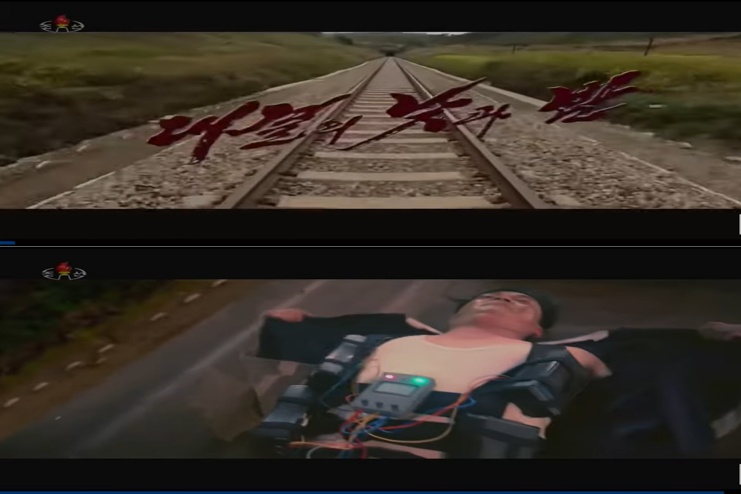
A North Korean film portraying an attempted assassination of the supreme leader has revealed a stark generational divide in audience reception since its broadcast on state television. “Days and Nights of Confrontation” has successfully provoked emotional reactions from older North Koreans while younger viewers see it merely as entertainment, according to sources inside the country.
The film has spread rapidly throughout North Korea, distributed via state television, DVDs, and flash drives, with nearly universal viewership reported across communities. For older North Koreans, the movie evokes powerful memories of the 2004 Ryongchon train station explosion, a devastating incident that reportedly inspired the film’s plot.
“Older viewers mentioned the Ryongchon train station accident, which was a huge issue at the time, and said they felt a rush of anger and hostility,” a source in North Hamgyong province told Daily NK. “So many people were killed in the accident that many thought spies must have been behind it—a rumor that’s still widely taken for granted even today.”
These older viewers have reportedly expressed intense disgust toward the film’s antagonist, Ri Tae-il. Many have used vulgar language when discussing his character, suggesting “he deserved to die” or criticizing him for killing innocent people in a “scheme that had no chance of success.”
In stark contrast, younger North Koreans approach the film with a notably different perspective. Rather than absorbing the ideological messaging, they focus on entertainment value, often quoting memorable lines like “Are you a spy by any chance?” and “I’m by your side” in humorous contexts.
“The younger generation definitely has a different perspective on this film than the older one. Young people focus on the acting quality or quirky dialogue,” the source explained.
This generational gap in reception highlights broader changes in North Korean society, particularly regarding the effectiveness of state propaganda among youth. The regime appears to have produced the film to unify the public against perceived threats and to reinforce vigilance, but these messages seem to be falling flat with younger audiences.
The divergent reactions to “Days and Nights of Confrontation” reflect what some observers identify as weakening ideological commitment among North Korea’s youth. Traditional propaganda vehicles like film are losing their effectiveness in a changing social landscape, even as the government continues to rely on them for messaging.
“In North Korea, films are produced to serve as regime propaganda. While young people are aware of that, most of them don’t pay much attention to the film’s underlying message,” the source noted. “The government wants to reinforce young people’s ideological commitment, but most of them just focus on the entertainment value.”
This shift represents a significant challenge for North Korean authorities, who have historically used cinema as a powerful tool for ideological indoctrination. The country’s film industry, directly overseen by the state, has long produced movies that glorify the leadership and promote state-sanctioned values.
According to the source, more traditional displays of leadership may still resonate more effectively than cinematic propaganda. “Films are no longer effective as works of propaganda. What was actually better at touching young people and beefing up their loyalty was Kim Jong Un’s recent appearance at the 80th anniversary of the establishment of the Socialist Patriotic Youth League.”
Media analysts suggest this generational divide in propaganda reception could indicate broader societal changes within North Korea, potentially influenced by increased, albeit limited, exposure to outside information and cultural products in recent years despite strict government controls.
Fact Checker
Verify the accuracy of this article using The Disinformation Commission analysis and real-time sources.

5 Comments
This generational divide in reactions to the film highlights the complex dynamics at play within North Korean society. It’s a nuanced issue that goes beyond a simple binary of acceptance or rejection of the regime’s messaging.
Fascinating to see how this North Korean propaganda film is eliciting such different reactions across generations. The older viewers seem to take it very seriously, while the younger crowd is more inclined to treat it as entertainment. It speaks to the generational divide and shifting attitudes within North Korean society.
I wonder if the younger generation’s meme-like treatment of the film is an attempt to cope with or undermine the propaganda narrative. It could be a subtle form of resistance, even if just through humor.
The use of a real-life event like the Ryongchon train station explosion to inspire the film’s plot is an interesting choice. It seems to be a strategy to make the propaganda more compelling and relatable for older North Koreans who remember that tragedy.
However, the fact that the younger viewers are able to distance themselves from the emotional weight of that historical event suggests a shift in how North Korean propaganda is being received and perceived.