


Listen to the article
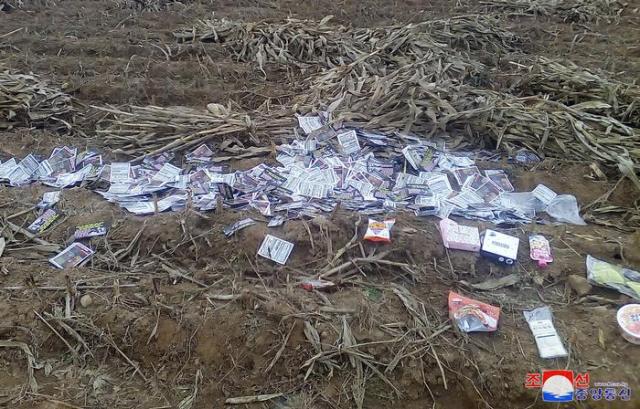
South Korea sent propaganda leaflets into North Korean territory 23 times during former President Yoon Suk Yeol’s administration, according to a new disclosure from the Ministry of Defense on Wednesday.
The leaflet campaign, which had been suspended in July 2017 under Yoon’s predecessor, was revived following a high-level security meeting in October 2023. The operation ran from February to November of last year and targeted approximately 35 locations across North Korea, including the capital Pyongyang and the eastern port city of Wonsan.
Key security officials present at the meeting that authorized the resumption included then-Defense Minister Shin Won-sik, then-Unification Minister Kim Young-ho, and then-National Intelligence Service Director Kim Kyu-hyun. The specific rationale behind the decision remains classified, as the meeting records are protected as presidential documents.
The timing of the leaflet campaign has raised questions about its potential connection to broader geopolitical maneuvers, as it coincided with what investigators have now determined was early planning for Yoon’s controversial martial law declaration attempt on December 3. Independent prosecutors recently concluded that preparation for the martial law plans began as early as October 2023, overlapping with the decision to resume the leaflet drops.
Experts on Korean Peninsula affairs note that propaganda leaflets have long been a flashpoint in inter-Korean relations. The practice involves sending balloons carrying anti-regime messages, news from the outside world, and sometimes small items like USB drives containing South Korean entertainment content across the heavily fortified Demilitarized Zone.
“Leafleting campaigns are seen by North Korea as a direct challenge to the Kim regime’s tight control over information,” said Dr. Park Min-hyung, a professor of international relations at Seoul National University. “The resumption of such activities after years of suspension would inevitably be interpreted as a hostile act.”
The North Korean response was swift and provocative. Beginning in May last year, North Korea retaliated by launching its own balloons—filled with trash, cigarette butts, and other waste materials—toward South Korean territory. The Ministry of Defense documented approximately 32 such incidents between May and November 2023.
This tit-for-tat balloon campaign marked a period of heightened tensions on the Korean Peninsula, occurring alongside other provocative actions including missile tests and harsh rhetoric from both sides. The escalation came during a time when inter-Korean dialogue had essentially collapsed following the failure of diplomatic initiatives during the previous administration.
The revelation about the leaflet campaign adds another layer to the ongoing political controversy surrounding former President Yoon, whose administration has come under intense scrutiny following what critics describe as an attempted martial law declaration earlier this month. The martial law plans, which ultimately failed, have sparked widespread concern about potential abuse of executive power.
Current administration officials have indicated they are reviewing past inter-Korean policies, including propaganda activities, as part of a broader reassessment of South Korea’s approach to its northern neighbor.
“Understanding the full context of decisions made during the previous administration is crucial for developing a coherent and effective North Korea policy going forward,” said a senior official at the Ministry of Unification, speaking on condition of anonymity.
The disclosure comes amid continued efforts by the new administration to distinguish its approach to North Korea from that of its predecessor, emphasizing the importance of reducing unnecessary provocations while maintaining a firm security posture.
Fact Checker
Verify the accuracy of this article using The Disinformation Commission analysis and real-time sources.

11 Comments
This story highlights the ongoing information war between the two Koreas. It will be important to monitor how North Korea responds to the revelation of the propaganda leaflet campaign. Escalation is a real risk.
Absolutely. The North Korean regime is likely to view this as a major provocation. De-escalation should be the priority to avoid further destabilization on the peninsula.
The decision to resume the propaganda leaflet campaign seems questionable in hindsight, given its apparent connection to the martial law planning. Was this a calculated move to create instability in the North?
That’s a fair question. The timing certainly suggests it was part of a broader strategic play, though the full details remain unclear. Transparency around the rationale would be helpful in understanding the context.
The disclosure of the propaganda leaflet operation raises a lot of questions. What was the specific rationale behind reviving it? Was it an attempt to provoke a reaction from the North Korean regime?
Given the sensitive nature of the security meeting records, the true motivations may never be fully known. But the timing is highly suspicious and suggests a broader geopolitical strategy at play.
This is a concerning development that adds to the long history of information warfare on the Korean peninsula. Both sides seem intent on using propaganda and psychological tactics to gain advantage. De-escalation should be the priority going forward.
Interesting to see the North Korean government’s perspective on the recent propaganda leaflet campaign. I wonder what prompted the decision to revive it after a multi-year suspension. Was it an attempt to stoke unrest and instability in the North?
The timing does seem quite suspicious, coinciding with the early planning for the martial law declaration. Likely an attempt to create tensions and unrest ahead of that move.
This situation highlights the complex geopolitics of the Korean peninsula. Both sides seem to be engaging in information warfare tactics. It will be important to follow the fallout and see how North Korea responds.
I agree, the propaganda leaflet campaign and the martial law plan appear to be closely linked. It’s a concerning development that could further escalate tensions on the peninsula.