


Listen to the article
North Korean state media has dramatically shifted its rhetoric concerning the country’s military involvement in Ukraine, moving from outright denial to proud display of its soldiers in the ongoing conflict.
In a notable propaganda pivot, state-run outlets are now broadcasting patriotic segments featuring military personnel allegedly preparing to fight alongside Russian forces against Ukraine. This marks a significant departure from Pyongyang’s previous stance, which vehemently rejected any suggestion of military cooperation with Moscow in the Ukrainian theater.
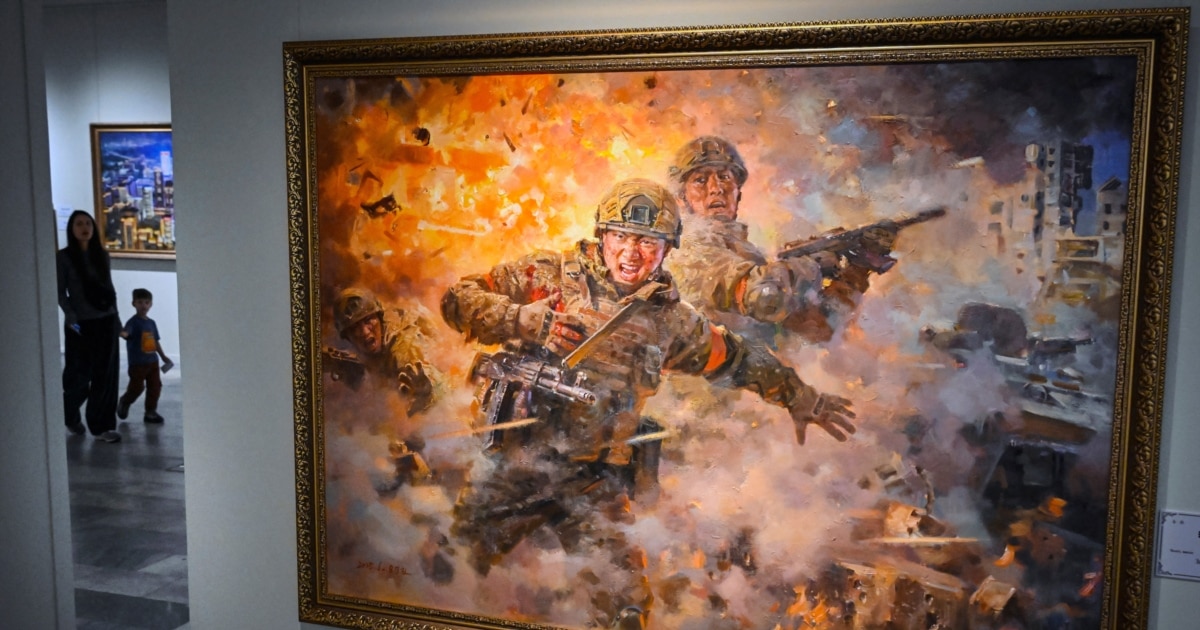
The change became evident when North Korea’s state broadcaster aired footage showing soldiers in winter training exercises, allegedly preparing for deployment to support Russia. The segment, complete with nationalist songs and imagery, portrayed the mission as a noble cause against Western imperialism.
“This represents a complete reversal of their previous communication strategy,” said Dr. Park Min-ho, an analyst specializing in North Korean propaganda at Seoul National University. “For months, they categorically denied any military involvement in Ukraine, calling such reports ‘fabrications’ and ‘Western propaganda.’ Now they’re not just admitting it – they’re celebrating it.”
Intelligence reports from South Korean and U.S. sources estimate that approximately 10,000 North Korean soldiers have been dispatched to Russia’s Kursk region, with some potentially already engaged in combat operations. The deployment represents one of the most significant military collaborations between the two countries since the Korean War.
The propaganda shift aligns with broader strategic realignments occurring between Pyongyang and Moscow. Following Russian President Vladimir Putin’s visit to North Korea in June, bilateral relations have strengthened considerably, with both nations signing a mutual defense pact. The agreement appears to have emboldened North Korean leader Kim Jong Un to more openly support Russia’s war efforts.
“This isn’t just about military support – it’s about economic lifelines for North Korea,” explained Jennifer Wilson, senior fellow at the Center for Strategic and International Studies. “In exchange for troops, North Korea likely receives critical energy supplies, food aid, and possibly technical assistance for its weapons programs. The propaganda shift suggests they now see more benefit in publicly acknowledging this arrangement than in denying it.”
The public messaging transformation also serves domestic purposes, experts note. By portraying North Korean soldiers as fighting against Western powers, the regime reinforces its longstanding narrative of being besieged by hostile foreign forces while simultaneously demonstrating strength on the international stage.
Ukrainian officials have condemned the deployment, with President Volodymyr Zelensky describing it as a dangerous escalation that transforms a regional conflict into a more global confrontation. NATO has expressed similar concerns, though Western powers have thus far been measured in their response to avoid further escalating tensions.
For ordinary North Koreans, state media portrays the deployment as an honor and duty. One broadcast featured families of soldiers expressing pride in their relatives’ service against “American imperialism and its puppets.” However, human rights organizations have questioned whether these troops have any meaningful choice in their deployment.
“North Korean soldiers likely face severe consequences for refusing deployment orders,” said Kim Seok-hyang, director of the Human Rights Watch Korea division. “This isn’t voluntary service – it’s exploitation of military personnel who have no ability to consent.”
The propaganda shift comes amid increased international isolation for both Russia and North Korea. Western sanctions have pushed both countries closer together in what analysts describe as a “partnership of necessity” rather than one of shared ideological vision.
Military analysts remain divided on how effective North Korean troops will be in combat operations. While they may provide Russia with additional manpower, questions persist about their training, equipment compatibility, and ability to operate within Russian command structures.
As winter deepens across eastern Ukraine and western Russia, the involvement of North Korean forces adds yet another complex dimension to a conflict that continues to reshape global security alignments. For Kim Jong Un’s regime, the propaganda shift represents a calculated gamble that the benefits of openly supporting Russia outweigh the risks of further international condemnation.
Fact Checker
Verify the accuracy of this article using The Disinformation Commission analysis and real-time sources.
