


Listen to the article
NFL Declines to Fine Texans’ Al-Shaair for “Stop the Genocide” Eye Black Message
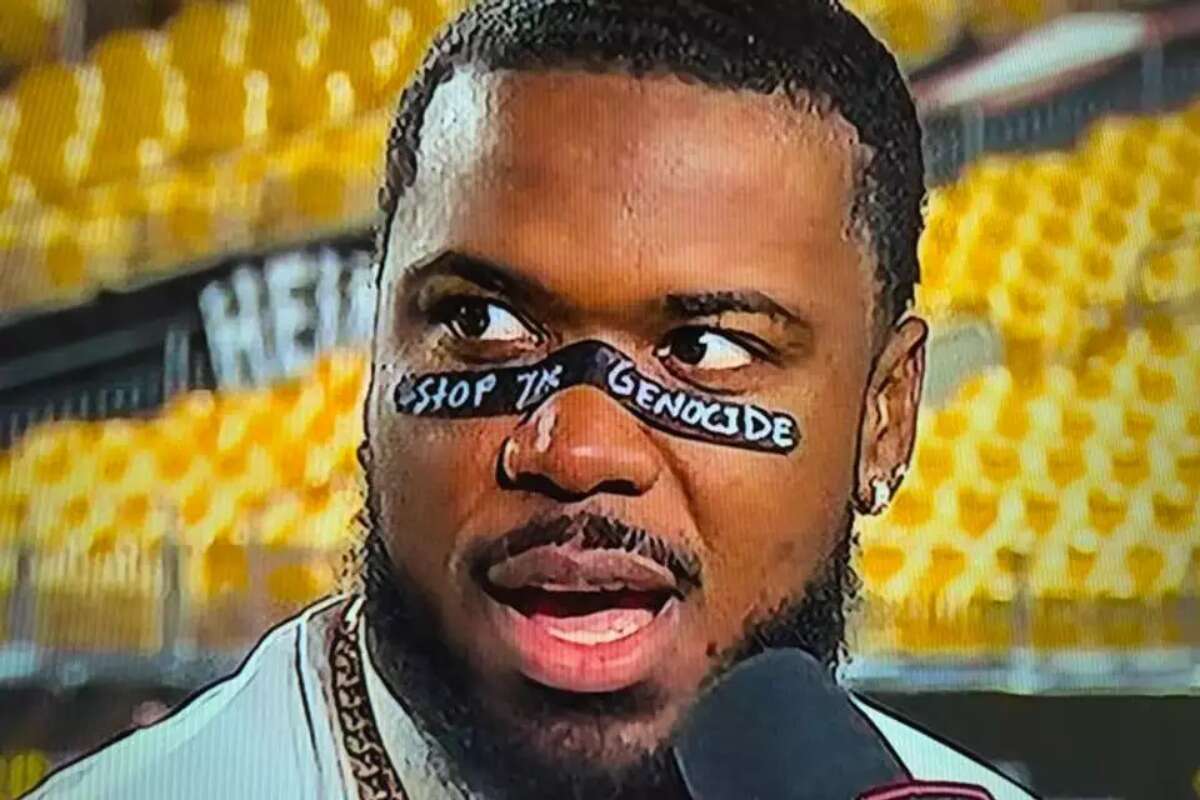
The National Football League has opted not to impose a fine on Houston Texans linebacker Azeez Al-Shaair after he displayed the message “Stop the Genocide” written under his eyes during a recent game. The message remained visible throughout the contest and during his postgame interview with ESPN.
According to the NFL’s established regulations, players are prohibited from displaying personal messages during games. The league’s fine schedule typically imposes an $11,593 penalty for first-time violations of this nature. However, when the NFL released its official disciplinary report, which included financial penalties for eight other players, Al-Shaair was notably absent from the list.
This decision has sparked controversy in sports media circles, with some commentators pointing to perceived inconsistencies in the league’s enforcement policies. American journalist Jon Root called the situation “one of the most egregious double standards in the history of the NFL,” highlighting that San Francisco 49ers defensive end Nick Bosa was fined more than $11,000 last season for wearing a MAGA hat during a postgame appearance.
Al-Shaair, who identifies as Muslim and spent part of his childhood in Saudi Arabia, has previously expressed support for Palestinians in the ongoing Middle East conflict. In an earlier game this season, he wore cleats featuring the word “FREE” displayed in the colors of the Palestinian Authority flag. The cleats also included casualty figures from the Gaza Strip that were attributed to Hamas.
Root further criticized sports media outlets for their limited coverage of the incident, stating on social media: “No journalist covering the Texans, or sports media outlet, other than Will Kunkel, has asked the NFL/Commissioner Goodell to comment on this, to either give a defense for the lack of a fine, or a defense for somehow approving this blatant propaganda.”
The controversy highlights the complex intersection of sports, political expression, and league policy enforcement. The NFL has historically attempted to maintain political neutrality by restricting players from displaying personal messages during games, though the enforcement of these policies has sometimes been inconsistent.
This incident occurs against the backdrop of increased athlete activism across professional sports in recent years. Many leagues, including the NFL, have grappled with balancing players’ desire for personal expression on social and political issues with maintaining a focus on the sport itself.
The NFL has faced similar controversies in the past, most notably surrounding players kneeling during the national anthem to protest racial injustice. The league’s approach to such expressions has evolved over time, sometimes allowing certain forms of protest while restricting others.
For Al-Shaair, who joined the Texans in 2023 after four seasons with the San Francisco 49ers, this incident has brought increased attention both to his on-field performance and his off-field advocacy. The 26-year-old linebacker has been a key contributor to Houston’s defensive unit this season.
The Texans organization has not publicly commented on the situation, nor has Al-Shaair elaborated further on his decision to display the message during the game. The NFL’s silence on its reasoning for not imposing a fine also leaves questions about how similar situations might be handled in the future.
As the NFL playoffs continue and public attention remains high, the league may face increasing pressure to clarify its policies regarding player expression and ensure consistent enforcement across all teams and players.
Fact Checker
Verify the accuracy of this article using The Disinformation Commission analysis and real-time sources.

16 Comments
This seems like a clear-cut violation of the NFL’s rules, yet the league chose not to impose a penalty. Their reasoning for the selective enforcement is questionable.
You’re right, the NFL’s actions here are very concerning. They need to apply their policies equally to avoid accusations of bias.
The NFL’s decision not to fine this player is puzzling and raises serious questions about their commitment to impartiality. They need to address this inconsistency.
I share your concerns. The league’s handling of this situation undermines its credibility and perceived fairness.
The NFL’s decision not to fine the player for his controversial message is troubling and seems to contradict their own policies. They need to explain their reasoning.
I agree, the league’s actions here are puzzling and concerning. They must be held accountable for the inconsistent application of their rules.
This raises valid concerns about the NFL’s priorities and double standards. They should either enforce their rules consistently or reconsider their policies entirely.
Well said. The league has a responsibility to apply its guidelines objectively, without favoring certain views over others.
The NFL’s decision not to fine this player for his controversial message is puzzling. Regardless of the content, they should be upholding their regulations evenly.
You make a fair point. The league needs to be transparent and impartial in how it handles these types of situations going forward.
The NFL’s handling of this case is quite troubling. Their refusal to fine the player sends a concerning message about their stance on political messaging.
I agree, the league’s decision is problematic and sets a dangerous precedent. They need to clarify their position on political displays.
Interesting situation with the NFL’s handling of this player’s message. It raises questions about the league’s consistency in enforcing its own rules and policies.
I agree, the league’s response seems inconsistent and could be perceived as biased. They should apply their rules fairly across the board.
This case highlights the complex challenges the NFL faces in balancing free speech and its own regulations. Their response warrants further scrutiny and clarification.
That’s a fair assessment. The league needs to find a way to uphold its rules while respecting players’ right to expression.