


Listen to the article
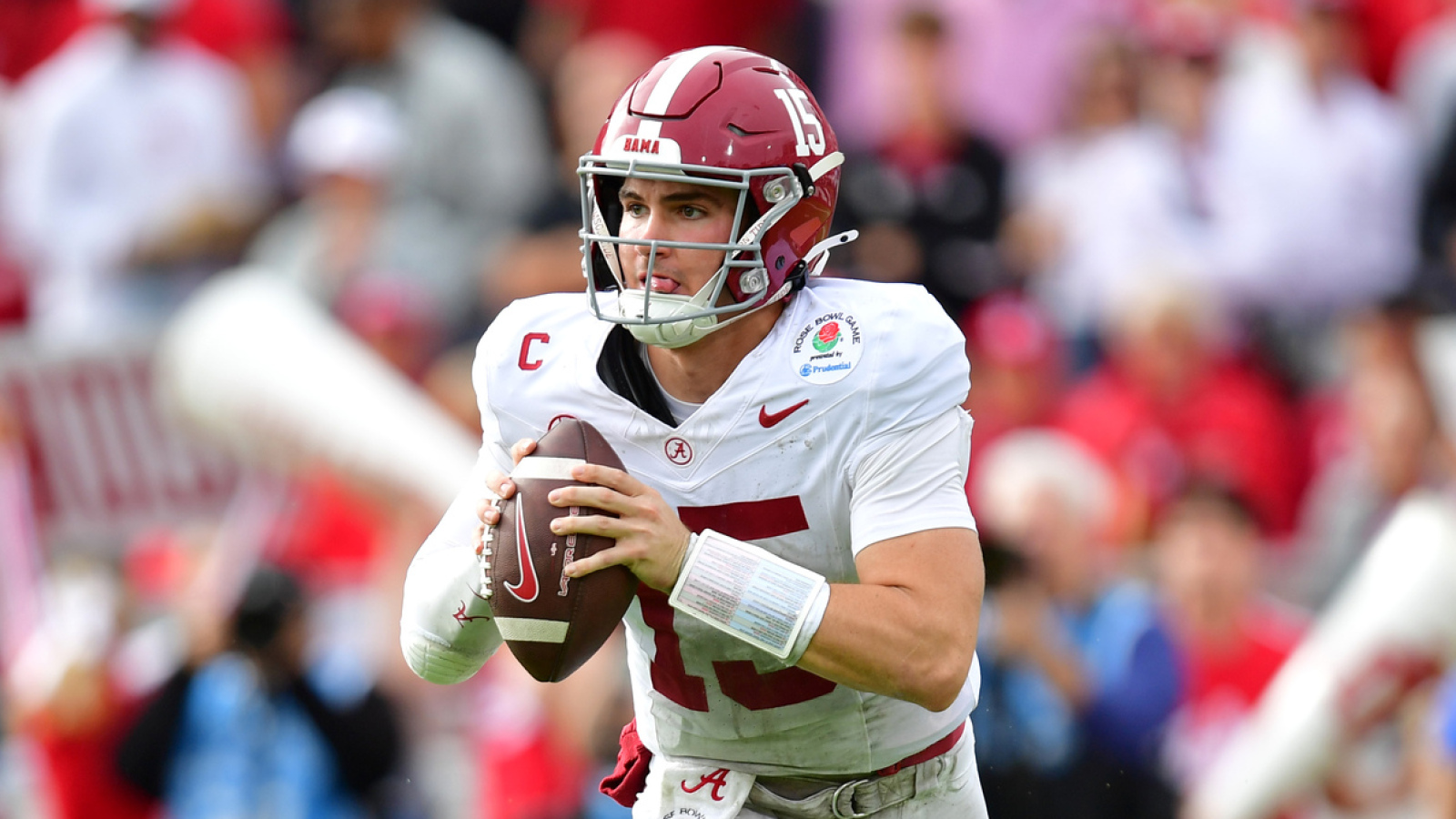
In the final days of March, a growing chorus of ESPN analysts revealed they couldn’t identify a single NFL team with a legitimate first-round grade on Alabama quarterback Ty Simpson. This revelation has sparked intense debate about Simpson’s draft position as the NFL Draft approaches on April 23.
The controversy surrounding Simpson’s draft status intensified Thursday when NFL insider Jason La Canfora of SportsBoom US published a report challenging the quarterback’s projected draft position. According to La Canfora, he’s found far more credible sources who don’t consider Simpson a first-round talent—or even the second or third-best quarterback in this class—than executives who agree with television analysts touting Simpson’s first-round credentials.
La Canfora’s report emerged shortly after news broke that at least one unnamed NFL coordinator identified Penn State’s Drew Allar as his “favorite quarterback in the draft” after Fernando Mendoza, who is widely expected to be selected first overall by the Las Vegas Raiders.
The disconnect between television analysis and NFL front office evaluations appears particularly stark regarding Simpson. One general manager was blunt in his assessment when speaking with La Canfora: “It’s complete propaganda. I don’t know if it’s just because they (some television analysts) have the same agent as this kid, but that’s what it looks like.”
This comment appears to reference former NFL quarterback and current analyst Dan Orlovsky, who shares representation with Simpson through Creative Artists Agency. Orlovsky has been among Simpson’s most vocal supporters, even calling him “the best quarterback” in the 2024 draft class—a position that seems increasingly at odds with actual NFL team evaluations.
The anonymous general manager who spoke with La Canfora ranks Mendoza, Miami’s Carson Beck, and LSU’s Garrett Nussmeier all ahead of Simpson. This assessment is particularly noteworthy as both Beck and Nussmeier are generally projected as Day 2 or even Day 3 selections in most mock drafts, suggesting Simpson could potentially fall much further than early television analysis indicated.
Another longtime NFL executive expressed similar skepticism about Simpson’s projected draft position, telling La Canfora: “The draft is a made-for-TV event, and that’s a made-for-TV storyline. It’s bull—-. He (Simpson) is QB4 for me.”
The divergence between media narratives and internal team evaluations highlights the complex dynamics of pre-draft analysis. Television personalities and draft analysts often create compelling storylines that drive viewer interest, but these narratives don’t always align with how NFL front offices evaluate talent.
Simpson’s situation reflects a common draft phenomenon where certain prospects receive disproportionate media attention that may not correlate with their standing on actual draft boards. The Alabama quarterback has become this year’s prime example of this disconnect.
Industry insiders suggest this phenomenon may be amplified by relationships between media figures and player representation. When analysts share management with prospects they evaluate, questions about objectivity naturally arise, though such connections don’t necessarily imply intentional bias.
Despite the growing skepticism, Simpson’s draft fortunes ultimately depend on team-specific evaluations. As one executive noted, all it takes is a single organization to value Simpson highly for him to become the second quarterback selected after Mendoza.
The debate surrounding Simpson’s draft position underscores the inherent unpredictability of the NFL Draft process. While consensus evaluations provide general guidelines, individual team assessments—often kept closely guarded until draft day—determine actual selections.
With the draft approaching, Simpson’s eventual landing spot will serve as an interesting case study in the relationship between media projections and actual team valuations in the increasingly public-facing world of NFL draft analysis.
Fact Checker
Verify the accuracy of this article using The Disinformation Commission analysis and real-time sources.

12 Comments
The fact that at least one NFL coordinator seems to prefer Penn State’s Drew Allar over Simpson is quite intriguing. I wonder what specific attributes or potential Allar possesses that have made him a more appealing QB prospect in the eyes of some teams.
Good point. It would be worth exploring what aspects of Allar’s game have impressed NFL evaluators more than the highly-touted Simpson at this stage.
The NFL GM’s criticism of the ‘propaganda’ surrounding Simpson’s draft status raises some important questions. What factors are teams really weighing in their assessments, beyond just the media narrative?
Good point. It would be valuable to understand the specific criteria and concerns that have led some teams to rate Simpson lower than the media projections.
The apparent disconnect between media coverage and team assessments of Ty Simpson’s draft status is certainly thought-provoking. I look forward to seeing how this situation unfolds as we get closer to the NFL Draft.
Absolutely, it will be interesting to see if any more details emerge about the differing perspectives on Simpson and how that impacts his eventual draft position.
Interesting to see the disconnect between media hype and actual NFL team evaluations of Ty Simpson’s draft prospects. It would be good to get more transparency on the reasons behind this divergence of opinion.
Agreed, more insight into the team scouts’ views would help provide a clearer picture of Simpson’s NFL potential.
The contrast between TV analysts’ first-round projections for Simpson and the more skeptical views of NFL insiders is quite striking. I’m curious to learn more about the underlying reasons for this disconnect.
Absolutely, getting a clearer picture of the differing evaluations from media pundits versus team decision-makers would provide valuable context around Simpson’s draft outlook.
While the ‘propaganda’ criticism seems a bit strong, there does appear to be a meaningful gap between the hype around Simpson and the more reserved assessments from NFL front offices. Understanding those nuanced evaluations would be helpful.
Agreed, a more balanced and detailed analysis of Simpson’s strengths, weaknesses, and NFL readiness from both media and team sources could provide a clearer picture for fans.