


Listen to the article
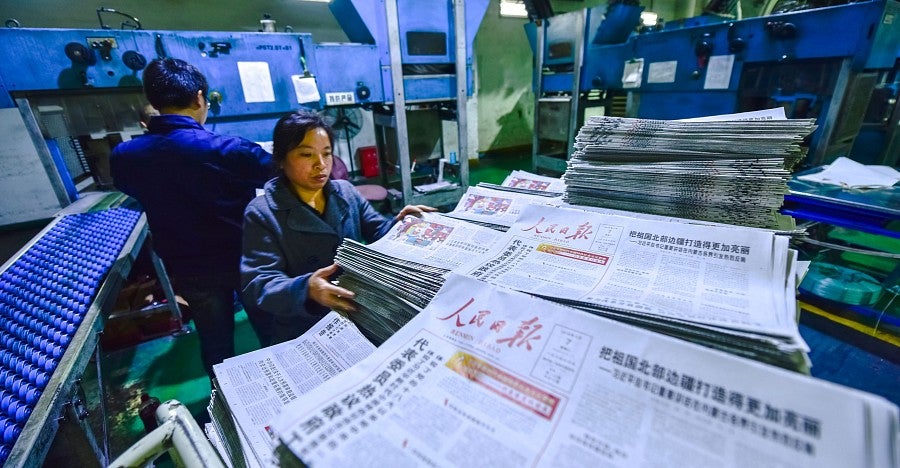
Chinese state-backed propaganda efforts have intensified significantly in recent months, according to a comprehensive study released yesterday by the International Media Research Institute. The report documents a 37 percent increase in state-sponsored content across digital platforms since January, representing the most dramatic expansion of propaganda activities in the country since 2018.
Researchers analyzed over 50,000 news articles, social media posts, and broadcast segments, finding that government messaging has become more sophisticated in its targeting and delivery methods. The propaganda push corresponds with several key domestic and international developments, including economic challenges and heightened tensions with Western nations.
“What we’re seeing is not just more content, but more strategically crafted narratives designed to shape both domestic and international perceptions,” said Dr. Wei Zhang, the study’s lead author. “The messaging is increasingly tailored to specific audiences and employs more subtle techniques than previous campaigns.”
The research identified several dominant themes in recent propaganda efforts. Economic messaging has emphasized China’s resilience despite global headwinds, with particular focus on portraying the country’s manufacturing sector as stable despite evidence of contraction. Political content has amplified nationalist sentiment while promoting the Chinese Communist Party’s leadership as essential to national prosperity and security.
On social media platforms like Weibo and WeChat, government-affiliated accounts have increased posting frequency by 42 percent year-over-year. These accounts now reach an estimated 870 million Chinese citizens daily, according to the report.
International messaging has also evolved, with China’s state media expanding its English-language operations and social media presence. China Daily and CGTN, two prominent state-backed outlets, have increased their international staff by approximately 25 percent in the past year, establishing new bureaus in Southeast Asia, Africa, and Latin America.
The propaganda surge coincides with challenging economic indicators for China, including a property market crisis, high youth unemployment, and sluggish consumer spending. Analysts suggest the information campaign aims to maintain social stability and project strength amid these difficulties.
“The government clearly sees perception management as crucial during this period of economic adjustment,” said Rebecca Thornton, an Asia-Pacific media analyst at Georgetown University not involved in the study. “They’re working to control the narrative around economic challenges while simultaneously positioning China as a global leader.”
Digital technology has enabled more sophisticated targeting of propaganda, the report notes. Artificial intelligence tools are being deployed to generate and distribute content more efficiently, while advanced analytics help gauge public response and refine messaging accordingly.
The research also identified growing efforts to influence international audiences through Western social media platforms. Despite being blocked within China, platforms like X (formerly Twitter), Facebook, and YouTube have seen substantial increases in content from Chinese state-affiliated accounts. These posts often highlight China’s development model, criticize Western policies, and promote the country’s global initiatives like the Belt and Road program.
Media watchdog organizations have expressed concern about the propaganda expansion. Reporters Without Borders cited the trend in its annual press freedom index, noting that China ranked 175th out of 180 countries assessed.
“The scale and sophistication of state information control in China remains unparalleled globally,” said Marcus Chen of the Digital Rights Foundation. “What’s particularly concerning is how effectively these techniques are being exported to other countries.”
Chinese officials have consistently rejected characterizations of state media as propaganda, instead describing it as “telling China’s story” and providing alternative viewpoints in a global information landscape dominated by Western perspectives.
The report concludes that propaganda efforts are likely to continue intensifying as China navigates economic challenges and positions itself in an increasingly competitive international environment. Researchers recommend that media literacy programs and independent journalism will be crucial counters to growing state information control.
“Understanding these dynamics isn’t just academic—it has real implications for how the global community engages with China and how citizens within China form their worldview,” Dr. Zhang said.
Fact Checker
Verify the accuracy of this article using The Disinformation Commission analysis and real-time sources.

10 Comments
The report’s findings on the ‘tailored’ and ‘subtle’ nature of China’s propaganda tactics are concerning. Recognizing these more nuanced approaches will be key to inoculating the public against manipulation.
Agreed. As propaganda methods become more advanced, media literacy and critical thinking skills are essential safeguards against the erosion of truth and objectivity.
Concerning to see the increased propaganda efforts in China. It’s important to maintain a critical eye and fact-check information, especially around sensitive political and economic issues.
You make a good point. Objective and balanced reporting is crucial to counter state-sponsored propaganda narratives.
This is an important issue to track, given the global implications of China’s growing influence. Effective counter-propaganda efforts will require coordinated international cooperation and commitment to media freedom.
Absolutely. Maintaining an open, fact-based information environment is crucial, especially when authoritarian states seek to shape global narratives through sophisticated propaganda tactics.
I’m curious to see what specific tactics and techniques the study identified in China’s more ‘sophisticated’ propaganda efforts. Greater transparency around these methods could help the public better recognize and resist manipulation.
Agreed, more details on the evolving propaganda tactics would be valuable. Understanding how these narratives are crafted and disseminated is key to combating their influence.
The economic messaging highlighted in the report is interesting. Curious to know if the propaganda is downplaying or obscuring any specific domestic economic challenges in China.
Good point. State media narratives around the economy often aim to project an image of stability and resilience, even if the underlying realities are more complex.