


Listen to the article
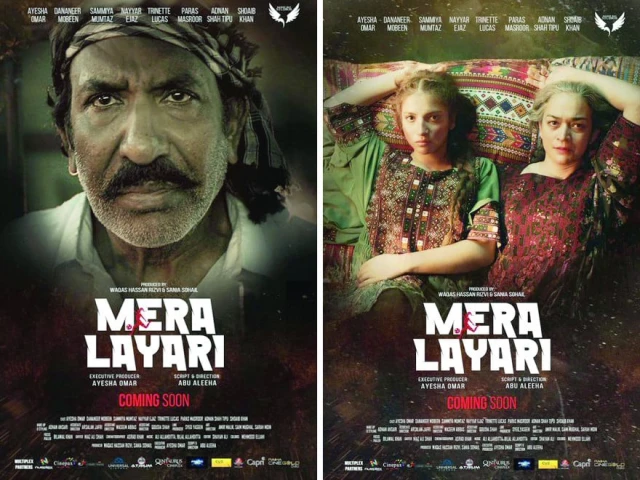
In a bold response to a controversial Bollywood portrayal, the Sindh government has announced plans to release “Mera Lyari,” a film aimed at countering what officials describe as misrepresentation of Karachi’s historic Lyari neighborhood in the Indian movie “Dhurandhar.”
Sindh’s Senior Minister Sharjeel Inam Memon revealed the initiative while criticizing the Indian film, which has sparked outrage in Pakistan for its depiction of Lyari as a violence-ridden area. Memon characterized the Bollywood production as part of a “broader conspiracy against Pakistan.”
“Lyari is not violence—it is culture, peace, talent, and resilience. Next month ‘Mera Lyari’ will release, showing the true face of Lyari: peace, prosperity, and pride,” Memon stated on the social media platform X.
Released on December 5, “Dhurandhar” loosely draws inspiration from Karachi’s historical gang conflicts in Lyari, but its portrayal has drawn criticism from audiences on both sides of the India-Pakistan border. The film has created a notable divide among Indian viewers, with some embracing the narrative while others condemning its characterization of the Pakistani neighborhood.
Pakistani audiences have particularly objected to what they see as propaganda elements in the film. However, the controversy has also sparked internal reflection, with some Pakistanis expressing disappointment that their own entertainment industry hasn’t been proactive in telling authentic stories that accurately represent local culture and history.
The contrast between fiction and reality was highlighted by a journalist who shared a video titled “The Karachi you see in ‘Dhurandhar’ v/s the Karachi I saw last week,” juxtaposing the film’s chaotic portrayal against the city’s vibrant food scene, music, and everyday warmth.
Memon, who also serves as Sindh’s Information Minister, emphasized that the upcoming Sindhi-language film “Mera Lyari” aims to present an accurate picture of the neighborhood, showcasing its cultural heritage and community bonds to both domestic and international audiences.
The controversy has escalated beyond cultural criticism into legal challenges. A day before the announcement, a constitutional petition was filed in a Karachi court against “Dhurandhar,” alleging unauthorized use of images of the late Benazir Bhutto, the Pakistan Peoples Party (PPP) flag, and footage from party rallies in the film’s promotional materials.
The petition, submitted by PPP activist Muhammad Amir in Karachi’s District and Sessions Court (South), seeks to register an FIR against the film’s creative team, including director Aditya Dhar, producers Lokesh Dhar and Jyoti Kishore Deshpande, and a star-studded cast featuring Ranveer Singh, Sanjay Dutt, Akshaye Khanna, Arjun Rampal, and R Madhavan, among others.
Lyari, one of Karachi’s oldest neighborhoods, has a complex history. Once known for gang violence and drug trafficking in the early 2000s, the area has undergone significant transformation in recent years. Today, it’s increasingly recognized for its rich cultural contributions, particularly in sports, music, and the arts. The neighborhood has produced national boxing champions and football stars, earning it the nickname “Mini Brazil” for its passionate football culture.
The cinematic face-off highlights the ongoing sensitivity surrounding cross-border cultural representations between India and Pakistan, where entertainment often becomes entangled with political tensions and historical grievances. Media analysts suggest that such controversies underscore the power of film as a medium for shaping international perceptions, particularly in regions with complicated diplomatic relations.
The Sindh government’s decision to produce a counter-narrative film represents an unusual step into content creation for a provincial administration, signaling the importance officials place on controlling the narrative about Pakistan’s urban spaces on the global stage.
Fact Checker
Verify the accuracy of this article using The Disinformation Commission analysis and real-time sources.

8 Comments
The Pakistan government’s response seems intended to reclaim the narrative around Lyari. While films can be polarizing, open dialogue and exchange of perspectives may lead to greater understanding across borders.
Countering one-dimensional portrayals with more nuanced representations is an important step. I’m curious to learn more about the Sindh government’s plans for ‘Mera Lyari’ and how it will challenge the ‘Dhurandhar’ narrative.
It’s encouraging to see the Sindh government taking proactive steps to showcase the positive aspects of Lyari that have been overlooked. Filmmaking can be a powerful medium for cultural exchange and challenging stereotypes.
Interesting development in the ongoing narrative battle over Lyari. I’m curious to see how ‘Mera Lyari’ portrays the neighborhood compared to the controversial ‘Dhurandhar’ film. Filmmaking can be a powerful tool for shaping perspectives.
Efforts to counter misrepresentation and highlight the true culture and spirit of Lyari are commendable. It’s important to give voice to local perspectives, especially when external narratives risk oversimplifying complex realities.
The announcement of ‘Mera Lyari’ is a bold move to reclaim the narrative around this community. It will be thought-provoking to see how the film portrays Lyari’s culture, history and resilience in contrast to the ‘Dhurandhar’ depiction.
The Lyari initiative highlights the power of storytelling in shaping perceptions. It will be interesting to see how the two films engage with the complex realities of the neighborhood and its people.
The Lyari initiative raises interesting questions about the role of media in shaping perceptions of communities. I wonder how the two films will compare in their approaches and whether they’ll succeed in conveying the full complexity of the neighborhood.