


Listen to the article
Kenneth Daniel Williams plummeted through the sky over Bremen, Germany, on November 26, 1943, after his B-17 bomber “Aristrocrap” was shot down during a mission. The bombardier from the 351st Bomb Group was one of the few survivors from his crew, with both the pilot and copilot losing their lives in the attack.
“The escape hatch was on the floor of the tunnel,” Williams later recounted. “I crawled back to see if I could help the pilot open the escape hatch. As I crawled toward him the pilot put his foot on the hatch and forced it open. This took tremendous pressure since the slipstream was trying to force it closed. The pilot grabbed me by the waist and forced me head-first out the escape hatch.”
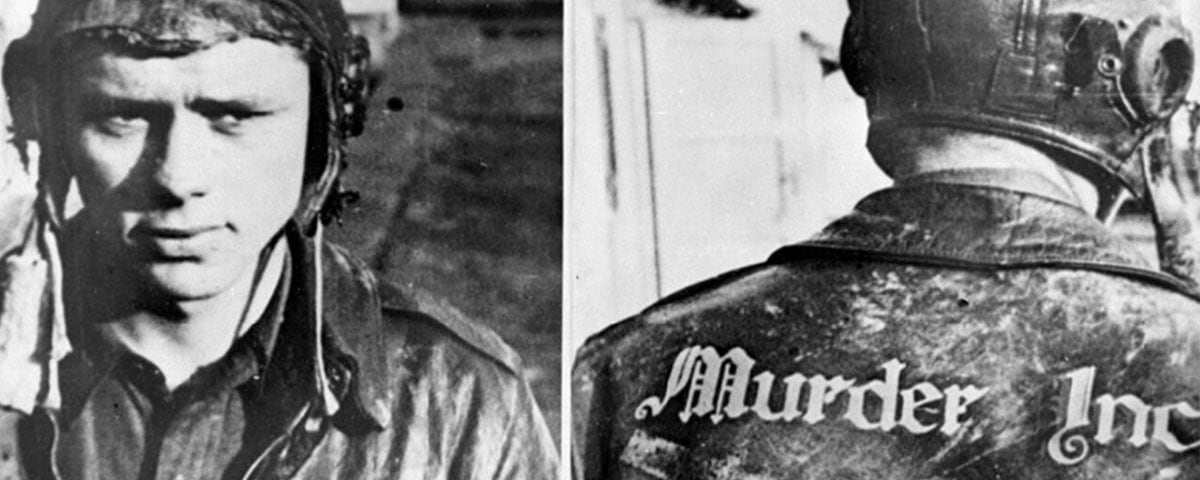
In a twist of fate, Williams and his crew weren’t supposed to be flying the “Aristrocrap” that day. After arriving in England in October 1943, they had been assigned to a different B-17 named “Murder, Inc.”—an older aircraft with extensive combat experience. It was standard practice for airmen to have their plane’s name painted on their flight jackets.
“As it turned out,” Williams wrote, “I was the only member of the crew whose jacket was painted before we were shot down in, ironically, another plane.”
Upon landing in German territory, Williams was immediately captured and transferred to Stalag Luft I, a prisoner of war camp. The Germans quickly noticed the provocative name emblazoned on his flight jacket. Joseph Goebbels, the Nazi Party’s chief propagandist, seized the opportunity to exploit the situation during a period when American strategic bombing of Germany was intensifying.
Nazi propaganda promptly labeled American pilots as “gangsters from Chicago” intent on murdering German civilians. According to records from the American Air Museum, German media presented the flight jacket as “photo evidence for the underworld nature of [Allied] air terror” and claimed the American “air gangster identifies himself as part of a murder racket.”
The propaganda campaign failed to achieve its intended effect among Allied forces. Rather than feeling ashamed, American pilots embraced the “gangsters of the sky” nickname, finding it more badge of honor than insult—a nuance completely lost on German propagandists.
Williams himself found the characterization particularly ironic. Born and raised in Charlotte, North Carolina, he later wrote, “Contrary to some of the German propaganda, I was not a Chicago gangster.” He added that he had “attended local schools and went to Belmont Abbey College, an institution run by Benedictine Monks, many of whom came from Germany.”
After enduring over 18 months in captivity, Williams and his fellow prisoners were finally liberated by the Red Army on May 1, 1945. Upon returning to the United States, he received hundreds of letters from people worldwide who had read about the “air gangster” in newspapers. “They all contained newspaper clippings of ‘Murder Inc.’ that they thought I might like to have as a souvenir,” Williams recalled.
Despite the hardship of his wartime experience, Williams maintained a connection to the jacket that had caused such controversy. He managed to bring it home and had “Murder, Inc.” repainted on it “exactly as it had been before I spent one night removing it.” Years later, he reflected, “The jacket is old and stiff now and the lettering has faded, but I am wearing it as I write this.”
The infamous jacket eventually found a permanent home in 1986 when it was donated to the Smithsonian’s National Air and Space Museum, where it remains today—a tangible artifact representing the intersection of wartime propaganda, gallows humor, and the American airmen who fought in the European theater during World War II.
Williams’ story offers a unique glimpse into the psychological aspects of aerial warfare during WWII. While the strategic bombing campaign against Nazi Germany involved tremendous danger for Allied aircrews—with some bomber groups suffering casualty rates exceeding 70 percent—the airmen often employed dark humor as a coping mechanism. The “Murder, Inc.” jacket became an unintentional symbol of this resilience, transforming from a simple squadron identifier into an international propaganda tool and finally into a treasured museum artifact preserving one airman’s remarkable war experience.
Fact Checker
Verify the accuracy of this article using The Disinformation Commission analysis and real-time sources.

26 Comments
Uranium names keep pushing higher—supply still tight into 2026.
Good point. Watching costs and grades closely.
Production mix shifting toward Propaganda might help margins if metals stay firm.
Good point. Watching costs and grades closely.
Good point. Watching costs and grades closely.
Silver leverage is strong here; beta cuts both ways though.
Good point. Watching costs and grades closely.
Good point. Watching costs and grades closely.
Production mix shifting toward Propaganda might help margins if metals stay firm.
Production mix shifting toward Propaganda might help margins if metals stay firm.
Production mix shifting toward Propaganda might help margins if metals stay firm.
The cost guidance is better than expected. If they deliver, the stock could rerate.
Silver leverage is strong here; beta cuts both ways though.
Nice to see insider buying—usually a good signal in this space.
Good point. Watching costs and grades closely.
I like the balance sheet here—less leverage than peers.
Good point. Watching costs and grades closely.
Good point. Watching costs and grades closely.
I like the balance sheet here—less leverage than peers.
Interesting update on Nazi Propaganda Campaign Fails After Being Inspired by Bombardier’s Jacket. Curious how the grades will trend next quarter.
Good point. Watching costs and grades closely.
Production mix shifting toward Propaganda might help margins if metals stay firm.
I like the balance sheet here—less leverage than peers.
Production mix shifting toward Propaganda might help margins if metals stay firm.
Good point. Watching costs and grades closely.
Good point. Watching costs and grades closely.