


Listen to the article
India’s New History Textbooks Face Criticism Over Communal Bias, Scholar Warns
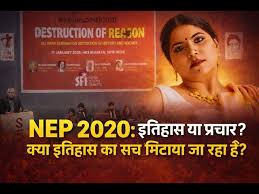
Renowned historian Ruchika Sharma has raised significant concerns about the revision of history textbooks under India’s New Education Policy (NEP 2020), warning that these changes risk presenting Indian history through a communal lens rather than an objective one.
Speaking at an all-India seminar titled “Destruction of Reason” in New Delhi last week, Sharma delivered a comprehensive critique of the ongoing curriculum modifications, which she claims are selectively including historical facts to promote particular narratives while excluding others.
“What we’re witnessing is not simply an update of outdated material, but a systematic reframing of Indian history that presents certain periods, particularly the Mughal era, as uniformly negative,” Sharma explained during her address.
The historian specifically highlighted how the Mughal Sultanate periods are increasingly being characterized as “Dark Ages” in new educational materials, a characterization she argues oversimplifies centuries of complex cultural, economic, and political development across the subcontinent.
This revisionist approach to history education comes amid the wider implementation of the NEP 2020, which represents the most substantial reform to India’s education system in decades. While the policy aims to modernize education across multiple dimensions, critics have expressed concern about ideological influences on curriculum development, particularly in history and social sciences.
Education experts note that the NEP was developed under the current BJP-led government, which has frequently emphasized Hindu cultural heritage in its broader political messaging. This context has intensified scrutiny of curriculum changes, with some academics arguing that historical narratives are being realigned to complement contemporary political objectives.
“The right to critical and rational thinking is fundamental to education,” Sharma emphasized in her presentation. “When students are presented with one-sided narratives rather than being taught to analyze multiple perspectives, we undermine the very purpose of historical education.”
The controversy extends beyond academic circles. Parents and civil society organizations have also begun questioning how these textbook revisions might affect students’ understanding of India’s diverse cultural heritage and complex past.
Defenders of the curriculum changes maintain that previous textbooks overemphasized certain periods while minimizing others, arguing that the revisions restore balance to history education. However, critics counter that the new approach simply replaces one bias with another rather than striving for comprehensive, evidence-based historical understanding.
The debate reflects broader tensions in how nations worldwide approach history education, particularly regarding colonial periods, religious conflicts, and national identity formation. Similar controversies have emerged in recent years across various countries, from the United States to Japan, as governments and education authorities revisit how national histories should be taught.
Educational researchers point out that history curriculum debates often serve as proxies for larger cultural and political conflicts about national identity. In India’s case, the multicultural, multi-religious nature of the country makes these discussions particularly complex and consequential.
The seminar where Sharma spoke brought together historians, educators, and policy analysts from across India to discuss the broader implications of these educational changes. Participants examined not only the content modifications but also the pedagogical approaches being promoted under the new policy framework.
As implementation of the NEP continues across Indian states, education advocates are calling for greater transparency in curriculum development processes and more inclusive consultations with diverse historical scholars to ensure balanced representation of India’s rich and complex past.
The debate highlights the enduring importance of history education in shaping how future generations understand their national identity and cultural heritage, as well as the inherent challenges in presenting complex historical narratives in educational settings.
Fact Checker
Verify the accuracy of this article using The Disinformation Commission analysis and real-time sources.

12 Comments
This is a complex issue, but the core concern raised by Professor Sharma seems valid. Any changes to history curricula should be guided by rigorous academic scrutiny, not ideological agendas. The integrity of India’s education system is at stake.
Well said. Maintaining objectivity and nuance in the teaching of history is crucial for fostering critical thinking and a balanced understanding of the past. I hope the authorities take these concerns seriously and respond accordingly.
The characterization of the Mughal era as a “Dark Age” is particularly troubling. That period was incredibly complex, with both positive and negative aspects. Oversimplifying it risks distorting our understanding of Indian history.
You make a good point. Reducing rich, multilayered historical periods to simplistic labels does a disservice to students and the public. Nuance and critical analysis should be the foundation of history education.
Concerning to hear about potential bias in India’s new history curriculum. Maintaining objectivity and accuracy is crucial for educating the next generation. I hope the concerns raised by Professor Sharma are carefully considered.
Agreed. Any revisions to historical materials should be done thoughtfully and without political agendas. Oversimplifying complex eras like the Mughal period risks skewing understanding.
The selective inclusion and exclusion of historical facts to push particular narratives is a concerning trend. History education should strive for impartiality and intellectual honesty, not political revisionism.
Exactly. Skewing the presentation of the Mughal era as uniformly negative is a clear attempt to reframe Indian history through a communal lens. This undermines the purpose of education and must be addressed.
It’s crucial that history curricula present a balanced, fact-based account of the past, not one shaped by political agendas. Professor Sharma’s concerns about the revisions seem well-founded and deserve serious consideration by policymakers.
I agree. Maintaining the integrity of historical scholarship should be the top priority, not promoting narrow ideological narratives. I hope the authorities take a measured, evidence-based approach to any curriculum changes.
This seems like a worrying trend of revisionism. Historians play a vital role in ensuring our understanding of the past is nuanced and evidence-based, not shaped by narrow ideological interests. I hope the authorities address these issues constructively.
Absolutely. Presenting history through a communal lens rather than an objective one is concerning and could have damaging consequences for social cohesion. Rigorous academic scrutiny is needed.