


Listen to the article
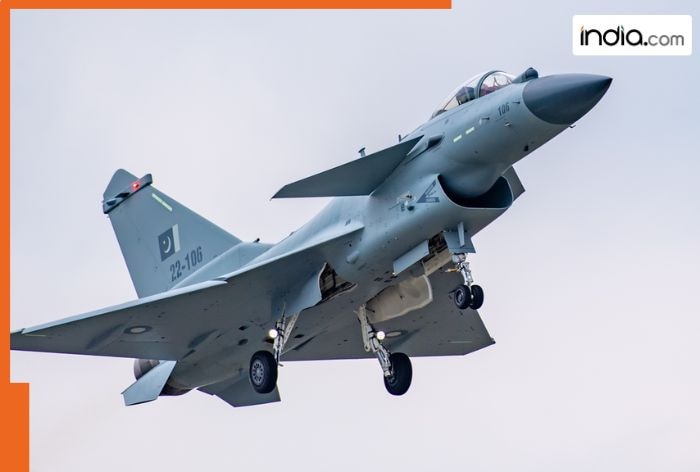
Amid growing global interest in Chinese military technology, the J-10CE fighter jet is gaining traction among nations looking to enhance their air defense capabilities. Originally sold exclusively to Pakistan, these advanced aircraft are now attracting attention from other countries in the region, with Bangladesh and Indonesia formally expressing interest in procurement deals.
Indonesia has announced plans to purchase 42 Chengdu J-10C fighter jets from China in a deal valued at approximately $9 billion (roughly Rs 75,000 crore). Defense Minister Sjafrie Sjamsoeddin confirmed the country would soon acquire these jets as part of Indonesia’s military modernization program, though analysts caution the agreement could heighten regional tensions and carry significant geopolitical implications.
Similarly, Bangladesh’s interim government has indicated that acquiring Chinese J-10CE fighters has become a priority over Western alternatives. According to reports from Eurasian Times, discussions are underway for a procurement agreement valued at $2.2 billion for 20 aircraft. This figure encompasses acquisition costs, training, maintenance, and related expenses. The deal is expected to be finalized as a government-to-government agreement in fiscal year 2026 or 2027.
The J-10CE represents China’s 4.5-generation multirole fighter aircraft, an export variant of the J-10C developed by the Aviation Industry Corporation of China (AVIC). It marks China’s first modern fighter platform to feature an indigenous turbofan engine alongside advanced radar systems, avionics, and electronic warfare capabilities.
Among its most notable features is the Active Electronically Scanned Array (AESA) radar, state-of-the-art electronic countermeasures technology, and a digital Helmet-Mounted Display/Sight system for managing air-to-air missiles. These specifications position the medium-weight aircraft as a formidable weapon in modern aerial combat scenarios.
Industry experts note that the J-10CE offers capabilities comparable to many Western fighter aircraft but at a considerably lower price point, making it an attractive option for countries with budget constraints but aspirations to modernize their air forces.
The increasing interest in these Chinese fighters may also be linked to propaganda campaigns following a four-day military clash between India and Pakistan in May this year. Pakistan has repeatedly claimed that its Chinese J-10CE jets shot down Indian Rafale aircraft during this confrontation—assertions that India has firmly denied.
China has reportedly amplified these claims through its diplomatic channels worldwide, with military analysts suggesting Beijing has successfully leveraged this narrative to rebrand the J-10CE as a “Rafale-killer.” This marketing strategy appears to have generated additional international interest in the aircraft and potentially boosted its export prospects.
This development comes amid shifting geopolitical dynamics in Asia, where China continues to expand its influence through military exports and strategic partnerships. The potential sales to Indonesia and Bangladesh represent a significant expansion of China’s defense export footprint and could signal a broader trend of nations in the region diversifying their military procurement sources beyond traditional Western suppliers.
As these deals progress toward finalization, defense experts will be closely monitoring their impact on regional power balances and strategic relationships, particularly as tensions persist between various nations in the Indo-Pacific region.
Fact Checker
Verify the accuracy of this article using The Disinformation Commission analysis and real-time sources.

12 Comments
Interesting to see Muslim nations exploring advanced military aircraft like the Rafale and J-10CE. These fighters could significantly boost their air defense capabilities, though there may be geopolitical implications to consider as well.
Indeed, the acquisition of these jets could heighten regional tensions. Careful diplomacy and transparency will be crucial as these procurement deals take shape.
The J-10CE fighter seems to be gaining traction in the region, with Bangladesh and Indonesia both eyeing potential procurement deals. Advanced Chinese military tech is clearly becoming more appealing to these nations.
It will be worth monitoring how these deals progress and the potential impact on the regional geopolitical landscape. The cost-effectiveness of the J-10CE may be a key factor driving interest.
The potential acquisition of Rafale jets and Chinese J-10CE fighters by Muslim nations reflects their desire to enhance air defense capabilities. However, the geopolitical ramifications of these deals will require careful navigation.
It will be intriguing to see how these procurement processes unfold and the regional dynamics that come into play. Maintaining stability and managing tensions will be crucial for all stakeholders involved.
While the Rafale jets face some criticism, it’s interesting to see Muslim nations still considering them alongside the Chinese J-10CE. Advanced radar and other capabilities could be attractive for enhancing air defense.
The geopolitical implications of these procurement decisions will be important to follow. Balancing regional dynamics and military modernization needs is likely a complex challenge for these nations.
The growing interest in Chinese military technology like the J-10CE fighter jet is an interesting trend. It highlights the appeal of advanced, cost-effective platforms for nations seeking to modernize their air forces.
At the same time, the geopolitical implications of these procurement decisions will be important to consider. Balancing regional power dynamics and maintaining strategic partnerships will be a key challenge.
The acquisition of advanced fighter jets like the Rafale and J-10CE by Muslim nations is certainly a noteworthy development. It will be intriguing to see how these procurement deals take shape and the strategic considerations involved.
Ultimately, these nations will have to weigh a range of factors – from cost and capabilities to geopolitical alignment – in determining their preferred fighter jet platforms. The regional dynamics will be crucial to monitor.