


Listen to the article
Inside Russia’s Propaganda Machine: A Teacher’s Secret Rebellion
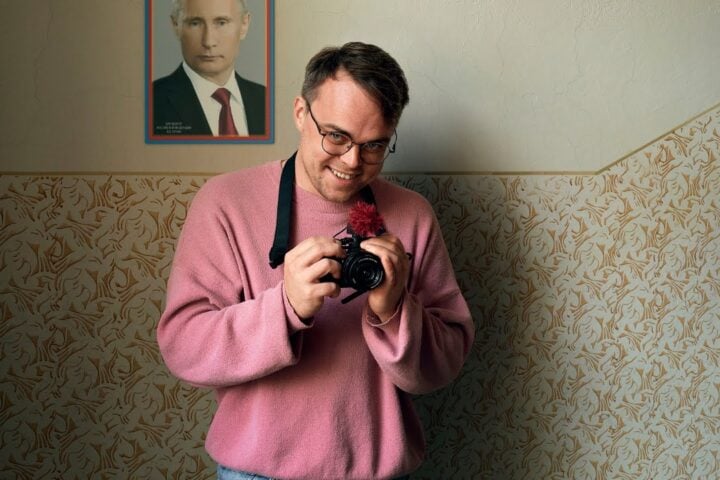
In a polluted mining town in Russia, an ordinary schoolteacher has undertaken an extraordinary act of resistance, capturing the attention of international documentary filmmakers. Pavel “Pasha” Talankin, a beloved primary school teacher in Karabash, has become the unlikely protagonist in a gripping documentary titled “Mr. Nobody Against Putin,” directed by American filmmaker David Borenstein.
The film chronicles Pasha’s transformation from a carefree educator to a clandestine documentarian, risking his safety to expose Russia’s propaganda machine as it infiltrates his classroom following the invasion of Ukraine.
Karabash, already infamous as one of the world’s most polluted cities after gaining notoriety on YouTube, serves as the perfect backdrop for this story of moral courage. Pasha had created a sanctuary within the school where he once studied himself—his mother still works there as a librarian—turning his office into a haven for students seeking refuge from the harsh realities of life in their industrial town.
The documentary vividly portrays the dramatic shift in Russian education following the invasion of Ukraine. What once were normal reading and writing lessons transformed into military-style drills, complete with marching and anthem singing. The curriculum changed to include what Borenstein’s film describes as “the non-history of Ukraine,” with one particularly ominous male teacher promoting Russian nationalist revisionist history.
As the conflict intensified, Pasha found himself unwillingly enlisted in the domestic propaganda effort. School administrators tasked him with recording footage of the new “patriotic education” initiatives for government officials, effectively weaponizing his passion for filmmaking against his own values.
The stakes rose dramatically as former students and siblings of current pupils received military call-ups. Community pressure mounted to demonstrate ostentatious support for the war effort or, at minimum, maintain silence about the unfolding events. For the freethinking Pasha, neither option proved sustainable.
In a pivotal decision, he began secretly documenting the propaganda machine’s influence on his community, amassing hundreds of hours of footage. Even more daringly, Pasha reached out to Borenstein, an American documentarian based in Copenhagen, initiating what Russian authorities would consider a treasonous collaboration.
The partnership between the two filmmakers, facilitated by a mutual Russian contact, highlights an unusual symmetry between them. Both share qualities of eccentricity balanced with serious journalistic purpose. Borenstein brings significant experience navigating authoritarian environments, having spent nearly a decade in China producing long-form projects for major networks including BBC, CNN, and PBS.
For over two years, the filmmakers maintained weekly encrypted communications while Pasha securely transferred video files for Borenstein to edit. This remarkable collaboration occurred under constant threat of discovery, with Borenstein making the controversial but arguably necessary decision not to inform many subjects of their inclusion in the film to protect their safety.
The resulting 90-minute documentary, distributed by Kino Lorber, focuses on Pasha’s profound love for his students, country, and hometown rather than overtly political messaging. This approach creates a powerful narrative that reveals how propaganda affects ordinary communities while capturing moments of absurdity that serve as psychological resistance.
Critics have praised the film for showing how humor and documentation become acts of defiance against authoritarianism, drawing parallels to the approach of the late Russian opposition leader Alexei Navalny. By maintaining dignity through subversive humor, the film suggests, citizens can preserve their humanity under oppressive regimes.
“Mr. Nobody Against Putin” stands as both a testament to individual courage and a window into the subtle ways ordinary Russians navigate an increasingly restrictive political landscape, where even the education of children has become weaponized in service to the state.
Fact Checker
Verify the accuracy of this article using The Disinformation Commission analysis and real-time sources.

6 Comments
This sounds like a powerful and important documentary. Pasha’s story of resistance and moral courage in the face of state propaganda is inspiring. I’m curious to learn more about how he navigates the challenges of teaching in a polluted town and maintaining a haven for his students amidst the pressures of the war in Ukraine.
It’s admirable that Pasha is willing to risk his own safety to expose the truth about Russia’s propaganda machine. His dedication to providing a safe space for his students in such a difficult environment is truly commendable.
The backdrop of Karabash, a notoriously polluted mining town, adds an intriguing layer to this story. I wonder how the environmental challenges faced by the community shape Pasha’s worldview and motivate his actions as an educator and documentarian.
It’s troubling to see how the invasion of Ukraine has impacted education in Russia, with propaganda infiltrating classrooms. Pasha’s efforts to shield his students from this are admirable, and I hope the film sheds light on the broader societal consequences of the war.
This film seems to provide a rare and valuable glimpse into the lived experiences of ordinary Russians who are resisting the government’s propaganda narratives. I’m interested to see how Pasha’s story reflects the broader challenges faced by those seeking to maintain independent thought and expression in the current political climate.
It’s concerning to hear about the dramatic shift in Russian education following the invasion of Ukraine. Pasha’s actions to create a sanctuary for his students are commendable, and I hope the film explores the complexities and risks he faces in doing so.