


Listen to the article
Russian streaming executives face legal charges over LGBTQ+ content regulations, according to a report published Wednesday by exiled news outlet Mediazona. Moscow authorities have filed administrative charges against top officials at several major streaming platforms for alleged violations of the country’s restrictive LGBTQ+ “propaganda” laws.
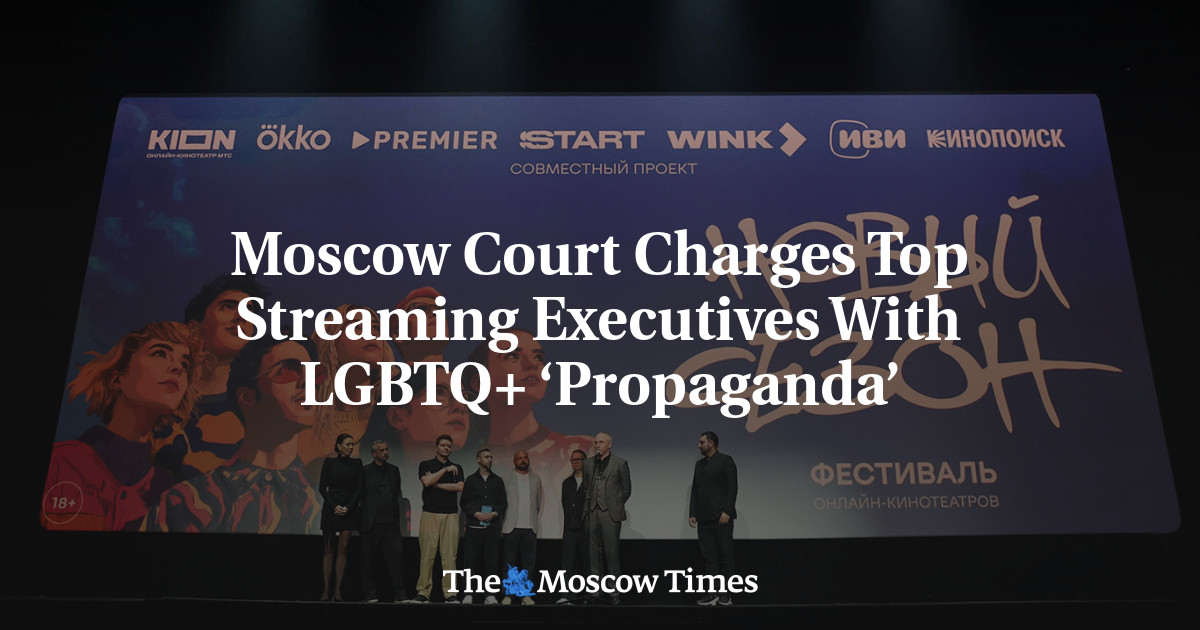
Court records filed with a Moscow arbitration court this week name executives from some of Russia’s most prominent streaming services, including Kinopoisk, Wink, Ivi, Amediteka, 24TV, Digital Television, and Beeline TV. While the specific content that prompted the charges remains undisclosed in public records, many of these platforms have previously faced penalties for similar violations.
The crackdown represents an escalation in Russia’s enforcement of controversial legislation that prohibits what authorities describe as the promotion of “non-traditional” relationships and lifestyles. Several of the named executives have already accumulated multiple fines for similar infractions in recent years.
Kinopoisk CEO Alexander Dunayevsky and Wink head Vyacheslav Popov have each been fined at least four times for allegedly distributing LGBTQ+ content deemed inappropriate under Russian law. Wink operates under the ownership of state telecommunications giant Rostelecom, highlighting how even companies with government connections face scrutiny under these regulations.
Similarly, Ivi deputy CEO Ivan Grinin has accumulated multiple fines for the same category of violations, according to Mediazona’s reporting. The streaming service Ivi has been a major player in Russia’s digital entertainment landscape, offering both international and domestic content to subscribers.
Two executives appear to be facing such charges for the first time: 24TV CEO Vladislav Dubrov and Digital Television program director Alexei Bernat. Notably, Bernat’s case involves the more severe accusation of exposing minors to LGBTQ+ “propaganda,” which carries potentially harsher penalties under Russian law.
The legal pressure on these platforms intensified following President Vladimir Putin’s 2022 expansion of Russia’s anti-LGBTQ+ legislation. The amended laws significantly broadened restrictions, banning any public display of what Russian authorities classify as “non-traditional” relationships across all media, including streaming platforms, films, advertising, books, and online content.
Financial penalties for violating these laws have been substantial. Streaming services face fines ranging from 800,000 to 5 million rubles (approximately $9,000 to $56,000) for companies, while individuals can be penalized between 50,000 to 400,000 rubles ($560 to $4,500). For repeat offenders, these amounts can escalate significantly.
The legal environment for LGBTQ+ content in Russia deteriorated further in November 2023, when the country’s Supreme Court designated what it called the “international LGBT movement” as an “extremist” organization—despite no such formal international organization existing. This ruling effectively criminalized LGBTQ+ activism and created additional legal risks for media platforms featuring content with LGBTQ+ themes.
Media analysts note that streaming services in Russia now face difficult editorial decisions regarding their content libraries. Many international films and television shows containing LGBTQ+ characters or storylines have been removed or heavily edited to comply with regulations. Some platforms have implemented additional content warnings or age restrictions in attempts to avoid penalties.
The ongoing legal action against streaming executives comes amid broader concerns about media freedom in Russia, where authorities have increasingly restricted independent journalism and content deemed contrary to traditional values. Human rights organizations have condemned these laws as part of a systematic campaign to suppress LGBTQ+ visibility and rights in the country.
As the cases proceed through the arbitration court, the streaming industry in Russia faces continuing uncertainty about content guidelines and the potential for further regulatory actions against digital entertainment platforms.
Fact Checker
Verify the accuracy of this article using The Disinformation Commission analysis and real-time sources.

18 Comments
This news highlights the risks that LGBTQ+ content creators and distributors face in Russia. The government’s heavy-handed enforcement of its propaganda laws is a concerning assault on free expression and diversity of viewpoints.
I share your concerns. These charges seem to be part of a broader pattern of intolerance and censorship in Russia that is deeply troubling. The impact on marginalized communities is especially alarming.
This news is deeply concerning. The Russian government’s continued crackdown on LGBTQ+ content through the enforcement of its propaganda laws is a troubling assault on fundamental freedoms. Streaming platforms should be able to provide diverse programming without fear of legal repercussions.
Well said. These charges represent an alarming erosion of media freedoms and the right to access information. I hope the international community responds strongly to condemn this blatant censorship and human rights violation.
While I understand the Russian government’s desire to regulate media content, these charges seem like an overreach that violates fundamental rights. Streaming platforms should be able to provide a range of programming without fear of legal repercussions.
I agree, the government is going too far in its attempts to control what people can see and hear. This kind of censorship is detrimental to a free and open society.
While I can understand the Russian government’s desire to regulate media content, these charges against streaming executives seem like a clear overreach. Targeting LGBTQ+ content is a violation of free expression and artistic freedom.
I agree, the government’s actions here are disproportionate and counterproductive. Censorship of this kind will only serve to further marginalize LGBTQ+ communities and restrict access to important perspectives.
The charges against these streaming executives are a disturbing escalation of Russia’s efforts to control and censor LGBTQ+ content. It’s a worrying development that threatens media freedoms and access to diverse perspectives.
Absolutely. This crackdown is a clear attack on fundamental human rights and the free flow of information. I hope the international community speaks out against these repressive actions.
This is a concerning development in Russia’s crackdown on LGBTQ+ content. Streaming platforms should be able to provide diverse programming without fear of legal repercussions. I wonder how this will impact freedom of expression and access to information in the country.
Agreed, this is a worrying trend that infringes on basic liberties. Authorities seem intent on censoring any content they deem ‘non-traditional’ despite the harm this causes to LGBTQ+ communities.
The charges against these streaming executives highlight the Russian government’s intolerance of LGBTQ+ content and its willingness to use the legal system to suppress it. This is a concerning development that undermines the free exchange of ideas and perspectives.
Absolutely. This crackdown is a clear violation of fundamental rights and freedoms. I hope the international community speaks out strongly against these repressive actions and defends the principles of media freedom and diversity of expression.
It’s disappointing to see Russia doubling down on its restrictive LGBTQ+ propaganda laws by targeting streaming executives. This sets a dangerous precedent and undermines artistic freedom and the free flow of information.
Exactly, these actions are a clear violation of human rights. I hope the international community pushes back against Russia’s crackdown on LGBTQ+ content and defends the principle of media freedom.
The charges against these streaming executives highlight the lengths the Russian government will go to enforce its restrictive LGBTQ+ propaganda laws. It’s a troubling erosion of media freedoms and the right to access diverse content.
Absolutely, these actions contradict principles of free speech and open access to information. It’s a concerning crackdown that will likely have a chilling effect on creative expression in Russia.