


Listen to the article
Lao Cai Province and Military Region 2 Strengthen Propaganda Coordination to Bolster National Security
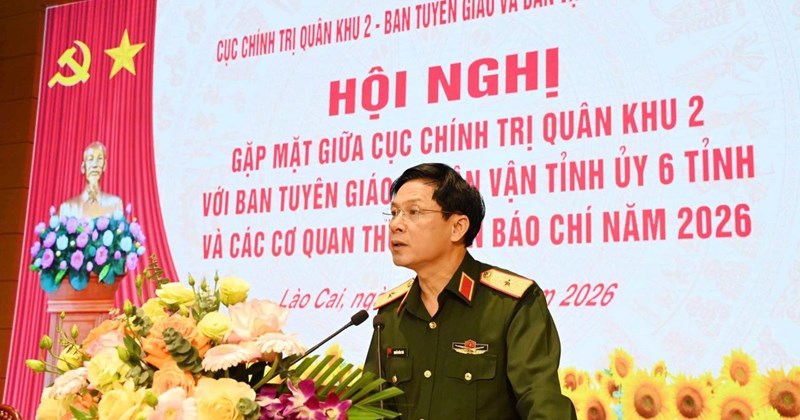
Military Region 2 and Lao Cai Provincial authorities recently convened a high-level conference to evaluate their joint propaganda and mass mobilization efforts, highlighting the critical intersection of regional development and national security. The meeting underscored both parties’ commitment to enhancing communication strategies in Vietnam’s northwestern border region.
Hoang Giang, Standing Deputy Secretary of the Lao Cai Provincial Party Committee, opened the session by highlighting Lao Cai’s notable socioeconomic achievements in 2025. He emphasized the profound political significance of the partnership between Military Region 2 and local authorities, describing it as essential for maintaining stability in this strategically important border province.
“This collaboration represents more than administrative coordination—it’s a cornerstone of our approach to regional development and security,” Giang noted in his address to assembled officials and media representatives.
According to reports presented during the conference, the coordination between Military Region 2’s Political Department and the Provincial Party Committee’s Propaganda and Mass Mobilization Department has yielded impressive results throughout 2025. Their joint efforts focused on promoting military and national defense priorities while supporting socioeconomic development initiatives and social security programs.
The propaganda strategy followed what officials termed the “6 more” approach: more timely communication, optimal time frames for messaging, visually compelling content, distinctive substance, diversified platforms, and broader dissemination. This comprehensive framework has allowed authorities to effectively reach communities throughout the province, including remote border areas where communication can be challenging.
Major General Nguyen Hong Thai, Deputy Political Commissar of Military Region 2, provided strategic direction during the conference, noting the significance of 2026 as both the first year of implementing the 14th Party Congress Resolution and the 80th anniversary of Military Region 2’s Traditional Day.
“Our propaganda efforts must continue to evolve and respond to emerging challenges,” Major General Thai stated. “We need to firmly grasp the Party’s guidelines while developing flexible, creative approaches that leverage technology and digital transformation.”
The Major General outlined several priority areas, advocating for a “clear people, clear tasks, clear time, clear responsibilities, clear products” methodology to guide future operations. He stressed the importance of strengthening connections with remote, isolated, and border communities while actively countering misleading information in digital spaces.
A significant portion of the strategy focuses on what officials called building a “people’s heart formation”—fostering strong bonds between military forces and local populations. This approach integrates propaganda work with practical economic development initiatives, poverty reduction programs, and cultural preservation efforts, particularly in ethnic minority communities that populate much of Lao Cai Province.
The conference also addressed specific operational concerns related to military recruitment, national defense education, civil defense protocols, and international defense relations—all vital components of Vietnam’s comprehensive security framework in the northern border region adjacent to China.
Duong Duc Huy, Head of Lao Cai’s Propaganda and Mass Mobilization Committee, facilitated discussions among delegates who shared experiences and proposed solutions to enhance coordination effectiveness, particularly in light of Vietnam’s ongoing implementation of the two-level local government model.
The gathering culminated with an awards ceremony during which 23 collectives and 55 individuals received Certificates of Merit from the Political Commissar of Military Region 2, recognizing their outstanding contributions to the joint propaganda efforts throughout 2025.
This conference reflects Vietnam’s consistent emphasis on the interrelationship between development and security, particularly in border provinces like Lao Cai that serve as both economic corridors and strategic buffer zones. As the country moves forward with implementing its latest Party Congress resolutions, the coordination between military and civilian authorities remains an essential component of Vietnam’s governance approach in regions of heightened strategic importance.
Fact Checker
Verify the accuracy of this article using The Disinformation Commission analysis and real-time sources.

11 Comments
This article highlights the delicate balance that governments must navigate between economic development, regional integration, and national security priorities, especially in strategically important border areas. The coordination between military and local authorities is an interesting approach, but the emphasis on propaganda is concerning.
Strengthening communication strategies and enhancing coordination between military and local authorities could potentially have positive impacts in terms of regional development and security. However, the heavy emphasis on propaganda is concerning and warrants closer scrutiny.
This article provides a glimpse into the complex web of regional dynamics and power structures in Vietnam’s northern border regions. The focus on propaganda and mass mobilization suggests an attempt to exert greater control and influence over these strategic areas.
The coordination between military and local authorities highlights the important intersection of economic development, regional integration, and national security priorities in this area. It will be interesting to see how these different factors are balanced and communicated to the public.
Curious to know more about the specific metrics and indicators used to evaluate the success of these propaganda and mobilization efforts.
The stated goals of maintaining stability and promoting socioeconomic progress are understandable, but the reliance on propaganda and mobilization techniques raises questions about the underlying motivations and potential risks involved.
It would be valuable to hear perspectives from independent observers and civil society groups to get a more balanced understanding of the situation on the ground.
Maintaining stability in border regions is certainly a critical national security concern. However, the focus on propaganda and mobilization raises some questions about the nature and intent of these efforts.
It would be helpful to get more transparency and independent analysis of the activities and outcomes to better understand the dynamics at play here.
Interesting to see the military and local authorities working together on propaganda and mobilization efforts in this strategic border region. Curious to learn more about the socioeconomic development plans and how they intersect with national security priorities.
The emphasis on enhancing communication strategies suggests a concerted effort to shape public opinion and narratives in this area. I wonder what the specific goals and messaging are around this coordination.