


Listen to the article
Military Junta Intensifies Air Campaign in Myanmar’s Chin State as Resistance Weakens
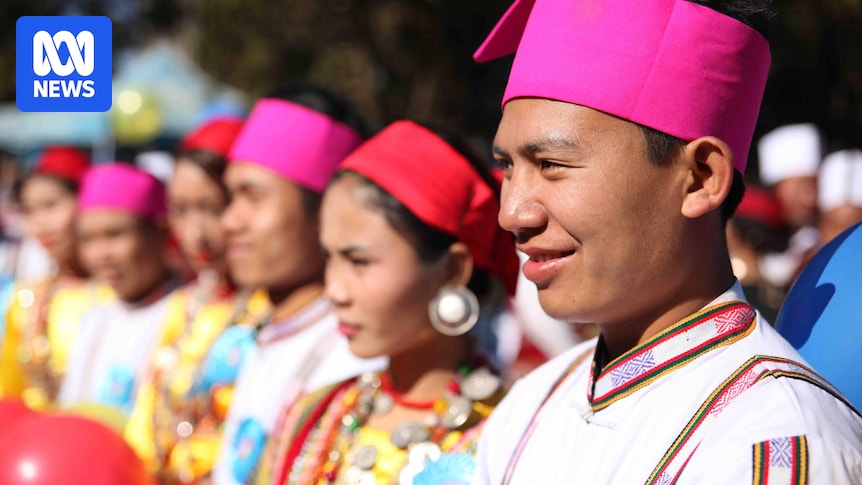
In Myanmar’s Chin State, a region typically alive with cultural celebrations during February’s Chin National Day, residents found little cause for festivity this year. Instead of traditional dances and ceremonial rifle fire, the mountainous northwestern state has been subjected to increased military bombardment targeting civilian areas.
“How can we celebrate when the military killed a two-year-old baby on the eve of National Day?” said local resident Thuy Win, speaking under a pseudonym due to security concerns.
Before the 2021 coup, Chin National Day was marked by vibrant cultural displays featuring tribal elders in hornbill-adorned headwear, marching bands, and community performances celebrating the region’s identity and self-governance aspirations. This year, however, senior military officials arrived by helicopter in the state capital Hakha for a ceremonial event that many locals deliberately boycotted.
“By associating themselves with Chin National Day, they are trying to attach themselves to something that is deeply important to the Chin people,” said Salai Za Uk Ling, director of the Chin Human Rights Organisation (CHRO). “The military wants to project some sort of normalizing of the situation — that they are in charge and that they can provide stability.”
Escalating Air Campaign
Since September last year, when the junta announced plans for elections, air strikes have intensified across Myanmar. According to Myanmar Peace Monitor data, military air attacks have killed at least 1,728 civilians in the past two years.
In recent weeks, as the regime prepares to seat a new parliament in April, the bombing campaign has continued unabated. Villages in Chin State report being bombed frequently, often preceding ground troop movements.
“People are really afraid,” said Za Uk. “As troops advance, they bomb ahead.”
The CHRO reported that four school children were among those injured when military forces bombed a medical dispensary in the town of Thantlang in early February.
“This attack demonstrates clear intent to target civilians and terrorize communities,” Za Uk said. “The deliberate bombing of a civilian village, followed by aerial circling consistent with ‘double-tap’ strike tactics, may constitute war crimes.”
A “double-tap” strike refers to a strategy of hitting the same location twice to maximize casualties among first responders to the initial attack.
Resistance Forces Under Pressure
Myanmar’s military is gradually reclaiming territory from resistance forces across several key regions, particularly in Chin State and neighboring Sagaing Division.
“What we’ve seen in the last few weeks is the military taking back major parts of resistance-held areas,” said John Quinley from human rights group Fortify Rights. “It’s not total collapse — but it’s erosion. And it’s happening on multiple fronts.”
Sagaing, long considered a stronghold of armed resistance, has been particularly affected. Resistance groups operate through interconnected networks of support across the country, and when one front struggles, others feel the impact.
“If they’re fighting to hold one area, they can’t support operations in Sagaing or Magway like they used to and redirect manpower,” Quinley explained.
Despite these setbacks, resistance groups continue to control significant territory nationwide. In areas under their authority, they are attempting to establish parallel governance systems aligned with the shadow National Unity Government in exile.
International Accountability Efforts
While international efforts to hold the junta accountable have progressed slowly, a significant development emerged recently when the government of Timor-Leste appointed a prosecutor to explore potential proceedings against the Myanmar military junta, including its leader, Min Aung Hlaing.
This action was triggered by the CHRO, which filed a criminal complaint with Timor-Leste’s Justice Department last month, alleging war crimes and crimes against humanity by the junta. The legal approach uses the doctrine of universal jurisdiction, which permits national courts to prosecute certain grave crimes regardless of where they were committed.
“It’s an amazing step toward accountability,” Quinley said. “A small state is saying it will not tolerate impunity.”
Even if senior generals never travel to jurisdictions where they face charges, arrest warrants can restrict their movement and signal that impunity is not absolute.
Human rights groups like Fortify Rights are also calling for new sanctions on the supply of jet fuel and dual-use equipment such as paragliders and paramotors, which the military uses to drop bombs. These low-tech aircraft allow the junta to circumvent international sanctions that restrict conventional military aircraft.
For communities in Chin State, however, such legal developments feel distant. The immediate reality is the difficult choices they face when military jets circle overhead.
“If we meet on the street, the junta could fire on us,” said Khun San, another resident using a pseudonym, who has collected tail fins from mortar bombs fired into villages. “People are scared of bombing when they go to their bean fields, but we have to harvest, or else we will starve.”
Fact Checker
Verify the accuracy of this article using The Disinformation Commission analysis and real-time sources.

10 Comments
It’s disturbing to see the Myanmar military exploiting cultural festivals to conceal their brutal crackdown on civilians. They are clearly trying to co-opt Chin National Day for propaganda purposes, which is despicable.
Agreed. By associating themselves with this meaningful cultural event, the military is attempting to whitewash their violent actions and portray themselves as supportive of Chin identity and self-governance.
This tactic of using festivals and celebrations for propaganda is unfortunately all too common among repressive regimes. It’s a cynical attempt to project an image of normalcy and stability while concealing the harsh realities on the ground.
You’re right. The military’s actions show a complete disregard for the Chin people and their cultural traditions. It’s a shameful attempt to legitimize their rule through false displays of patriotism.
It’s heartbreaking to hear that a 2-year-old child was killed on the eve of Chin National Day. The military’s continued bombardment of civilian areas is a grave violation of human rights that must be condemned.
Absolutely. The targeting of innocent civilians, including children, is a war crime that cannot be tolerated. The international community must take urgent action to hold the military junta accountable for these atrocities.
It’s deeply concerning to see the military using festivals and cultural events as a cover for their continued attacks on civilians in Chin State. This is a clear violation of the Chin people’s rights and must be condemned.
I agree. The international community needs to take stronger action to pressure the military junta and prevent them from exploiting cultural festivities for their own propaganda purposes.
The military’s attempt to co-opt Chin National Day is a transparent ploy to distract from their violent crackdown on the pro-democracy movement. It’s a cynical abuse of cultural heritage for political gain.
Well said. The military’s actions are a blatant disregard for the Chin people’s right to self-determination and autonomy. It’s a disturbing trend that must be challenged and reversed.