


Listen to the article
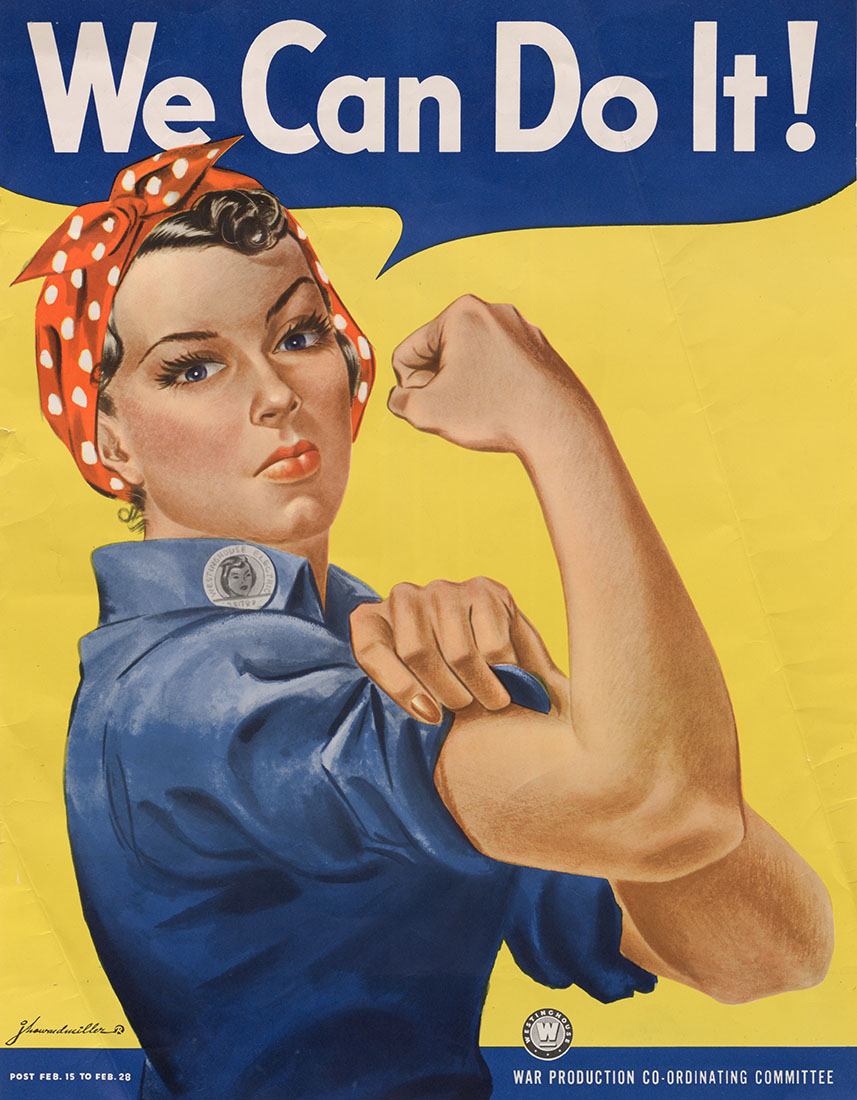
The Milford Museum is set to continue its popular American History Series with an insightful exploration of women’s portrayal in wartime media. Dr. Marguerite Hoyt will present “Glamour Girls: The Portrayal of Women in World War II Propaganda Posters, Films, and Vogue Magazine” on Saturday, March 14, at 1 p.m. at the Milford Public Library.
The presentation delves into the complex intersection of government propaganda, Hollywood glamour, and women’s roles during one of history’s most transformative conflicts. According to program materials, Dr. Hoyt’s research reveals how “propaganda is a tool that governments use to direct people to act in a certain way or to emulate certain behaviors. It is not always bad, but it is always biased.”
Dr. Hoyt’s work specifically examines the surprising ways Hollywood glamour influenced government-commissioned artwork during the war years. Her research analyzes imagery across various media platforms, including posters, magazines, and film, to demonstrate how popular culture shaped official messaging about women’s contributions to the war effort.
This presentation comes at a time of renewed interest in women’s wartime contributions, as historians continue to reevaluate the significant but often overlooked roles women played during World War II. The imagery from this period helped establish narratives about women’s capabilities that would later influence post-war gender dynamics across American society.
Dr. Hoyt brings impressive academic credentials to the presentation. She earned her Ph.D. in history from Johns Hopkins University in 2003 and has taught at several prestigious institutions including Catholic University of America, University of Maryland, Baltimore County, and Goucher College. Her teaching experience spans Women’s Studies and American History, and while at Goucher, she was instrumental in establishing assault and sexual harassment programs.
Since retiring from academia, Dr. Hoyt has remained active in the field as a history consultant and writer. Her scholarly work has appeared in “Readings in Gendered Communication” and the “Encyclopedia of War and American Society.” She has presented her research on images of women during World War II at both national and international conferences. Dr. Hoyt also appeared in the 2010 documentary film “Scrappers: How the Heartland Won World War II,” further demonstrating her expertise in this historical period.
The Milford Museum’s American History Series has become a valued community resource, offering monthly programs that explore various aspects of local, state, and national history. These educational presentations occur on the second Saturday of each month at 1 p.m. at the Milford Public Library, located at 11 S.E. Front Street in Milford.
The series reflects a broader trend among cultural institutions to provide programming that connects historical events to contemporary understanding, helping communities appreciate the complex factors that have shaped current social dynamics. The Delaware Heritage Commission provides grant support for these programs, underscoring the state’s commitment to historical education and preservation.
For Delaware residents interested in women’s history, World War II, or media studies, this presentation offers a unique opportunity to understand how visual culture influenced perceptions of gender during a critical period in American history. The exploration of propaganda techniques also provides valuable context for understanding how media continues to shape public perception today.
Those seeking more information about this presentation or the American History Series can contact the Milford Museum directly at 302-424-1080 or by email.
As communities nationwide prepare to commemorate Women’s History Month in March, programming like this highlights the ongoing work to recognize women’s historical contributions and understand the cultural forces that have shaped gender roles throughout American history.
Fact Checker
Verify the accuracy of this article using The Disinformation Commission analysis and real-time sources.

18 Comments
The Milford Museum’s program on women in WWII propaganda seems like an insightful exploration of how visual media can be used to shape public opinion, even if the underlying messaging is biased or incomplete. I’m curious to see how Dr. Hoyt’s research sheds light on those dynamics.
Agreed, understanding the nuances and contradictions in how propaganda utilizes popular culture is crucial. This presentation should provide valuable historical context on those complex interactions.
The Milford Museum’s exploration of women in WWII propaganda sounds like a timely and thought-provoking topic. I appreciate the nuanced perspective, acknowledging that propaganda is not inherently good or bad, but always carries biases.
Yes, unpacking the complex dynamics between government, popular culture, and gender roles during wartime will be a valuable lens into that historical period.
I’m really looking forward to learning more about how the glamour and allure of Hollywood influenced government-commissioned artwork and messaging during WWII. The interplay between popular culture and official propaganda must have been quite fascinating.
Yes, that’s a really intriguing angle. Exploring the ways in which those forces shaped perceptions of women’s wartime contributions should make for a thought-provoking presentation.
The Milford Museum’s program on women in WWII propaganda seems like an important reminder that visual media, even in service of government messaging, can have complex and far-reaching impacts on societal perceptions and norms.
Agreed, understanding how those dynamics played out during such a transformative time in history is crucial. This should be a thought-provoking and illuminating presentation.
The Milford Museum’s program on women in WWII propaganda seems like a timely and important examination of how visual media can be leveraged to advance specific narratives, even if those narratives don’t fully reflect reality.
Absolutely, understanding the biases inherent in propaganda, even when it’s not overtly ‘bad’, is crucial. This presentation should provide valuable historical context on those dynamics.
Examining the intersection of government propaganda, Hollywood glamour, and women’s roles during WWII is a fascinating topic. I’m eager to learn more about how those forces shaped the portrayal of women’s contributions to the war effort, and the lasting impact of those depictions.
Yes, that’s a really compelling angle. Unpacking the biases and assumptions inherent in those propaganda portrayals should make for a thought-provoking and illuminating presentation.
I’m intrigued by the idea of analyzing how Hollywood glamour influenced government-commissioned artwork during the war years. That intersection of popular culture and official propaganda messaging must have been quite powerful in shaping public perceptions.
Yes, that’s a really insightful angle to explore. I’m curious to see how Dr. Hoyt’s research unpacks the nuances and contradictions in those portrayals of women’s wartime roles.
Examining how the glamour of Hollywood intersected with official wartime messaging about women’s contributions is a fascinating angle. I’m curious to see how Dr. Hoyt’s analysis illuminates the subtleties and contradictions in these portrayals.
Absolutely, that interplay between propaganda and cultural influences is ripe for deeper exploration. This presentation should provide some insightful historical context.
Fascinating look at how propaganda used glamorous imagery to shape perceptions of women’s wartime roles. I’m curious to learn more about the complex interplay between Hollywood, government messaging, and cultural norms during WWII.
Agreed, the power of visual media to influence public opinion, even in service of propaganda, is quite remarkable. This should make for an insightful presentation.