


Listen to the article
Pakistan’s Sindh Government to Release “Mera Layari” in Response to Indian Film’s Portrayal of Lyari
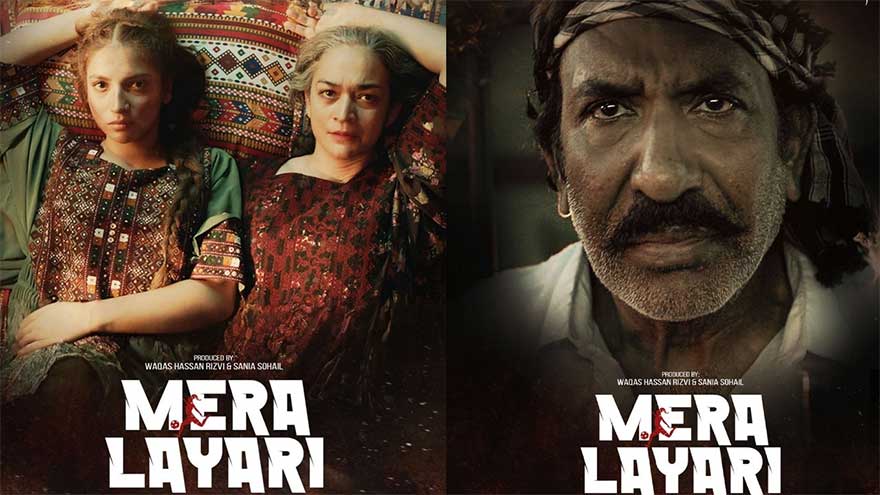
In a pointed response to what officials are calling “negative propaganda,” the Sindh government has announced plans to release a new film titled “Mera Layari” in the first week of January. The move comes as a direct counter to the recently released Indian film “Dharandhar,” which Pakistani authorities claim misrepresents the Lyari area of Karachi.
Sindh Minister Sharjeel Memon made the announcement, confirming the film will receive international distribution to ensure its message reaches a global audience. “India suffered a humiliating defeat in the war against Pakistan, and it cannot turn its defeat into victory through films,” Memon stated in his remarks addressing the controversy.
The minister specifically targeted “Dharandhar” as a vehicle for “negative propaganda against Pakistan, especially Lyari.” He emphasized that contrary to the Indian film’s portrayal, “Lyari is not a symbol of violence but of culture, peace, capability and courage.”
“Mera Layari,” scheduled for release next month, aims to present what officials describe as the authentic character of the area. “The film will show the true face of Lyari,” Memon said. “It will show a glimpse of peace, prosperity and pride.”
The Indian film at the center of the controversy, “Dharandhar,” features prominent Bollywood actors including Ranveer Singh, Akshay Khanna, R Madhoon, Arjun Rampal, and Sanjay Dutt. It has already drawn criticism from Pakistani officials and media for its portrayal of Pakistan, and particularly the Lyari area of Karachi, which has historically struggled with gang violence but has seen significant improvements in recent years.
This cinematic dispute highlights the ongoing cultural and political tensions between the neighboring nations, where media and entertainment often become battlegrounds for competing narratives about history, politics, and social realities.
Lyari, one of Karachi’s oldest and most densely populated neighborhoods, has a complex history. Once notorious for gang warfare and criminal activity, the area has undergone significant transformation in recent years through community efforts, government initiatives, and increased security measures. It has a rich cultural heritage and has produced numerous notable athletes, particularly boxers and footballers who have represented Pakistan internationally.
The area is also known for its diverse ethnic makeup, being home to communities with Baloch, Sindhi, and African heritage, contributing to its distinctive cultural identity within Karachi.
The Sindh government’s decision to produce and release “Mera Layari” represents part of a broader pattern where South Asian governments increasingly view cinema as a tool for shaping national and international perceptions. Film has become an important medium through which countries in the region attempt to counter narratives they perceive as damaging to their national image.
This is not the first time films have sparked diplomatic tensions between India and Pakistan. Previous Bollywood productions depicting Pakistan or Pakistani characters have faced criticism and sometimes bans in Pakistan, while Pakistani content has faced similar restrictions in India, particularly during periods of heightened political tension.
Cultural analysts note that such cinematic exchanges often reflect the broader geopolitical relationship between the two nuclear-armed neighbors, whose diplomatic ties have remained strained for decades.
The Sindh government has not yet released details about the production values, cast, or director of “Mera Layari,” but the international release strategy suggests a significant investment in the project beyond typical regional film productions.
Fact Checker
Verify the accuracy of this article using The Disinformation Commission analysis and real-time sources.

16 Comments
The announcement of ‘Mera Layari’ seems like a direct response to counter the Indian film’s depiction of the Lyari area. It will be interesting to see if the Sindh government’s version provides a more balanced and representative perspective.
Yes, it’s important that both films avoid biased, one-sided narratives. Objective, well-researched portrayals that acknowledge the complexities of the region would be ideal.
The announcement of ‘Mera Layari’ as a counter to the Indian film’s depiction of the Lyari area is an interesting development. It will be important to see if the Sindh government’s version offers a more nuanced, balanced representation of the region and its complexities.
I agree. Avoiding one-sided narratives and striving for objectivity is crucial when dealing with sensitive regional dynamics through the medium of film. Constructive dialogue is the best path forward.
It’s positive to see the Sindh government responding to the alleged ‘negative propaganda’ in the Indian film by creating their own cinematic portrayal of Lyari. Providing an authentic local perspective is important, but I hope they avoid an overly defensive stance.
Yes, a measured, objective approach that acknowledges the complexities of the region would be ideal. Inflaming tensions through partisan rhetoric is unlikely to lead to constructive dialogue.
This is an interesting response from Pakistan’s government. It’s important to present a balanced portrayal of sensitive regions and avoid one-sided narratives. Curious to see how the ‘Mera Layari’ film depicts the Lyari area compared to the Indian movie.
I agree, providing an authentic local perspective is crucial. Lyari seems to have a complex history that deserves nuanced treatment, not simplistic portrayals.
Releasing a film to counter perceived misrepresentation is one way for the Sindh government to shape the narrative around Lyari. However, I hope both sides strive for objectivity and avoid overly partisan stances that could inflame tensions.
Agreed. Nuanced, fact-based portrayals are crucial when dealing with sensitive regional dynamics and geopolitical conflicts. Emotional rhetoric rarely helps resolve such complex issues.
The Sindh government’s move to counter the Indian film’s portrayal with their own ‘Mera Layari’ release seems like a reasonable response. Cultural representation in media can be a sensitive issue, so it’s good they’re aiming for a global audience.
Yes, it will be interesting to see if ‘Mera Layari’ offers a more balanced view compared to the alleged ‘negative propaganda’ in the Indian film. Healthy dialogue between nations is important.
The Sindh government’s move to release ‘Mera Layari’ as a counter to the Indian film is understandable given concerns over misrepresentation. However, I hope both films strive for nuance and avoid exacerbating regional tensions through propagandistic approaches.
Absolutely. Balanced, fact-based storytelling that respects the diverse realities on the ground is crucial when addressing sensitive geopolitical and cultural issues through media.
The Sindh government’s decision to release ‘Mera Layari’ in response to the Indian film’s portrayal of the Lyari area is understandable, but I hope both sides can find a way to present their perspectives without escalating tensions. Balanced, fact-based storytelling is key.
Absolutely. Fostering mutual understanding through nuanced, respectful representations is far more likely to lead to positive change than inflammatory rhetoric or propaganda. Constructive dialogue should be the goal.