


Listen to the article
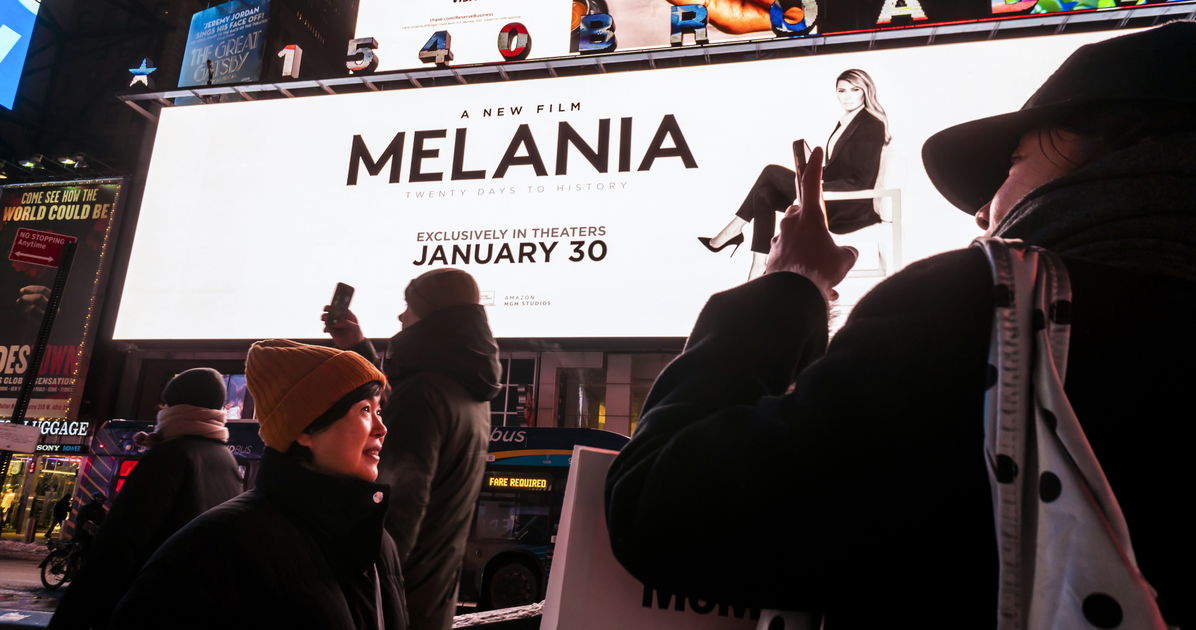
Former First Lady Melania Trump’s documentary, produced by Brett Ratner and funded by Jeff Bezos, is facing significant scrutiny amid allegations of manipulated viewership data and contentious music licensing issues.
The documentary, simply titled “Melania,” has struggled at the box office despite efforts from the Trump camp to present it as a success. Reports indicate that bulk ticket purchases by Trump supporters were allegedly presented as organic box office sales. Additionally, Rotten Tomatoes ratings for the film reveal a stark contrast between critic and audience scores—the film holds a dismal 11% from professional critics but boasts a 98% audience score, raising questions about authenticity.
Producer Marc Beckman addressed these concerns in a recent Variety interview, dismissing the criticism by stating, “It’s OK that a majority of the people who went to see it were fans of hers.” However, industry observers note the suspicious pattern of first-time Rotten Tomatoes users leaving glowing reviews, suggesting a coordinated effort to artificially inflate the film’s public perception.
The documentary’s production faced additional challenges regarding music licensing. Several prominent artists, including Grace Jones, Guns N’ Roses, and the Prince estate, explicitly refused to allow their music to be used in the project. Renowned composer Jonny Greenwood reportedly objected to the use of his “Phantom Thread” score, but the production utilized it anyway through licensing company agreements that circumvented direct artist approval.
Beckman made claims about securing Mick Jagger’s “blessing” for the film, stating that the Rolling Stones classified it as a “nice movie.” Variety’s fact-checking, however, could not verify these assertions, noting that ABKCO—not the band members themselves—controls the Rolling Stones’ catalog licensing.
The documentary’s content has also raised eyebrows. Critics point to a notable lack of substance, with the 90-minute runtime struggling to present meaningful insights into the former First Lady’s personality or accomplishments. One sequence features Melania spending time with Father Enrique Salvo at St. Patrick’s Cathedral, which some promotional materials frame as evidence of her Catholic faith—a characterization that critics find thinly supported.
The film comes at a time when Melania Trump maintains a characteristically low profile. Her absence from public events has been notable, including reports that even her son did not attend the Kennedy Center premiere of the documentary.
Music selection for the film proved particularly challenging. With many contemporary artists unwilling to associate with the Trump brand, the production reportedly relied heavily on purchased catalogs from artists who no longer control their own licensing rights. Beckman attempted to frame this as a positive, suggesting these obstacles led to “a more rich visual and sonic experience than typical for a documentary.”
Media analysts note the documentary appears to follow a pattern of Trump-related messaging that prioritizes perception over substance. The aggressive promotion continues despite poor critical reception and lackluster box office performance, reflecting the Trump team’s long-established approach of treating negative coverage as preferable to no coverage at all.
For Melania Trump, who has historically maintained a reserved public persona, the documentary represents a rare attempt at shaping her public narrative—though critics question whether the final product accomplishes this goal or further obscures an already enigmatic public figure.
Fact Checker
Verify the accuracy of this article using The Disinformation Commission analysis and real-time sources.

7 Comments
Hmm, the music licensing issues for this documentary are concerning. I hope the producers can resolve those challenges. It would be a shame if the film’s creative vision is compromised due to legal troubles.
I agree, the music licensing issues could really undermine the final product. Hopefully they can find a resolution that works for all parties involved.
The Melania Trump documentary seems to be facing some challenges with its public image and reception. It’s interesting to see the contrast between critic and audience reviews, and the allegations of manipulated viewership data. I wonder what the real story is behind this production.
While the producer’s dismissal of the criticism is understandable, the concerns raised about the film’s reception seem valid. It will be interesting to see how this all plays out and whether the documentary’s issues can be resolved.
The contrast between the critic and audience scores on Rotten Tomatoes is quite stark. I’m curious to learn more about the allegations of coordinated efforts to inflate the public’s perception of the film. It’s important to get to the bottom of these kinds of issues.
Absolutely, the discrepancy in ratings is very curious. Transparency around audience engagement and review authenticity is crucial, especially for high-profile projects like this.
Interesting to see the claims of bulk ticket purchases by Trump supporters being presented as organic box office sales. That raises some red flags about the film’s true popularity and reception. I wonder how common these kinds of tactics are in the industry.