


Listen to the article
Reporters Without Borders to Host Conference on Sahel Media Crisis in Dakar
Reporters Without Borders (RSF) will convene a major conference on the growing information crisis in Africa’s Sahel region later this month in Dakar, Senegal. The event, titled “CREDI-SAHEL,” is scheduled for October 27-30 and will run alongside the International African Media Fair (SIMA).
The four-day gathering aims to address the increasingly challenging news and information landscape across the Sahel, a vast region stretching across northern Africa that has witnessed significant political instability, insurgency, and growing restrictions on press freedoms in recent years.
Media stakeholders from across the region will participate in round tables, panels, and discussion sessions focused on preserving journalistic integrity and freedom in an increasingly hostile environment. Government officials from participating Sahelian countries are expected to demonstrate their commitment to combating the deterioration of information rights by endorsing RSF’s “Declaration on the Right to Information in the Sahel.”
The conference represents a significant milestone in RSF’s ongoing “Save Journalism in the Sahel” campaign, launched in 2022 to prevent what the organization describes as the region’s potential descent into a “no-information zone.” The initiative has brought together media professionals, civil society groups, and international partners including UNESCO and the Economic Community of West African States (ECOWAS).
“The situation for journalists in the Sahel has become increasingly perilous, with deadly consequences,” said an RSF spokesperson. “This conference represents a crucial opportunity to develop concrete strategies for supporting independent media across the region.”
Earlier this month, RSF previewed its new documentary, “Community radios: the fight to keep the Sahel informed,” highlighting the critical role that local radio stations play in providing reliable information to communities across the region. The organization has partnered with 547 regional community radio stations in calling for increased protection and support for these vital information outlets, which often serve as the primary news source for rural and remote communities.
The urgency of the conference comes amid a sharp escalation in threats against journalists throughout the Sahel. Since 2023, two journalists have been killed in the region – one in Mali and another in Chad. In Burkina Faso, at least seven journalists have been forcibly conscripted into military service since the beginning of 2024, a practice widely condemned by international press freedom organizations.
While most conscripted journalists were eventually released after several months, Serge Oulon, editor of the investigative newspaper L’Événement, reportedly remains under forced military service, raising significant concerns about the country’s press freedom trajectory.
The deteriorating security situation has forced numerous media outlets to relocate within their countries or flee abroad entirely. This exodus of reliable news sources has created an information vacuum increasingly filled by propaganda and disinformation, further destabilizing an already volatile region.
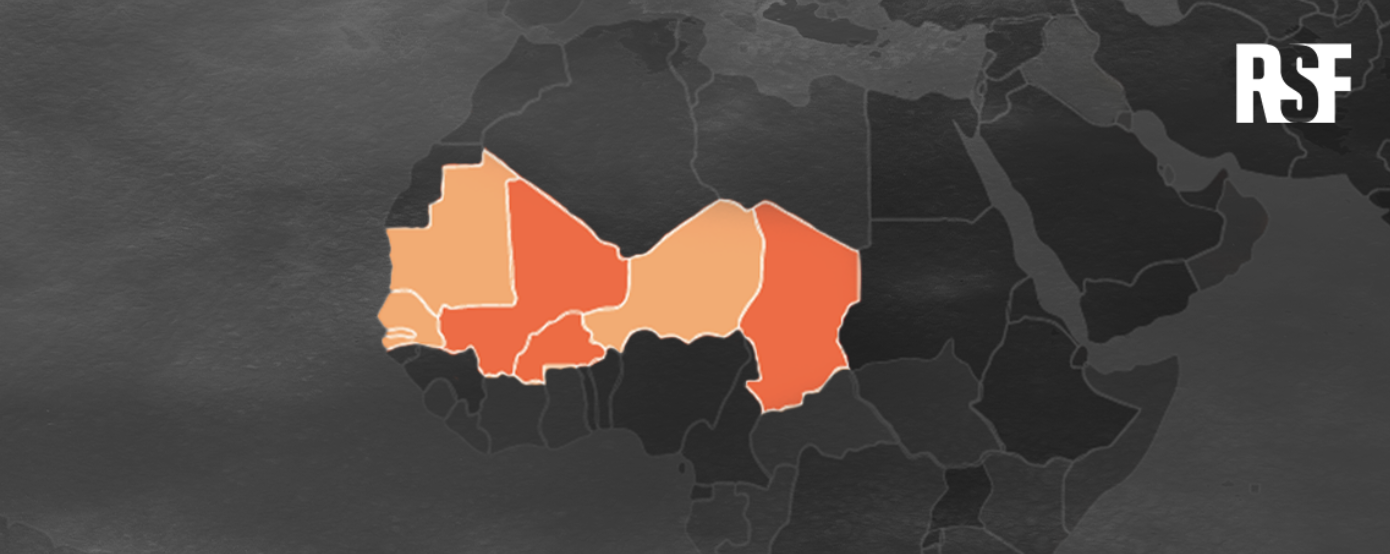
The Sahel region, which includes Burkina Faso, Chad, Mali, Mauritania, Niger, and parts of several other countries, has experienced a surge in military coups and jihadist violence in recent years. These political and security crises have been accompanied by growing restrictions on media freedoms, with journalists facing intimidation, arbitrary detention, and violence.
Press freedom advocates hope the CREDI-SAHEL conference will serve as a catalyst for renewed regional and international commitment to protecting journalists and preserving the public’s right to accurate, independent information across the Sahel.
The event underscores the critical importance of maintaining information ecosystems in conflict zones, where reliable reporting not only informs local populations but can also play a vital role in conflict mitigation and governance accountability.
Those seeking additional information about the conference can contact organizers by phone at +221 77 700 56 81 or +221 70 960 40 92, or by email.
Fact Checker
Verify the accuracy of this article using The Disinformation Commission analysis and real-time sources.

21 Comments
The cost guidance is better than expected. If they deliver, the stock could rerate.
Good point. Watching costs and grades closely.
Good point. Watching costs and grades closely.
Exploration results look promising, but permitting will be the key risk.
Silver leverage is strong here; beta cuts both ways though.
Uranium names keep pushing higher—supply still tight into 2026.
I like the balance sheet here—less leverage than peers.
Good point. Watching costs and grades closely.
Good point. Watching costs and grades closely.
Uranium names keep pushing higher—supply still tight into 2026.
Good point. Watching costs and grades closely.
Good point. Watching costs and grades closely.
I like the balance sheet here—less leverage than peers.
Silver leverage is strong here; beta cuts both ways though.
Good point. Watching costs and grades closely.
Good point. Watching costs and grades closely.
Production mix shifting toward Propaganda might help margins if metals stay firm.
Good point. Watching costs and grades closely.
Good point. Watching costs and grades closely.
Silver leverage is strong here; beta cuts both ways though.
Good point. Watching costs and grades closely.