


Listen to the article
MEA Dismisses “Misleading Propaganda” Over Bangladesh High Commission Protests
The Ministry of External Affairs (MEA) has strongly refuted claims circulating in Bangladeshi media regarding protests outside the Bangladesh High Commission in New Delhi. In a statement issued Sunday, MEA spokesperson Randhir Jaiswal clarified that no attempts were made to breach the diplomatic compound’s perimeter during the demonstrations.
“We have noted misleading propaganda in sections of the Bangladesh media on the incident,” Jaiswal said. According to the MEA, approximately 20-25 youth gathered outside the High Commission on December 20 to protest the killing of Dipu Chandra Das in Bangladesh’s Mymensingh district and to call for the protection of minorities in the neighboring country.
The ministry emphasized that the protesters never attempted to create a security situation, and police stationed at the location dispersed the group within minutes. “Visual evidence of these events is available publicly for all to see,” the statement noted, adding that India remains committed to ensuring the safety of foreign diplomatic missions in accordance with the Vienna Convention.
The protests in Delhi came amid escalating tensions in Bangladesh following two high-profile deaths. The South Asian nation has been experiencing widespread unrest since the death of student leader Sharif Osman Hadi, who succumbed to injuries sustained in an assassination attempt on December 12 in Dhaka. Hadi, who served as spokesperson for Inqilab Mancha, was airlifted to Singapore for treatment but died despite medical intervention.
Hadi’s death triggered massive public demonstrations across Bangladesh, with protesters flooding Dhaka and surrounding areas. The interim government led by Nobel laureate Muhammad Yunus has promised “no leniency” toward those responsible for the assassination.
Compounding the volatile situation was the brutal lynching of Dipu Chandra Das, a 27-year-old Hindu man, who was killed by a mob over alleged blasphemy. In a particularly disturbing development, his body was reportedly set on fire on Friday. This incident has sparked outrage across India, particularly among Hindu communities concerned about religious minorities in Bangladesh.
The situation highlights the fragile religious tensions that continue to simmer in Bangladesh, where Hindus constitute approximately 8 percent of the predominantly Muslim population. Violence against religious minorities has been a recurring issue in the country’s turbulent political landscape.
India and Bangladesh typically maintain close diplomatic relations, with both nations sharing a 4,096-kilometer border and numerous cultural and historical ties. However, incidents involving religious minorities often create diplomatic friction between the neighbors.
The current interim government in Bangladesh, which took power following the ouster of former Prime Minister Sheikh Hasina earlier this year, faces significant challenges in maintaining law and order while addressing deep-rooted political and religious divisions.
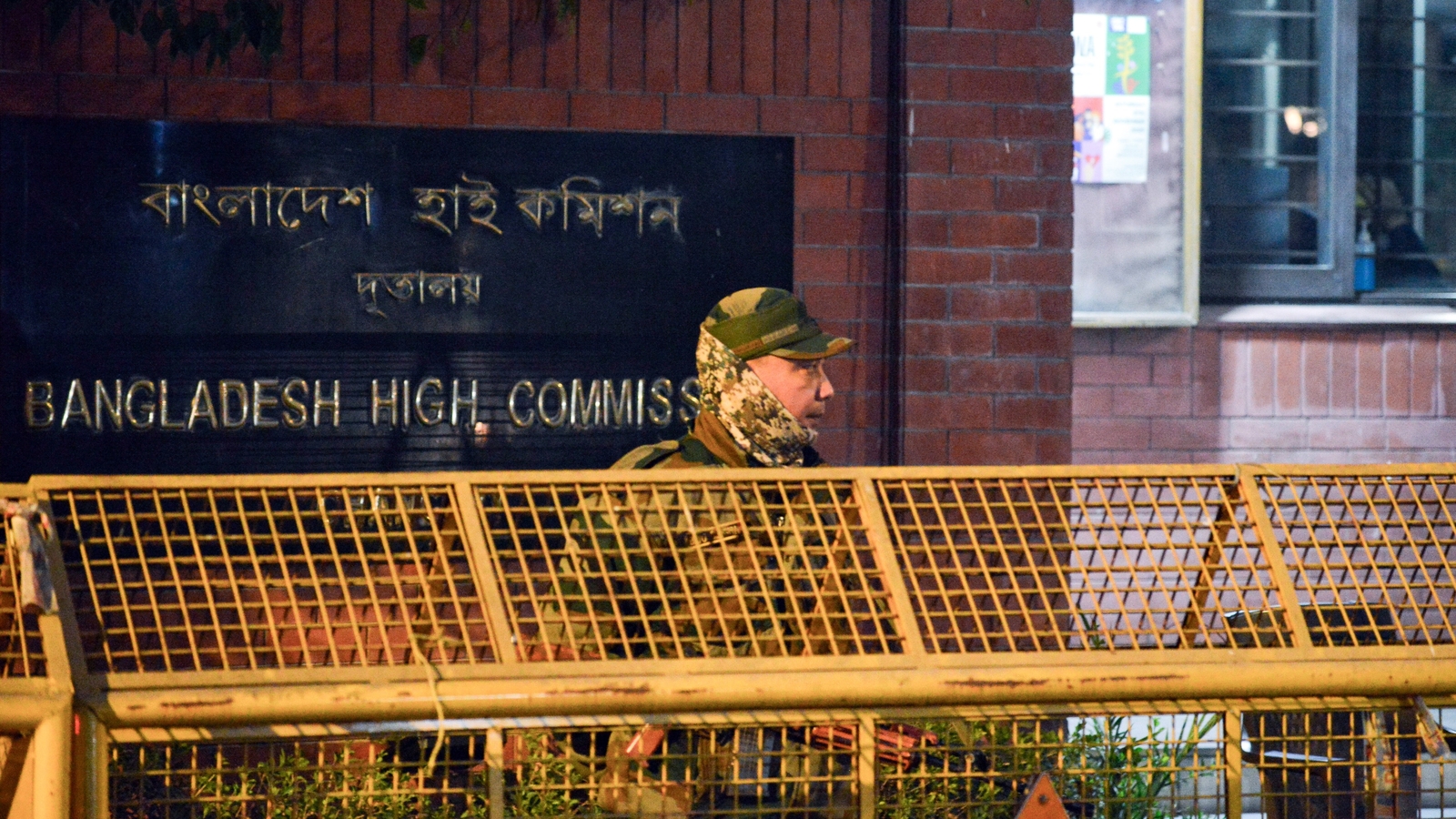
Security has been visibly heightened around the Bangladesh High Commission in New Delhi, with officials maintaining vigilance to prevent any further demonstrations from escalating.
The MEA’s swift response to what it termed “misleading propaganda” underscores India’s sensitivity to how such incidents are portrayed internationally, particularly in bilateral relations with immediate neighbors in South Asia. The ministry appears determined to counter any narrative suggesting inadequate protection for foreign diplomatic missions on Indian soil.
As Bangladesh continues to navigate its complex political transition, incidents like these highlight the interconnected nature of regional stability and the potential ripple effects of domestic unrest across national boundaries.
Fact Checker
Verify the accuracy of this article using The Disinformation Commission analysis and real-time sources.

9 Comments
Interesting to see the MEA’s response to the protests at the Bangladesh High Commission. It’s important to get accurate information out there and avoid misleading propaganda on both sides.
Agreed. Maintaining diplomatic relations and ensuring the safety of foreign missions is crucial, even in the face of protests. The MEA seems to have handled this situation responsibly.
This incident highlights the importance of reliable, fact-based reporting on geopolitical issues that can impact commodity markets and mining operations. I’ll be keeping a close eye on developments in this region.
As an investor, I’m curious to see how this diplomatic dispute might impact trade and investment flows between India and Bangladesh, particularly in the mining and commodities sectors.
That’s a good point. Any disruption to regional stability and cooperation could have economic implications, especially for industries like mining that rely on cross-border supply chains.
The tensions between India and Bangladesh over minority rights and security are concerning. I hope both sides can work to address these issues through open dialogue and diplomatic channels.
Absolutely. Inflammatory rhetoric and protests are unlikely to resolve these complex problems. Constructive engagement and a focus on facts will be key.
The MEA’s statement about ensuring the safety of foreign diplomatic missions is reassuring, but the underlying tensions seem difficult to resolve. I hope both countries can find a constructive way forward.
Agreed. Maintaining the rule of law and upholding international conventions is crucial, but the root causes of these disputes need to be addressed through patient negotiation and compromise.