


Listen to the article
Lukashenko’s Religious Display: When Faith Becomes Political Theater
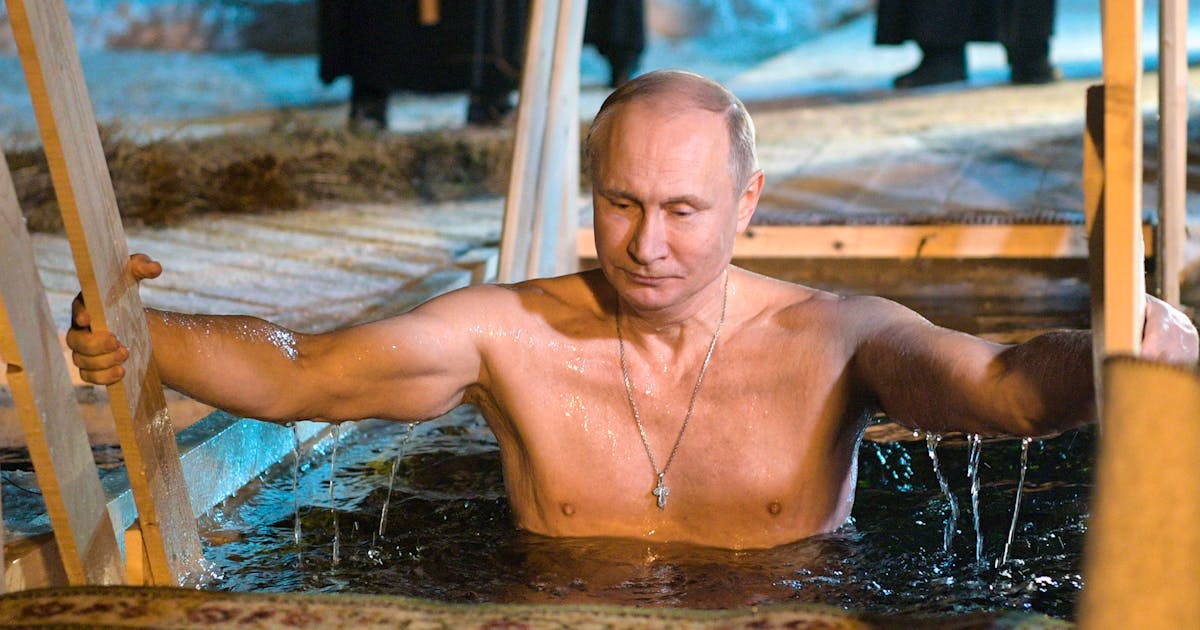
When Belarusian President Alexander Lukashenko plunged into the icy waters during Orthodox Epiphany celebrations this week, cameras were rolling. The footage, promptly distributed by his own press office, showed the authoritarian leader participating in a centuries-old religious tradition. But experts note that the carefully choreographed event represents something beyond simple religious devotion.
The Orthodox Epiphany ritual, where believers immerse themselves in freezing water to commemorate Jesus’s baptism in the Jordan River, traditionally symbolizes purification, spiritual renewal, and communal faith. Across Belarus, Russia, and other predominantly Orthodox countries, millions of ordinary citizens participate in this ritual each January, often in humble, personal ceremonies.
Lukashenko’s participation, however, transforms this sacred tradition into political theater, according to religious and political analysts. “When autocrats take to the ice, it’s rarely about faith alone, but about projecting power and legitimacy,” explains Dr. Elena Korosteleva, Professor of International Politics at the University of Kent and specialist in Belarus studies.
The public nature of his participation—complete with professional videography and press distribution—reveals the calculated nature of the display. Unlike ordinary citizens whose participation is primarily spiritual, Lukashenko’s ritual bathing serves multiple political purposes.
“These displays create a narrative that the leader shares the values and traditions of ordinary people,” notes Sergei Karaganov, a political scientist specializing in post-Soviet states. “It’s a powerful visual that humanizes otherwise distant authoritarian figures while simultaneously reinforcing their connection to national identity and tradition.”
This intersection of religion and politics is not unique to Belarus. Across the post-Soviet space, political leaders frequently employ religious imagery and participate in Orthodox ceremonies to bolster their standing. Russian President Vladimir Putin has similarly been photographed participating in the Epiphany ritual, creating powerful imagery that reinforces his cultivated image as a defender of traditional values.
For Lukashenko, who has ruled Belarus with an increasingly iron grip since 1994, such displays serve additional purposes amid growing international isolation. Following the disputed 2020 election and subsequent crackdown on opposition, Lukashenko faces sanctions from Western nations and growing diplomatic pressure.
“By embracing Orthodox traditions so publicly, Lukashenko appeals to conservative constituencies both domestically and in neighboring Russia,” says Maria Kolesnikova, an Eastern European political analyst. “It’s a visual reminder of Belarus’s cultural alignment with Russia rather than Europe, reinforcing his geopolitical positioning.”
The timing of this year’s display also coincides with increasing economic challenges in Belarus and continued reports of human rights abuses. Human rights organizations have documented over 1,300 political prisoners in the country, with many opposition leaders either imprisoned or forced into exile.
For ordinary Belarusians, the Epiphany celebration remains primarily a religious event, despite its political appropriation. Thousands participate in the ritual away from cameras and political messaging, maintaining the spiritual essence of the tradition.
Religious scholars point out that such political appropriation of sacred rituals is not new. Throughout history, rulers have incorporated religious ceremonies into their public personas to reinforce authority and claim divine sanction for their leadership.
“What makes modern examples like Lukashenko’s particularly effective is the immediate global distribution of these images,” explains Dr. Thomas Johnson, a specialist in religion and politics at Oxford University. “Within minutes, millions can see these carefully staged moments of apparent piety and strength.”
As Belarus continues to navigate its complicated relationship with both Russia and the West, such symbolic displays will likely remain part of Lukashenko’s political strategy—merging ancient traditions with modern political messaging to maintain his grip on power.
Fact Checker
Verify the accuracy of this article using The Disinformation Commission analysis and real-time sources.

10 Comments
While the Orthodox Epiphany celebration holds deep spiritual significance for many, Lukashenko’s participation appears to be a calculated move to bolster his image. It’s a concerning trend when political leaders exploit religious ceremonies for their own agenda.
I agree. Faith should not be reduced to mere political theater. Lukashenko’s actions undermine the authentic religious meaning of this tradition and raise questions about his respect for the separation of church and state.
The contrast between Lukashenko’s scripted display and the humble, personal ceremonies of ordinary citizens is striking. It’s a stark reminder that for some leaders, religious rituals are more about PR than genuine spirituality.
Absolutely. When religious observances become political props, it erodes public trust and undermines the sanctity of these traditions. Lukashenko’s exploitation of the Epiphany celebration is a concerning development.
It’s disheartening to see authoritarian figures like Lukashenko and Putin co-opt religious ceremonies for their own gain. These sacred traditions should be preserved for the faithful, not used as political theater.
I share your sentiment. The politicization of religion is a worrying trend that we must be vigilant about. Maintaining the integrity of spiritual practices is crucial, especially in the face of autocratic attempts to manipulate them.
Lukashenko’s public display during the Orthodox Epiphany celebration is a clear attempt to project an image of piety and legitimacy. But his authoritarian rule and human rights abuses undermine any genuine spiritual resonance.
You’re absolutely right. When political leaders prioritize image over substance, it erodes public trust and undermines the true meaning of religious traditions. Lukashenko’s actions are a concerning example of this troubling trend.
Lukashenko’s public Orthodox ritual seems more about political posturing than genuine spiritual devotion. Authoritarian leaders often use religious ceremonies to project an image of legitimacy and piety, even if their actions contradict the faith’s core tenets.
You make a good point. Religion can be a powerful tool for autocrats to manipulate public perception and consolidate their grip on power. It’s concerning to see these sacred traditions co-opted for political gain.