


Listen to the article
Russian propagandists falsely attribute nuclear assessment to Western think tank in latest disinformation effort, experts reveal.
Ukraine’s Center for Countering Disinformation has exposed a significant Russian disinformation operation involving fabricated statements allegedly made by the Institute for the Study of War (ISW), a respected Western research organization.
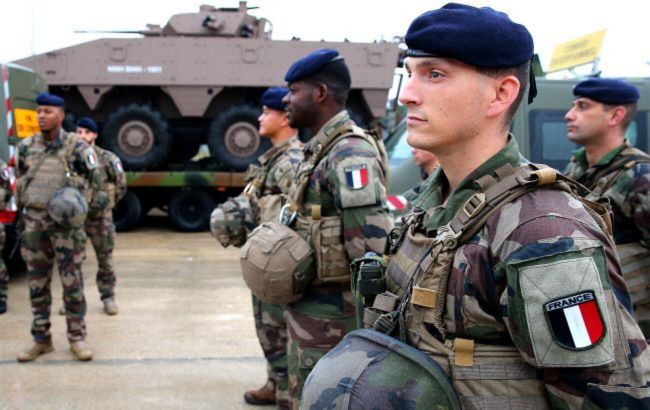
According to specialists from the Center, Russian operatives created and distributed false claims that the ISW had conducted a technical audit of France’s nuclear capabilities with unfavorable results. The Center emphasized that the ISW has published no such assessment and, importantly, does not conduct technical evaluations of NATO countries’ nuclear arsenals as part of its mission.
“The fake follows a typical Kremlin pattern: a fabricated statement attributed to a reputable Western institution is used to discredit France, its defense capability, and President Emmanuel Macron, as well as to create the illusion of ‘NATO weakness,'” the Center explained in its statement.
Analysts at the Ukrainian agency believe this disinformation campaign represents a deliberate attempt to undermine trust in European institutions and sow discord among NATO allies. The false claims about French nuclear capabilities appear designed to create doubt about European defense readiness at a time of heightened tensions with Russia.
This incident is part of an escalating pattern of sophisticated Russian disinformation tactics. RBC-Ukraine previously reported on the widespread use of AI-generated fake content about the Ukrainian city of Kupiansk, a strategically important location in the ongoing conflict.
Andrii Kovalenko, head of the Center for Countering Disinformation and an officer in the Ukrainian Defense Forces, noted that Russian propagandists were specifically tasked with spreading false claims that Ukrainian President Volodymyr Zelenskyy “was not in Kupiansk” and that the city “is under Russian control” – despite neither assertion being true.
The sophistication of these efforts has increased, with Russian operatives producing convincing fake videos using artificial intelligence tools. In some cases, they have been careless enough to leave visible watermarks from the AI generation software, allowing experts to identify the manipulated content.
Russian disinformation efforts have also extended to social media platforms like TikTok, where videos featuring AI-generated “Ukrainian soldiers” have begun circulating again. These fabricated characters claim to be positioned at various sections of the frontline and speak of a supposed “collapse of defenses,” “Russian penetration of the flanks,” “chaos within units,” and “indifference of commanders.”
Intelligence analysts emphasize that these psychological operations have specific strategic goals: to demoralize Ukrainian military personnel, erode trust between soldiers and their leadership, and spread a sense of hopelessness among both fighters and civilians.
In another concerning development, fake TikTok videos are being distributed claiming a “mass surrender” of Ukrainian troops near Pokrovsk, a critical front-line city that has seen intense fighting in recent months. These claims have been refuted by Ukrainian authorities.
The targeting of Pokrovsk is particularly significant as it represents a key logistics hub for Ukrainian forces in the eastern Donetsk region. Creating false narratives about Ukrainian surrenders there appears aimed at undermining morale in a strategically vital area.
These increasingly sophisticated disinformation campaigns highlight Russia’s continued investment in information warfare as a complementary strategy to conventional military operations. By leveraging artificial intelligence and targeting respected Western institutions, Moscow seeks to shape perceptions of the conflict both within Ukraine and among its international supporters.
Western intelligence agencies and disinformation experts continue to work closely with Ukrainian counterparts to identify and counter such campaigns before they gain significant traction in global media ecosystems.
Fact Checker
Verify the accuracy of this article using The Disinformation Commission analysis and real-time sources.

10 Comments
This is a concerning example of Russian disinformation tactics. Falsely attributing assessments to reputable Western organizations is a common Kremlin strategy to sow discord and undermine trust. Glad the Center for Countering Disinformation was able to swiftly debunk these fabricated claims.
Indeed, the Kremlin seems intent on discrediting France and NATO at every turn. We must remain vigilant against such blatant propaganda efforts.
Wow, the level of detail and coordination in this Russian disinformation campaign is truly concerning. Fabricating statements from a respected Western think tank to attack France’s nuclear capabilities – it’s a worrying sign of the Kremlin’s willingness to go to great lengths to sow discord.
Agreed. This underscores the urgent need for robust fact-checking and public awareness initiatives to counter these malicious attempts to undermine democratic institutions and alliances.
It’s alarming to see the lengths Russia will go to in spreading disinformation. Fabricating assessments from respected think tanks is a new low. Glad the truth is being exposed, but this highlights the urgent need to counter Kremlin propaganda more effectively.
Absolutely. Debunking these false claims is crucial, but the larger challenge is addressing the root problem of Russian disinformation campaigns targeting the West. Strengthening resilience and media literacy is key.
This is a textbook example of the Kremlin’s disinformation playbook. Fabricating assessments from reputable Western organizations to discredit adversaries is a common tactic. Kudos to the experts who exposed this latest attempt to sow discord and erode trust in European institutions.
Absolutely. The Kremlin’s relentless propaganda efforts underscore the urgent need for robust fact-checking and public awareness campaigns to counter these malicious attempts to manipulate information.
This is a classic Kremlin tactic – creating and spreading false narratives to undermine adversaries. Attributing a non-existent nuclear assessment to the ISW is a particularly brazen attempt to discredit France and the broader NATO alliance. Kudos to the Ukrainian experts for exposing this disinformation.
It’s disheartening to see the Kremlin resort to such blatant lies and propaganda. Falsely attributing a technical nuclear assessment to the ISW is a new low, even for Russian disinformation tactics. I’m glad the Ukrainian Center for Countering Disinformation was able to quickly refute these claims.