


Listen to the article
In a political landscape charged with anticipation, tensions are rising in Kogi State as the 2027 gubernatorial election approaches. Political stakeholders from Kogi West Senatorial District are pushing back against what they describe as a fabricated “one-term pact” designed to deny their region its rightful turn at the governorship.
Since Kogi State’s creation in 1991, power has rotated between only two of the state’s three senatorial districts. Kogi East held the governorship for sixteen years, while Kogi Central will have completed twelve years by 2027. Throughout this period, Kogi West has remained on the sidelines of executive leadership, despite contributing significantly to the state’s political ecosystem.
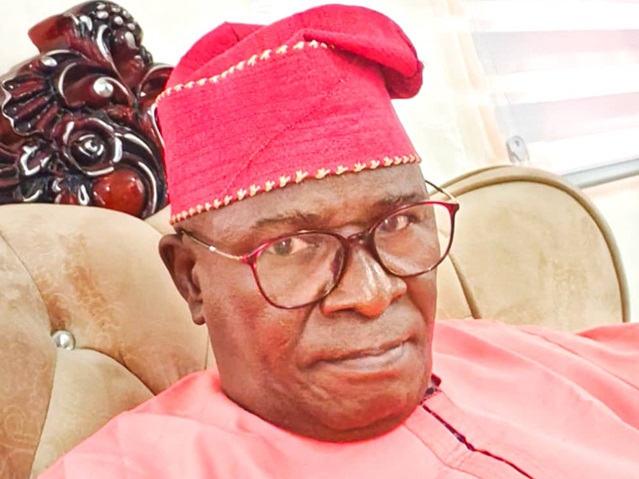
Political analyst and foundational member of the All Progressives Congress (APC), Musa Asiru Bakare, has characterized the emerging “one-term pact” narrative as a desperate attempt to maintain the status quo. “This sudden resurrection of one-term propaganda is no coincidence,” Bakare stated in a recent analysis. “It is the final murmur of a political order that senses its moral authority waning.”
The controversy centers on claims that high-profile political figures, including President Bola Ahmed Tinubu and Representative James Abiodun Faleke, have endorsed an arrangement limiting the next governor to a single term. Bakare vehemently denies these assertions, calling them “a fraud” and “sacrilege against truth.”
Political observers note that power rotation has become increasingly contentious in Nigerian states, with marginalized regions seeking representation after decades of perceived exclusion. The Kogi situation mirrors similar tensions in other states where power imbalances have created political flashpoints.
The state’s tripartite structure makes equitable distribution of power not merely a political nicety but a necessity for long-term stability. “Power hoarded corrodes; power shared heals,” Bakare remarked, highlighting the potential consequences of continued exclusion.
What makes the Kogi scenario particularly significant is the timing. As 2027 approaches, the state is reaching a critical juncture where historical imbalances could either be corrected or further entrenched. The outcome will likely influence political alignments beyond state boundaries, potentially affecting federal relationships as well.
Demographic data shows Kogi West constitutes approximately one-third of the state’s population, yet it remains the only senatorial district not to have produced a governor since the state’s creation. This statistical reality has fueled growing calls for rotation as a matter of equitable representation rather than political favor.
The agitation for power shift transcends individual ambitions, according to Bakare. “This is not about any individual; it is about fate,” he emphasized. The movement has reportedly gained momentum across professional groups, traditional institutions, and youth organizations throughout Kogi West.
Political scientists have long observed that stability in heterogeneous societies often depends on power-sharing arrangements that acknowledge the legitimacy of all constituent parts. The current situation in Kogi represents a test case for how Nigeria’s democratic institutions handle demands for inclusion from marginalized regions.
The controversy also highlights the sometimes opaque nature of political agreements in Nigeria’s democratic practice. While informal power-rotation agreements exist in many states and at the federal level, their non-constitutional nature means enforcement relies largely on political goodwill and public pressure.
As the debate intensifies, stakeholders from all three senatorial districts will likely be drawn into more explicit discussions about the future of governance in Kogi State. The resolution of this impasse could establish precedents for how similar disputes are handled in other states facing comparable challenges of equitable power distribution.
Whether Kogi West’s aspirations will materialize in 2027 remains uncertain, but what is clear is that the issue has moved from political backrooms to the center of public discourse in the state. As Bakare concludes, “The march toward equity is irreversible, and the cry for justice will echo until Lugard House reflects the full moral, cultural, and political symmetry of Kogi State.”
Fact Checker
Verify the accuracy of this article using The Disinformation Commission analysis and real-time sources.

9 Comments
This situation in Kogi State highlights the importance of strong democratic institutions and the need for transparent and fair electoral processes. I hope the relevant authorities can investigate these claims thoroughly and take appropriate actions to ensure that all voices are heard and represented.
The allegations of a fabricated “one-term pact” are quite serious and warrant close scrutiny. It’s essential that the political process in Kogi State is conducted in a manner that upholds democratic principles and gives all stakeholders a fair chance to participate.
The rotation of power between the senatorial districts in Kogi State seems like an important factor in maintaining a balanced and inclusive political landscape. Denying representation from Kogi West would be a concerning development and could undermine public trust in the electoral process.
The analysis by Musa Asiru Bakare raises some interesting points about the motivations behind the “one-term pact” narrative. I’ll be curious to see how this situation unfolds and whether the political process can be safeguarded to ensure a fair and inclusive election.
This is a complex and sensitive political issue, and it’s important that all voices are heard and represented fairly. I hope the relevant authorities can investigate these claims thoroughly and work to ensure a transparent and equitable electoral process.
The claims of a fabricated “one-term pact” to deny Kogi West’s rightful turn at the governorship are quite serious. I’m curious to learn more about the political dynamics at play and what steps might be taken to ensure an equitable electoral process.
Absolutely, transparency and fairness in the electoral process are crucial. I hope the relevant authorities investigate these allegations thoroughly and take appropriate actions to uphold democratic principles.
It’s concerning to hear about the potential manipulation of the political landscape in Kogi State. The rotation of power between the senatorial districts is an important factor to consider, and denying representation from Kogi West would be a concerning development.
This sounds like a politically charged situation in Kogi State. It’s concerning to hear about potential efforts to deny representation from the Kogi West region, which has been underrepresented in the past. I hope the political process can be fair and transparent for all stakeholders involved.