


Listen to the article
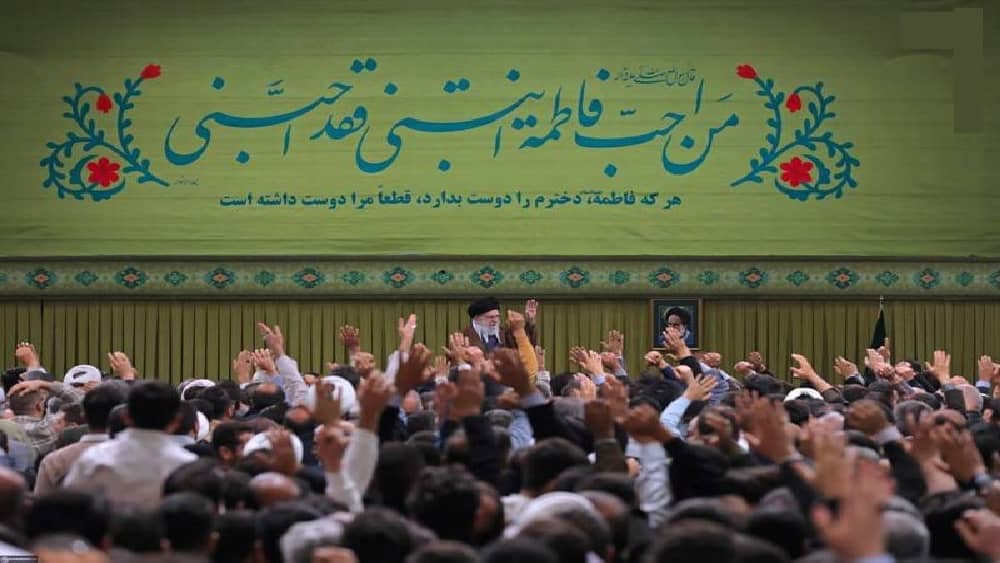
In a revealing three-hour address on Thursday, Iran’s Supreme Leader Ali Khamenei shifted his strategic focus from military threats to what he termed a “propaganda and media war” – signaling growing concern about the regime’s domestic legitimacy amid mounting internal challenges.
Speaking to a carefully selected audience of pro-government religious eulogists, Khamenei painted a picture of an ideological battlefield where the real struggle is over the hearts and minds of Iranians. “We are now beyond the military clashes,” he declared, characterizing the United States as the central figure in a “broad front” of opposition that includes European nations and Iranian exiles, whom he dismissed as “mercenaries,” “traitors,” and “stateless” people.
The speech marked a significant departure from typical rhetoric by explicitly acknowledging the widespread economic and social hardships facing Iranians. Khamenei conceded that “shortages and problems across the country are many,” though he carefully avoided attributing these difficulties to governance failures. Instead, he reframed these challenges as evidence of national resilience, praising what he described as the public’s “steadfastness” and “pursuit of justice.”
In a telling moment, Khamenei referenced the chronic dust storms plaguing Khuzestan province, only to minimize their significance by calling them among the “smallest” of the country’s problems. This selective acknowledgment appears designed to recognize widespread suffering without accepting responsibility for systemic issues.
Analysts note Khamenei’s warning against “repeated speculation about renewed fighting” represents an attempt to calm a nervous base. “Some repeatedly raise the possibility of a repeat military clash,” he said, while others “deliberately fan” such discussions to maintain public anxiety – suggesting the regime views domestic unrest as a greater threat than external military confrontation.
The Supreme Leader’s most pointed remarks concerned identity and cultural influence. He accused unnamed enemies of trying to make “people gradually forget the revolution, its goals, and the legacy of its founding leader.” Describing this as a well-funded cultural campaign, Khamenei claimed “billions” are being spent to influence young Iranians, specifically naming writers, artists, and “Hollywood” as instruments in this effort.
Perhaps most revealing was Khamenei’s operational guidance to his audience. He instructed the religious eulogists to function as a national infrastructure for ideological transmission – what he called a “base” for building and spreading the “literature of resistance.” His military-inspired approach was explicit: “Just as Iran would arrange its forces in response to a military threat, it must adopt the correct arrangement in the propaganda and media confrontation.”
This media strategy extends beyond mere defense. “Do not suffice with defending against what the adversary casts as doubts,” Khamenei instructed. “The enemy has many weak points – target them and attack them.”
The regime has already begun institutionalizing this narrative control through “Balagh Mobin,” described as a “hybrid war” headquarters involving more than 40,000 clerics and seminarians. Unlike conventional public relations, this organization focuses on perception management – countering dissent by recasting it as foreign interference.
Political observers view these efforts as evidence that earlier messaging campaigns, notably the “jihad of clarification,” failed to prevent the 2022 nationwide uprising. The regime appears to be responding to its declining credibility by intensifying control over information flows rather than addressing the underlying causes of public discontent.
Khamenei’s strategic pivot comes amid persistent economic difficulties, environmental crises, and simmering social tensions that have repeatedly erupted into protests in recent years. By framing the primary battlefield as informational rather than military, the Supreme Leader tacitly acknowledges the growing gap between state narratives and lived realities for many Iranians.
As one Tehran-based political analyst who requested anonymity explained: “When a government invests this heavily in controlling information rather than solving problems, it reveals deep insecurity about its own legitimacy. The battlefield Khamenei describes isn’t against foreign enemies – it’s against Iranians who no longer believe the official story.”
Fact Checker
Verify the accuracy of this article using The Disinformation Commission analysis and real-time sources.

6 Comments
This speech provides a rare window into the internal struggles within the Iranian regime. Khamenei’s acknowledgment of economic and social hardships, while carefully avoiding blame, suggests the regime is grappling with significant domestic challenges that could undermine its legitimacy.
It’s interesting to see Khamenei shift the focus to the ‘propaganda war’ rather than military threats. This could indicate a recognition that the regime’s real battle is for the hearts and minds of the Iranian people, who are facing mounting economic and social challenges.
The Iranian regime’s emphasis on the ‘propaganda and media war’ highlights their vulnerability to external and internal narratives. Khamenei’s dismissal of Iranian exiles as ‘mercenaries’ and ‘traitors’ suggests the regime is feeling threatened by alternative voices and perspectives.
Khamenei’s speech suggests the Iranian regime is feeling the pressure of mounting internal challenges, from economic hardship to eroding public support. The acknowledgment of ‘shortages and problems’ is a rare admission, even if he tries to frame it as ‘national resilience’. The propaganda battle is clearly a priority now.
You’re right, this speech marks a significant departure from the regime’s typical rhetoric. The shift in focus from military threats to the ‘propaganda war’ reveals the regime’s growing concern about its domestic legitimacy.
Fascinating insight into the internal dynamics in Iran. Khamenei’s focus on the ‘propaganda war’ signals a shift away from military threats and an acknowledgment of growing domestic challenges. It will be interesting to see how the regime tries to address these issues through media control and messaging.