


Listen to the article
‘Kerala Story 2’ Ignites Debate on Cinema, Religion, and Political Propaganda
The controversial film “The Kerala Story 2: Goes Beyond” has sparked renewed debate across Kerala and India about the intersection of cinema, religion, and political messaging. Following its contentious predecessor, the sequel has drawn criticism from both the ruling Communist Party of India (Marxist)-led Left Democratic Front and the opposition Congress-led United Democratic Front in Kerala for allegedly portraying Muslims as “love jihadists” who lure Hindu women into marriage for religious conversion.
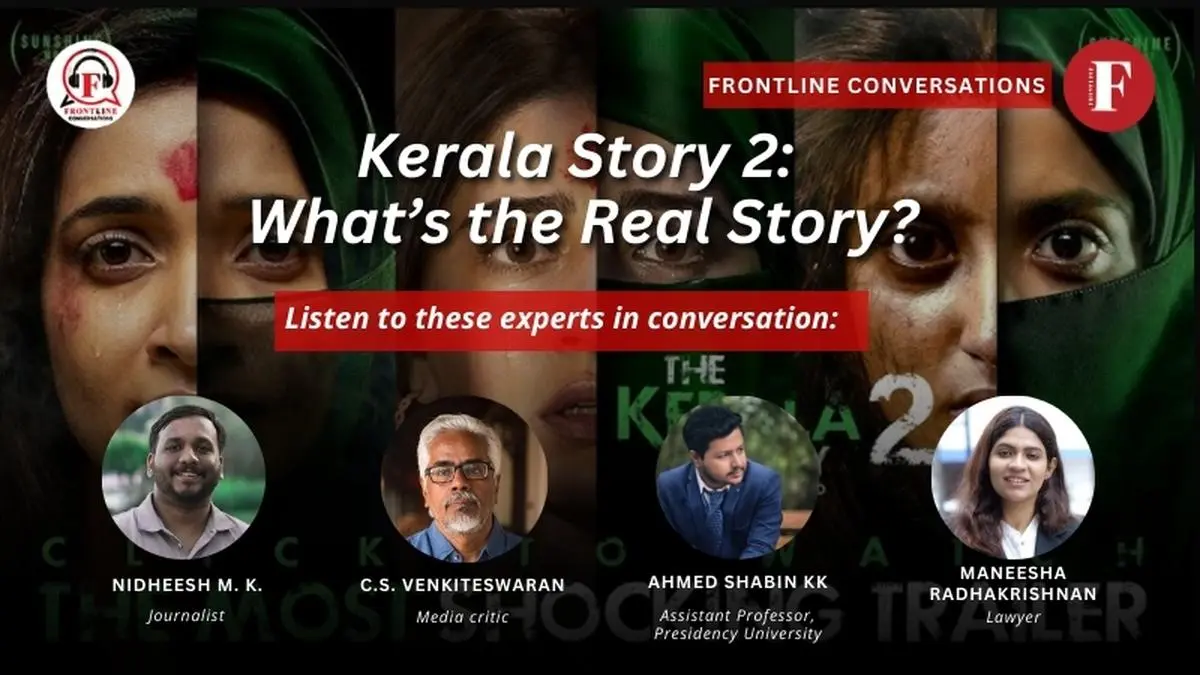
At a recent panel discussion organized by Frontline magazine, experts examined how the film constructs fear and contributes to what they describe as a growing ecosystem of propaganda films in India. Film critic C.S. Venkiteswaran shared a troubling anecdote about the film’s reach: “While traveling in Kutch, school children approached me asking if ‘The Kerala Story’ was true. I was shocked that these films are being shown widely to children, who are naturally influenced.”
The panel highlighted concerns about the film’s claims regarding “love jihad,” a term that has been repeatedly debunked by multiple investigations. Lawyer and activist Maneesha Radhakrishnan emphasized, “Not a single love jihad case has been officially reported—there is not one single FIR in Kerala regarding love jihad.” She noted that the government itself stated in the Lok Sabha in February 2020 that no such concept exists in the country.
Critics argue the film is part of a larger pattern of propaganda cinema that has emerged in recent years. Academic Ahmed Shabin K.K. identified a trend including titles like “Prime Minister Narendra Modi,” “The Tashkent Files,” “Kashmir Files,” and others that receive institutional support while films with opposing viewpoints face censorship challenges.
The panelists also raised concerns about inconsistencies in the censorship process. They pointed to instances where films depicting ordinary aspects of Kerala life, such as beef consumption, face censorship hurdles, while propagandistic content receives certification without issue. “When the state is supporting majoritarian narratives, where do you go? Whom do you appeal to?” asked Venkiteswaran.
The controversy extends beyond artistic expression to questions about the selective application of censorship standards and the financial backing behind such productions. “The monetary aspect of these films is kept deliberately hidden,” noted Shabin, who suggested a comprehensive investigation into the funding sources would be revealing.
The Kerala High Court has already observed that the film portrays an entire community negatively in ways that could potentially incite tensions in a state known for its communal harmony. Critics worry that for many Indians outside Kerala, such films may constitute their only exposure to the state’s culture and society.
Kerala Tourism’s creative response to the controversy—posting “We have no beef with anyone” on social media—represents one example of pushback. Panelists suggested that beyond legal challenges and political opposition, everyday Keralites sharing their actual lived experiences might provide the most effective counter-narrative to the film’s portrayal.
The discussion reflects broader concerns about the changing media landscape in India, where panelists argue traditional checks and balances against divisive content have weakened. “What they are doing is pushing outrageous lies into public discourse,” said Venkiteswaran. “By constantly pushing such lies into the public sphere, you normalize them and make them legitimate—you make them discussable.”
As “The Kerala Story 2” nears release, the controversy highlights ongoing tensions about representation, religious harmony, and the responsibilities of filmmakers when addressing sensitive social issues. For many observers, the debate isn’t simply about one film but about the direction of public discourse in India and the role media plays in shaping perceptions of communities and regions.
Fact Checker
Verify the accuracy of this article using The Disinformation Commission analysis and real-time sources.

8 Comments
The political nature of this film is quite troubling. Using cinema as a vehicle for propaganda, rather than objective storytelling, is concerning. I hope experts and critics can shed light on the real motives and impact behind these types of films.
Yes, it’s critical to scrutinize how films can be leveraged for political messaging, especially around sensitive religious and social issues. Nuanced, fact-based discussions are needed to counter misinformation.
The panel discussion highlights some valid concerns about the real-world impacts of this film. Exposing impressionable young minds to these types of narratives is deeply worrying. We need more nuanced, evidence-based storytelling in cinema, not political agendas.
Showing this film to impressionable children is extremely irresponsible. They should not be exposed to such biased and potentially damaging narratives. Filmmakers have a duty of care when it comes to the influence of their work, especially on young audiences.
This film sounds quite controversial and concerning. Portraying Muslims as ‘love jihadists’ is a dangerous and misleading narrative that contributes to rising religious tensions. It’s troubling to hear it’s being shown to impressionable schoolchildren.
I agree, spreading propaganda and manufactured fear through films is deeply problematic. Responsible filmmaking should avoid promoting harmful stereotypes or dividing communities.
This is a concerning example of how cinema can be weaponized for political propaganda. The ‘love jihad’ claims have been thoroughly debunked, yet this film seems intent on perpetuating harmful stereotypes. Responsible media is crucial for a healthy democracy.
I agree, the dissemination of misinformation through film is extremely problematic. Fact-checking and critical analysis of these types of movies is essential to counter the spread of propaganda.