


Listen to the article
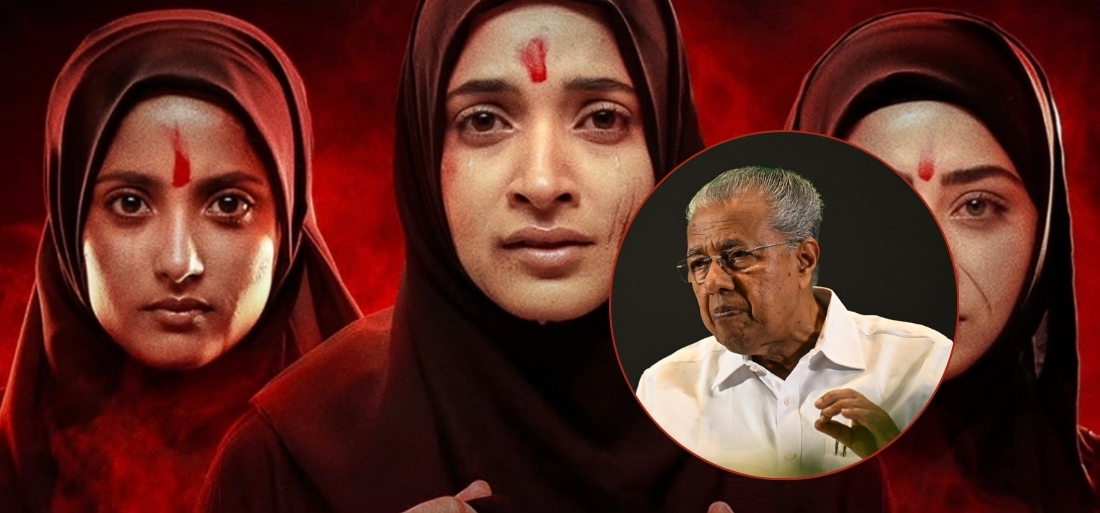
New controversy has erupted over “The Kerala Story 2: Goes Beyond” after its trailer release, with Kerala Chief Minister Pinarayi Vijayan issuing a strong condemnation of the film, which claims to depict cases of forced religious conversions in the state.
The sequel follows the commercially successful first installment, which despite facing widespread criticism and bans in some regions, managed to earn Rs 300 crore worldwide and won two National Film Awards for Best Director and Best Cinematography.
In a statement released by his office on Wednesday, Chief Minister Vijayan accused the filmmakers of deliberately spreading misinformation about Kerala. “They are spreading false propaganda by portraying even marriages conducted with mutual consent as examples of communalism and forced religious conversion,” the statement read.
Vijayan emphasized that such portrayals are harmful to Kerala’s reputation as a state known for religious harmony and secular values. He characterized the filmmakers as “enemies of the state” and suggested the film represents an attempt to disturb the peace in a region that has historically maintained positive interfaith relations and avoided communal violence.
“We must collectively reject attempts to portray Kerala, a land of religious harmony that stands at the forefront of sustainable development and is a model in maintaining law and order, as a center of terrorism,” Vijayan stated. He called on citizens to uphold the state’s secular foundation against what he termed “false propaganda.”
The controversy highlights ongoing tensions between artistic expression and regional sensitivities in India’s politically diverse landscape. Kerala, governed by a Left Democratic Front coalition led by the Communist Party of India (Marxist), has long positioned itself as a bastion of secular values and communal harmony in contrast to more polarized regions.
Producer Vipul Amrutlal Shah defended the film in a statement to Hindustan Times, insisting that it draws from authentic cases. “The three stories that we selected, we could not just tell their stories but took many incidents from other girls’ lives and made them part of their stories,” Shah explained. He claimed the film aims to represent the “all-India situation” rather than focusing solely on Kerala.
Directed by Kamakhya Narayan Singh, “The Kerala Story 2: Goes Beyond” is scheduled for theatrical release on February 27. The first film in the series, directed by Sudipto Sen and starring Adah Sharma, Sonia Balani, Yogita Bihani, and Siddhi Idnani, became a flashpoint for debate about religious conversion narratives in Indian cinema.
The original film faced accusations of exaggerating statistics and promoting communal stereotypes. Critics argued it misrepresented Kerala’s social fabric, while supporters defended it as bringing attention to legitimate concerns about religious extremism and human trafficking.
This new controversy emerges amid increasing tensions over religious-themed content in Indian cinema, with several recent films drawing both praise and criticism for their handling of sensitive communal issues. The film industry has become a battleground for competing narratives about India’s religious diversity, with different political factions often taking strong positions on film content that addresses interfaith relations.
As the release date approaches, the debate over “The Kerala Story 2” is likely to intensify, with potential implications for its theatrical distribution in Kerala and other states where the previous film faced resistance from government authorities and civil society groups.
Fact Checker
Verify the accuracy of this article using The Disinformation Commission analysis and real-time sources.

10 Comments
Religious harmony and secular values are certainly important principles, but the chief minister’s response also seems heavy-handed. I hope there can be a more balanced public dialogue about the film’s content and its implications for Kerala.
It will be interesting to see how this controversy plays out and whether the filmmakers stand by their depiction of religious issues in the state, or if they make any concessions in response to the government’s criticism.
Allegations of ‘false propaganda’ are serious, but I’d like to understand more about the specific claims and evidence presented in ‘The Kerala Story 2’ before rushing to judgment. Nuance is important when dealing with complex social and religious issues.
The Chief Minister’s characterization of the filmmakers as ‘enemies of the state’ is a very strong statement. This suggests the government sees the film as a serious threat to Kerala’s reputation and stability.
The Kerala government’s response to this film sequel is quite forceful, accusing the filmmakers of deliberately spreading misinformation. I wonder if there’s a middle ground where the film’s perspective can be heard without harming Kerala’s reputation.
Given the commercial success of the first ‘Kerala Story’ film, it seems the filmmakers see an audience for this type of narrative. But the Chief Minister’s comments indicate they’ve struck a nerve in the state.
This controversy over ‘The Kerala Story 2’ seems rife with political tensions and accusations of false propaganda. I’m curious to learn more about the factual basis behind the claims made by both sides.
It’s concerning to see such strong rhetoric from the Chief Minister labeling the filmmakers as ‘enemies of the state’. This suggests deep divisions over the film’s portrayal of religious issues in Kerala.
This is a complex issue where reasonable people may disagree. I appreciate the chief minister’s concerns about preserving Kerala’s reputation, but censorship and demonization of the filmmakers is not the answer. Open and respectful debate is needed.
The chief minister’s statement that the film represents an ‘attempt to disturb the peace’ is concerning. I hope the situation does not escalate in a way that undermines Kerala’s tradition of interfaith harmony.