


Listen to the article
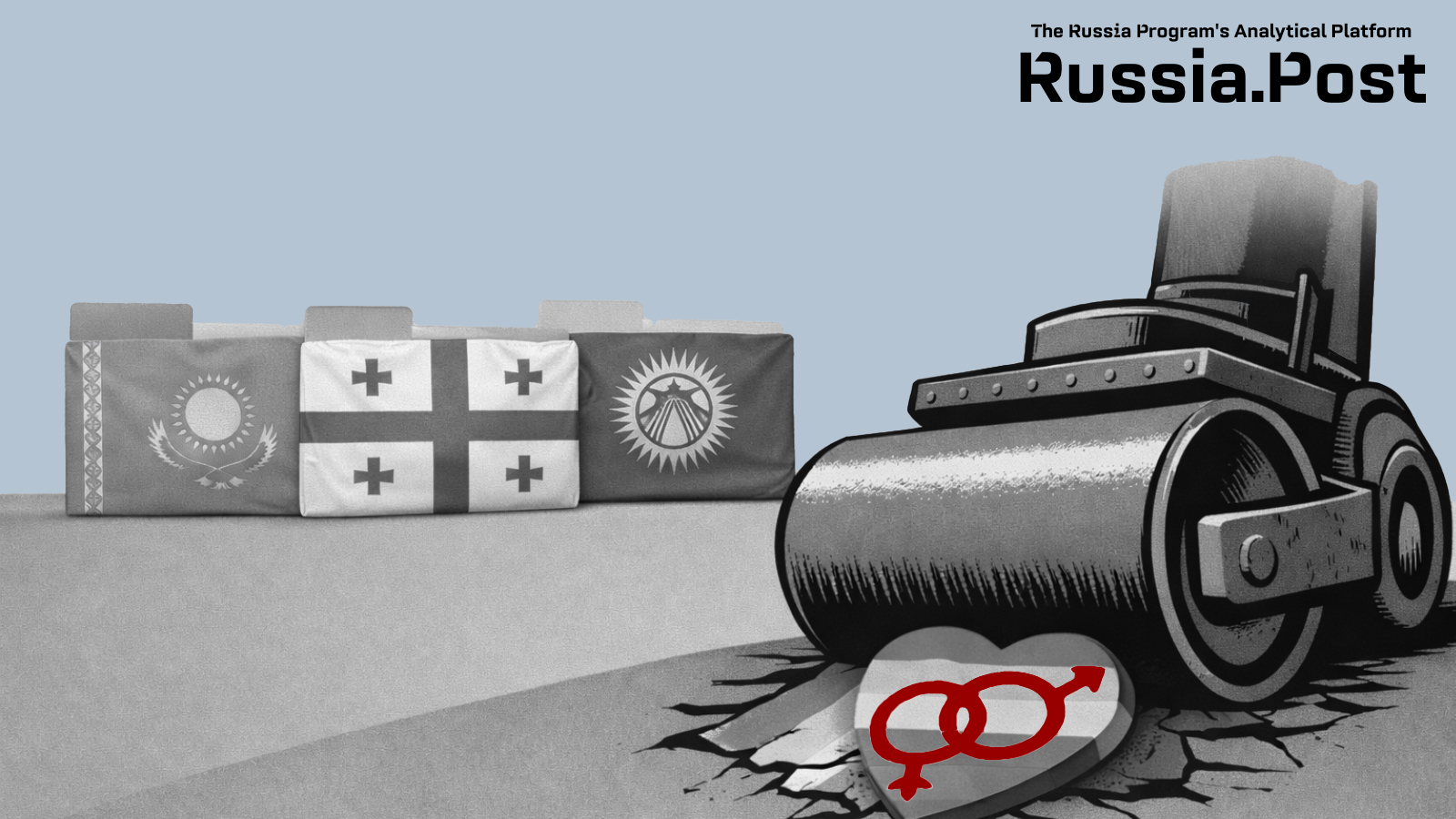
In a move reflecting a troubling trend across post-Soviet states, Kazakhstan’s parliament has passed legislation banning what it terms “LGBT propaganda,” placing the country on track to join a growing bloc of former Soviet nations codifying homophobia into law. The bill, which awaits final approval from the Senate and President Kassym-Jomart Tokayev’s signature, signals Kazakhstan’s alignment with Russia’s intensifying crackdown on LGBTQ+ rights.
The legislation would require mandatory labeling of all public materials containing LGBTQ+ themes, including books, films, and media content. Violations could result in fines or detention, while giving authorities broad powers to suspend access to websites and digital platforms. The parliamentary action follows a 2024 petition that garnered 50,000 signatures from Kazakhstani citizens calling for restrictions on public LGBTQ+ representation.
While Russia’s aggressive anti-LGBTQ+ stance has certainly influenced this development, Kazakhstan’s move also reflects deeper historical patterns. The resurgence of state-sanctioned homophobia across the post-Soviet space stems from both current regional politics and unresolved Soviet legacies that each nation has processed differently since independence.
During the Soviet era, approaches to homosexuality varied significantly across the Union. Some republics treated it primarily as a religious transgression, others as a criminal offense, and still others as a medical condition requiring intervention. These regional differences became increasingly apparent in the final years of the Soviet Union and evolved distinctly after its collapse in 1991.
The post-Soviet landscape initially showed promise for LGBTQ+ rights in several countries. Ukraine abolished its sodomy law in 1991 with notable support from officials who viewed gay rights as integral to broader human rights concerns. Russia followed in 1993 under Boris Yeltsin, quietly repealing its sodomy law after government representatives engaged in open debate about decriminalization.
A gradual wave of decriminalization followed throughout the region: Latvia in 1992, Lithuania in 1993, Belarus in 1994, and Moldova in 1995. The Central Asian republics generally moved in this direction later, with Kazakhstan, Kyrgyzstan, and Tajikistan decriminalizing homosexuality in 1998. South Caucasus nations were slower still, with Georgia and Azerbaijan acting in 2000 and Armenia in 2003. Only Uzbekistan and Turkmenistan maintained their Soviet-era sodomy laws.
However, these legal reforms rarely reflected genuine societal acceptance. Instead, they represented a political abdication of responsibility, leaving LGBTQ+ communities to navigate lingering homophobia without government protection. In countries struggling to build democratic institutions after decades of Soviet rule, challenging entrenched prejudices proved exceptionally difficult.
The vacuum created by this approach has allowed homophobia to reemerge in modernized forms. Rather than criminalizing homosexuality directly, as in the Soviet era, many post-Soviet states now target “propaganda” and public visibility – approaches pioneered by Russia’s 2013 legislation and dramatically expanded in recent years.
Kazakhstan’s pending legislation reflects this evolution. By targeting media representation and public expression rather than private conduct, the law creates a mechanism for state control over LGBTQ+ visibility while claiming to protect “traditional values” – language increasingly common across the region.
Human rights organizations have expressed alarm at Kazakhstan’s legislative move, noting that similar laws in Russia have led to widespread discrimination, violence, and erasure of LGBTQ+ communities. The legislation contradicts Kazakhstan’s previous statements on human rights commitments and could damage its relationships with Western partners who have prioritized LGBTQ+ rights in diplomatic relations.
As the bill moves toward final approval, Kazakhstan stands at a crossroads in how it will address its Soviet past and define its future. Rather than breaking with historical patterns of discrimination, the country appears poised to formalize them in new ways, joining a troubling regional movement to legislate LGBTQ+ people back into invisibility.
Fact Checker
Verify the accuracy of this article using The Disinformation Commission analysis and real-time sources.

24 Comments
Production mix shifting toward Propaganda might help margins if metals stay firm.
Good point. Watching costs and grades closely.
Silver leverage is strong here; beta cuts both ways though.
If AISC keeps dropping, this becomes investable for me.
Good point. Watching costs and grades closely.
Good point. Watching costs and grades closely.
If AISC keeps dropping, this becomes investable for me.
Good point. Watching costs and grades closely.
Nice to see insider buying—usually a good signal in this space.
Good point. Watching costs and grades closely.
Good point. Watching costs and grades closely.
Uranium names keep pushing higher—supply still tight into 2026.
If AISC keeps dropping, this becomes investable for me.
Good point. Watching costs and grades closely.
Good point. Watching costs and grades closely.
Silver leverage is strong here; beta cuts both ways though.
Good point. Watching costs and grades closely.
Good point. Watching costs and grades closely.
Silver leverage is strong here; beta cuts both ways though.
Good point. Watching costs and grades closely.
Uranium names keep pushing higher—supply still tight into 2026.
Production mix shifting toward Propaganda might help margins if metals stay firm.
Good point. Watching costs and grades closely.
Good point. Watching costs and grades closely.