


Listen to the article
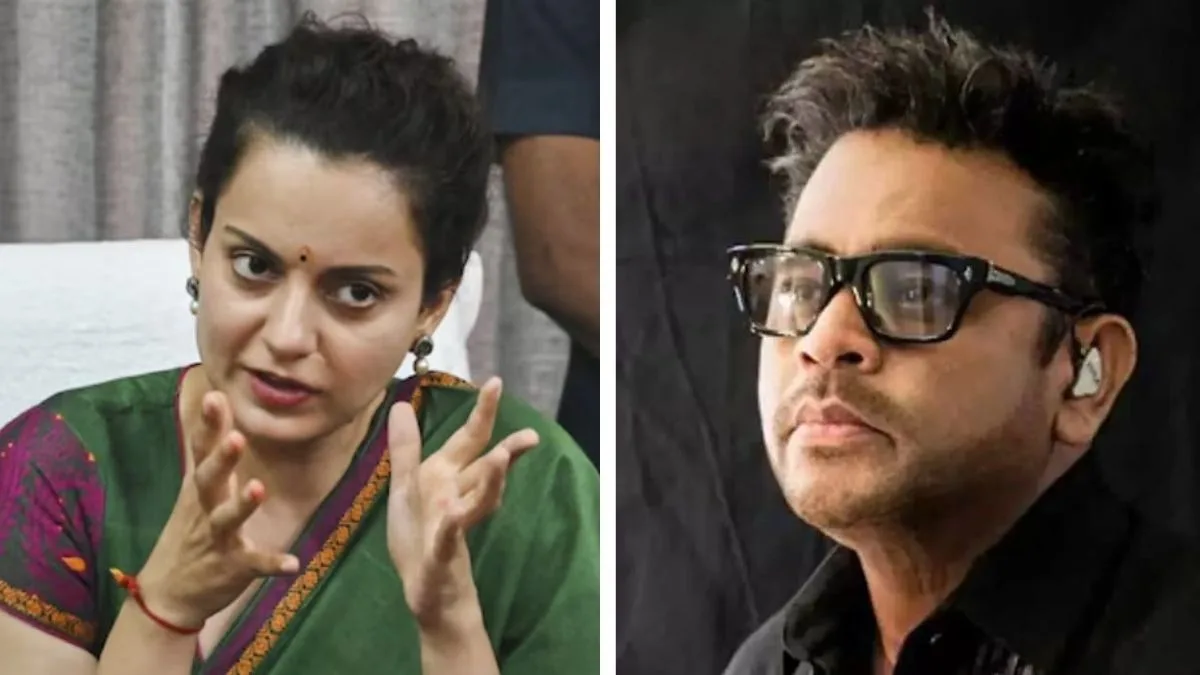
Music maestro AR Rahman and Bollywood actor-politician Kangana Ranaut have become embroiled in a heated public dispute that has captured the attention of India’s entertainment industry. The controversy erupted after Ranaut accused the Oscar-winning composer of refusing to work on her film “Emergency” due to political bias.
The conflict began following Rahman’s recent interview with the BBC Asian Network, where the acclaimed composer remarked that his work in Hindi cinema has decreased over the past eight years. Rahman subtly suggested that the changing atmosphere in Bollywood might now involve religious considerations affecting professional opportunities. This comment quickly ignited debate across social media and film circles.
Ranaut, known for her outspoken nature, responded forcefully on Instagram, describing Rahman as “prejudiced and hateful.” The “Queen” actress, who directed “Emergency,” claimed she had sought Rahman’s musical expertise for the film and was eager to personally present the project to him.
“I wanted to narrate the film to him myself, but that meeting never materialized,” Ranaut stated in her social media post. She alleged that Rahman declined even meeting her because he had predetermined that “Emergency” was a “propaganda film,” a characterization she vehemently disputes.
The actress, now a Member of Parliament representing Mandi constituency in Himachal Pradesh, further expressed that Rahman’s alleged rejection particularly stung because she already faces what she describes as industry bias for her political affiliations with the ruling Bharatiya Janata Party.
“Emergency,” Ranaut’s biographical political thriller based on former Prime Minister Indira Gandhi’s controversial period of emergency rule in India between 1975-77, has itself been a lightning rod for debate. In her statement, Ranaut defended the film’s balanced approach, claiming it received praise from critics across the political spectrum, including opposition leaders.
“The film was called balanced and compassionate in its storytelling by many,” Ranaut asserted. “Rahman’s refusal stemmed not from facts but from hate and assumptions. I feel sorry that such prejudice could blind someone as respected as him.”
The controversy has drawn additional voices into the fray, including prominent author and columnist Shobhaa De. Speaking at the Jaipur Literature Festival, De challenged Rahman’s original comments, calling them “very dangerous.” The veteran writer maintained that Bollywood has historically been one of the few Indian institutions where talent supersedes religious identity.
“In my 50 years of observing the industry, I have seen countless artists succeed purely because of skill, not identity,” De stated. “If someone does not get work, it’s typically due to lack of fit or talent, not faith.”
This public dispute reflects broader tensions within India’s entertainment industry, which has increasingly become politicized in recent years. Many industry observers note that political and religious divides have become more pronounced in Bollywood, mirroring similar polarization in Indian society.
Rahman, whose groundbreaking compositions for films like “Slumdog Millionaire” and “Lagaan” earned him international acclaim, has yet to respond to Ranaut’s accusations or De’s comments. The composer has generally maintained a reputation for staying above industry politics throughout his three-decade career.
As the controversy continues to unfold, it highlights the complex intersection of art, politics, and religion in India’s most influential cultural industry.
Fact Checker
Verify the accuracy of this article using The Disinformation Commission analysis and real-time sources.

12 Comments
Interesting to see this clash of perspectives between Ranaut and Rahman. As an observer, I don’t have enough context to judge the merits of their respective positions. However, I hope they can find a way to engage constructively and avoid escalating the dispute further, as that rarely benefits anyone in the long run.
Well said. Resorting to public accusations and confrontation is rarely the best approach, especially between prominent figures in the creative industry. A more measured, thoughtful dialogue focused on understanding each other’s concerns would likely lead to a better outcome for all involved.
It’s unfortunate to see this public spat between two prominent Indian artists. While creative differences are understandable, I hope they can find a way to resolve this constructively and move forward. The film industry could benefit from more open dialogue and understanding across diverse perspectives.
I agree. Maintaining a collaborative and inclusive environment in Bollywood seems important, especially for sensitive historical projects like ‘Emergency’. Hopefully Rahman and Ranaut can find a way to work together or at least engage in a thoughtful exchange of views.
This dispute highlights the challenges artists can face when tackling politically-charged subject matter. While creative freedom is essential, sensitivities around historical events like the ‘Emergency’ period require nuanced handling. I’m curious to learn more about the specific concerns that led Rahman to decline the project.
Agreed. The ‘Emergency’ period in India’s history is a complex and contentious topic, so it’s understandable that an artist like Rahman may have reservations about getting involved. Hopefully, an open dialogue can shed light on the motivations and lead to a productive resolution, if possible.
Interesting conflict between Kangana Ranaut and AR Rahman over the ‘Emergency’ film project. Sounds like a complex issue with potential political and religious undertones. I’m curious to learn more about the nuances of their disagreement and Rahman’s perspective on the changing Bollywood landscape.
The article provides some helpful context, but it would be good to hear directly from Rahman on why he declined the project and his views on the industry shifts. This seems like an issue worth exploring further from multiple angles.
As someone interested in Indian cinema and politics, I’m intrigued by the claims of ‘propaganda’ around the ‘Emergency’ film. It would be helpful to get more objective information on the project’s intent and approach. Allegations of bias from either side are concerning and warrant further investigation.
Exactly. It’s critical to look at this issue from multiple angles and avoid quick judgments. There may be legitimate creative, political, or religious factors at play that deserve a nuanced, fact-based discussion. I hope more details emerge to shed light on the motivations and perspectives of those involved.
Sounds like a complex and sensitive situation with high-profile personalities involved. While I respect Kangana Ranaut’s passion, I’m hesitant to take sides without hearing more from AR Rahman directly. Creative differences in the arts often have deeper roots, and it would be wise to approach this with an open mind.
Well said. Maintaining an objective and impartial stance is important, especially on issues that involve potential political or ideological divides. I hope the parties involved can find a constructive way to engage and potentially find common ground, if possible.