


Listen to the article
The growing struggle to interpret Jewish narratives in contemporary media has reached a critical juncture, as online discourse increasingly filters even the most innocuous Jewish references through the lens of Israeli-Palestinian conflict.
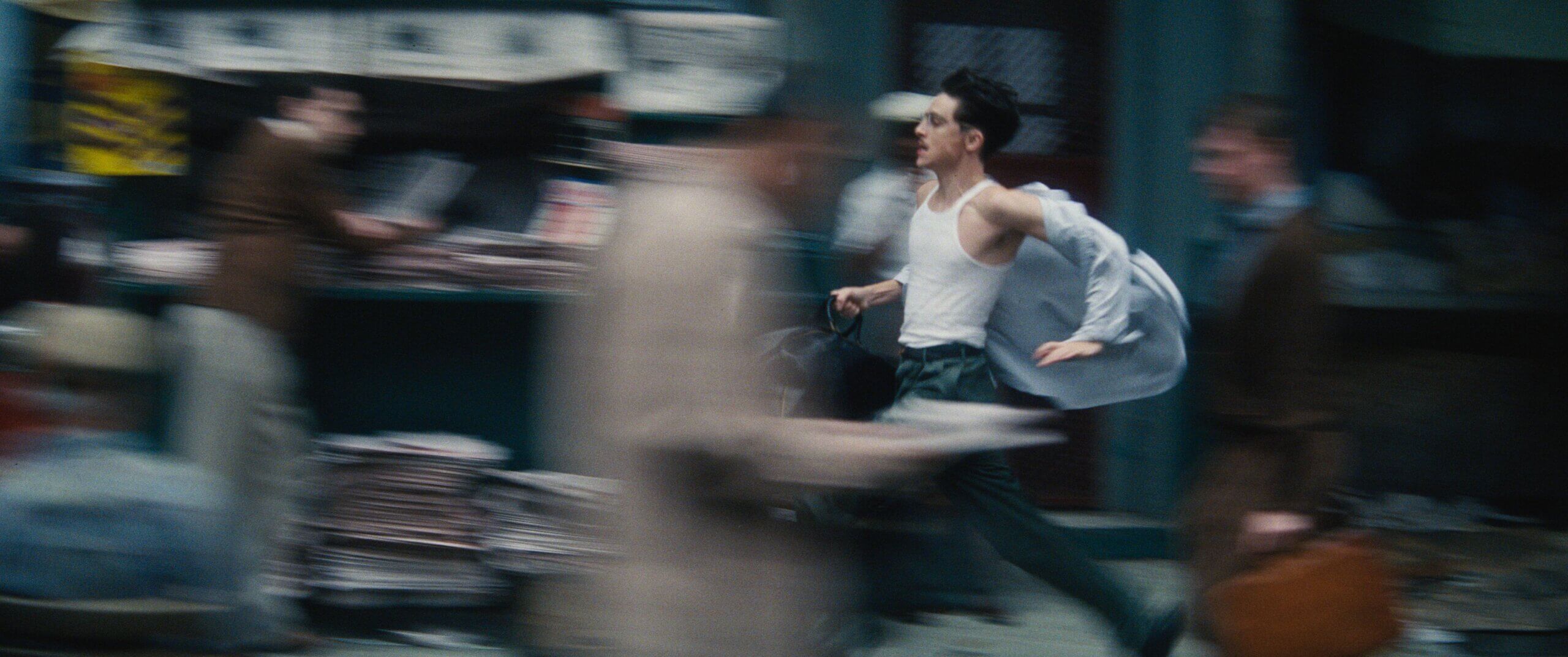
Recent examples highlight this troubling trend. Josh Safdie’s “Marty Supreme,” starring Timothée Chalamet as a Jewish ping-pong hustler, sparked controversy over a scene where the protagonist presents his mother with a piece of the pyramids, claiming “We built that.” The joke, meant to illustrate the character’s outsized self-importance, was misinterpreted by social media users as “Zionist propaganda,” with one post making this accusation garnering nearly 96,000 likes and 7 million views.
This misinterpretation isn’t isolated. Last year, Brady Corbet’s “The Brutalist” faced similar scrutiny over its portrayal of Holocaust survivors discussing the newly formed state of Israel, with viewers demanding the film take a definitive political stance rather than simply depicting historical reality.
The phenomenon extends beyond explicitly Jewish stories. Mainstream properties like “Dune,” “Superman,” and even “Zootopia 2” have been characterized by some viewers as allegories for the Israeli-Palestinian conflict, regardless of creators’ stated intentions or historical inspirations.
“When I see these takes, I beat my chest as if performing viddui over the death of media literacy,” notes cultural critic PJ Grisar, referring to the Jewish confessional prayer.
Even classic films aren’t immune. In “Blazing Saddles,” a 1974 comedy directed by Mel Brooks, a joke referencing the Passover narrative might be interpreted differently today. When a character suggests killing “the firstborn male child in every household,” another dismisses it as “too Jewish” – a clear reference to the Exodus story. Yet in today’s climate, such references risk being misconstrued through a conspiratorial lens.
This shift in interpretation raises concerns about the future of Jewish representation in media. As actor Denise Gough demonstrated in discussing the “Star Wars” series “Andor,” there’s a growing tendency to view global conflicts as interconnected through Palestine, which she described as an “exhaust port” that, when targeted, “explodes everything” – a perspective that dangerously oversimplifies complex geopolitical realities.
The underlying issue is that valid criticism of Israeli government policies is increasingly blurring with broader Jewish cultural references. When online commentators label any Jewish presence in media as “Zionist propaganda,” they inadvertently undermine legitimate arguments that anti-Zionism isn’t inherently antisemitic.
Media scholars worry this trend could lead to self-censorship among creators or a flattening of Jewish narratives to avoid controversy. The rich tapestry of Jewish experience – which includes diverse perspectives on Israel, religion, culture, and identity – risks being reduced to a single political dimension.
“The Jewish story is textured, complex and anything but unified,” Grisar emphasizes. Films like “Marty Supreme,” “The Brutalist,” and “Blazing Saddles” each demonstrate this complexity in their own way.
As audiences grow increasingly polarized on Middle Eastern politics, the ability to appreciate Jewish stories on their own terms – with their humor, contradictions, and cultural specificity – faces unprecedented challenges. The consequences extend beyond entertainment, potentially affecting how Jewish identity itself is understood and discussed in public discourse.
Fact Checker
Verify the accuracy of this article using The Disinformation Commission analysis and real-time sources.

19 Comments
The tendency to over-politicize even the most innocuous Jewish references in media is deeply concerning. We need to be more discerning and avoid reductive interpretations that stifle artistic expression.
Agreed. Thoughtful, nuanced storytelling that reflects the diversity of Jewish identities should be celebrated, not dismissed as propaganda.
This is a complex issue that deserves more nuanced discussion. Artistic works exploring Jewish narratives should not be automatically viewed through a political lens. We need to be open to diverse representations.
Absolutely. Jumping to conclusions about ‘Zionist propaganda’ based on limited interpretations risks shutting down important conversations about identity and representation.
The tendency to filter even benign Jewish references through a political lens is concerning. Films should be allowed to explore Jewish identity and experiences without being automatically accused of having a ‘Zionist’ agenda.
Absolutely. Nuanced storytelling that reflects the diversity of Jewish lives and perspectives should be encouraged, not censored due to political biases.
The growing struggle to interpret Jewish narratives in media through a political lens is deeply concerning. Artistic works should be evaluated on their own merits, not immediately dismissed as having a hidden agenda.
The tendency to filter Jewish narratives through a political lens is worrying. Films should be able to depict Jewish experiences and histories without being accused of having a hidden agenda.
Well said. Artistic freedom and creative expression should be protected, even when exploring sensitive or controversial topics related to identity and conflict.
It’s worrying to see how quickly some viewers jump to label any Jewish narrative as ‘Zionist propaganda.’ This kind of reductive thinking shuts down important discussions and risks perpetuating harmful stereotypes.
The tendency to over-politicize even the most innocent Jewish references in media is troubling. We should encourage nuanced storytelling that reflects the diversity of Jewish lives, not dismiss it as propaganda.
This is a complicated issue with no easy answers. Portraying Jewish experiences and narratives in film should not automatically be labeled as ‘Zionist propaganda.’ Creative works should be evaluated on their own merits, not reduced to political agendas.
I agree. Dismissing any depiction of Jewish identity or history as propaganda is reductive and risks stifling meaningful artistic expression.
This is a complex issue that deserves more thoughtful discussion. Dismissing films that explore Jewish experiences as ‘propaganda’ risks stifling important artistic expression and limiting the diversity of stories we’re exposed to.
The tendency to filter Jewish narratives through a political lens is troubling. We should be open to nuanced, multifaceted portrayals of Jewish identity and history in media, rather than jumping to conclusions about hidden agendas.
It’s concerning to see how quickly some viewers label any depiction of Jewish experiences as ‘Zionist propaganda.’ This kind of knee-jerk reaction shuts down meaningful dialogue and risks perpetuating harmful stereotypes.
It’s troubling to see how quickly some viewers jump to label Jewish narratives as ‘propaganda.’ This kind of knee-jerk reaction shuts down important discussions and risks perpetuating harmful stereotypes.
Well said. We should be open to exploring complex, multifaceted Jewish experiences in film without immediately assuming political agendas.
This is a concerning trend that risks stifling meaningful artistic exploration of Jewish identity and experiences. We need to be more discerning and avoid knee-jerk accusations of ‘Zionist propaganda.’