


Listen to the article
The Jewish Baby Who Became a Nazi Propaganda Symbol Dies at 91
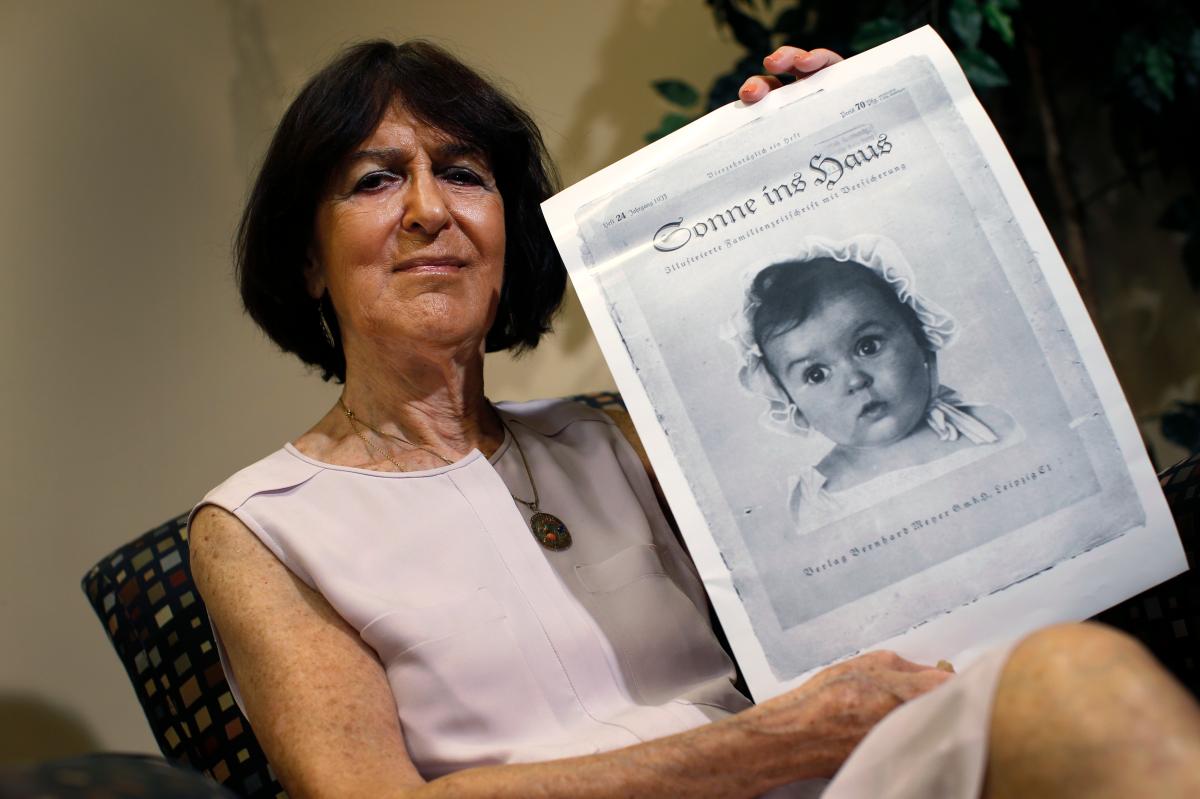
Hessy Levinsons Taft, a Jewish woman whose baby photo was ironically used as Nazi propaganda after winning a contest to represent the “ideal Aryan baby,” died at her San Francisco home on January 1. She was 91.
Born in Berlin in 1934 to Latvian Jewish parents, Taft was just six months old when German photographer Hans Ballin captured the portrait that would unwittingly thrust her into one of history’s most bizarre propagandist twists.
Without the family’s knowledge or consent, Ballin entered Taft’s photograph in a national contest overseen by Nazi propaganda minister Joseph Goebbels. The competition sought to identify the perfect example of “Aryan” features that aligned with Nazi racial ideology—blue eyes, blond hair, and fair skin that the regime considered genetically superior.
When Taft’s parents discovered their daughter’s image on the cover of the Nazi family magazine Sonne ins Haus (“Sunshine in the House”), they confronted the photographer in panic. Ballin’s response revealed his dangerous act of subversion: he admitted he had “deliberately wanted to slip in the little Jewess” as a personal joke against the Nazi regime.
The irony was both profound and perilous. At a time when Jews were being systematically persecuted across Germany, a Jewish infant had become the poster child for Nazi racial ideology. For Taft’s family, the exposure created immediate danger amid escalating anti-Jewish policies.
Recognizing the growing threat, the family fled Germany for Paris in 1938, just before the outbreak of World War II. As German forces advanced through France in 1941, they escaped again, eventually finding refuge in Cuba among thousands of European Jewish refugees who had managed to secure exit visas.
By 1949, the family had relocated to the United States, where Taft built a new life focused on education and scientific achievement. She studied at Barnard College and later earned a master’s degree in biochemistry from Columbia University. She married Earl Taft and had two children while pursuing her academic career as a professor at St. John’s University.
While Taft and her immediate family survived the Holocaust, the shadow of Nazi genocide touched her deeply. Most of her extended family in Latvia were murdered during the Holocaust, victims of the systematic killing that claimed approximately 70,000 Latvian Jews—nearly 90% of the pre-war Jewish population there.
Taft kept her unusual story relatively private for decades. She first publicly shared the account in 1987, contributing to Gertrude Schneider’s book “Muted Voices: Jewish Survivors of Latvia Remember.” Her story gained wider attention in 2014 when she donated a copy of the Sonne ins Haus magazine featuring her baby photo to Yad Vashem, the World Holocaust Remembrance Center in Jerusalem.
Upon making the donation, Taft expressed a sense of historical justice, telling the organization: “I feel a sense of revenge, good revenge.” The photo had become more than a personal memento—it represented a powerful symbol of Nazi racial pseudoscience’s absurd fallacies.
Historians note that Taft’s story illustrates the arbitrary nature of Nazi racial classifications and the regime’s manipulation of imagery for propaganda purposes. During the Third Reich, Nazi scientists went to extraordinary lengths to promote their racial ideology, even attempting to lighten German children’s hair and eyes to create more “Aryan” appearances.
Taft’s remarkable story serves as a poignant reminder of how propaganda can be undermined from within, and how historical truths eventually emerge despite efforts to suppress them. As one of the last surviving links to this unusual chapter in Holocaust history, her passing marks the loss of an important witness to both the horrors and the occasional ironies of one of history’s darkest chapters.
Fact Checker
Verify the accuracy of this article using The Disinformation Commission analysis and real-time sources.

8 Comments
Such a fascinating and tragic story. It’s heartbreaking that this woman’s image was exploited by the Nazis for their vile propaganda, but it’s inspiring that the photographer acted in defiance. Hopefully her story can serve as a reminder of the dangers of intolerance and the power of quiet resistance.
Yes, it’s a remarkable tale of how the Nazis tried to co-opt even the most innocent aspects of life for their hateful agenda. The photographer’s act of subversion was a brave and clever rebuke.
This is a heartbreaking yet fascinating story. The thought of a Jewish baby being used as a Nazi propaganda symbol is just chilling. But it’s good to know that the photographer who captured the image was able to secretly undermine the regime’s intentions. Hessy Levinsons Taft’s life was marked by this trauma, but her story serves as an important reminder of the dangers of unchecked hate and intolerance.
What an incredibly twisted story. To think that a Jewish child’s image was exploited in this way by the Nazis is just appalling. But the photographer’s act of defiance, using the regime’s own contest against them, is really admirable. It’s a bittersweet tale, but one that sheds light on the insidiousness of propaganda and the importance of resisting it, even in small ways.
Absolutely. The photographer’s subversive move was a powerful rebuke of the Nazis’ hateful ideology, even if it came at a great personal cost to the Taft family. Their story serves as an important lesson about the dangers of unchecked prejudice.
This is a chilling example of how the Nazis twisted even the most benign things to serve their poisonous ideology. It’s disturbing to think of the innocent Jewish child being used in this way, but it’s good that the story has now come to light and her memory can be honored.
What a twisted irony that the ‘perfect Aryan baby’ was actually a Jewish child. The photographer’s quiet act of defiance is really admirable – using the regime’s own contest against them. It’s a shame the family had to live with that trauma, but at least Hessy Levinsons Taft’s story can now be told.
Yes, the photographer’s subversive move is really remarkable. It’s a small but powerful rebuke of the Nazis’ hateful agenda.