


Listen to the article
A Tokyo court has ordered North Korea to pay 88 million yen ($570,000) in compensation to four victims who were deceived into migrating to the isolated country decades ago, marking a significant legal milestone despite limited enforcement prospects.
The Tokyo District Court ruled Monday that the plaintiffs, who were lured by false promises of a “paradise on Earth,” had “most of their lives taken away” by North Korea. Judge Taiichi Kamino ordered the North Korean government to pay each plaintiff at least 20 million yen ($130,000) in damages.
“It’s not an overstatement to say most of their lives were ruined by North Korea,” Kamino stated during the ruling.
The case stems from a controversial repatriation program that ran from 1959 to 1984, during which more than 90,000 ethnic Koreans and their Japanese spouses relocated to North Korea. The program, initially portrayed as a humanitarian initiative, promised free education, medical care, and prosperity to Koreans struggling in post-war Japan.
Instead, according to the plaintiffs’ 2018 complaint, they encountered severe deprivation, human rights abuses, and harsh living conditions that contradicted the propaganda used to recruit them. Many found themselves unable to leave, effectively trapped for decades.
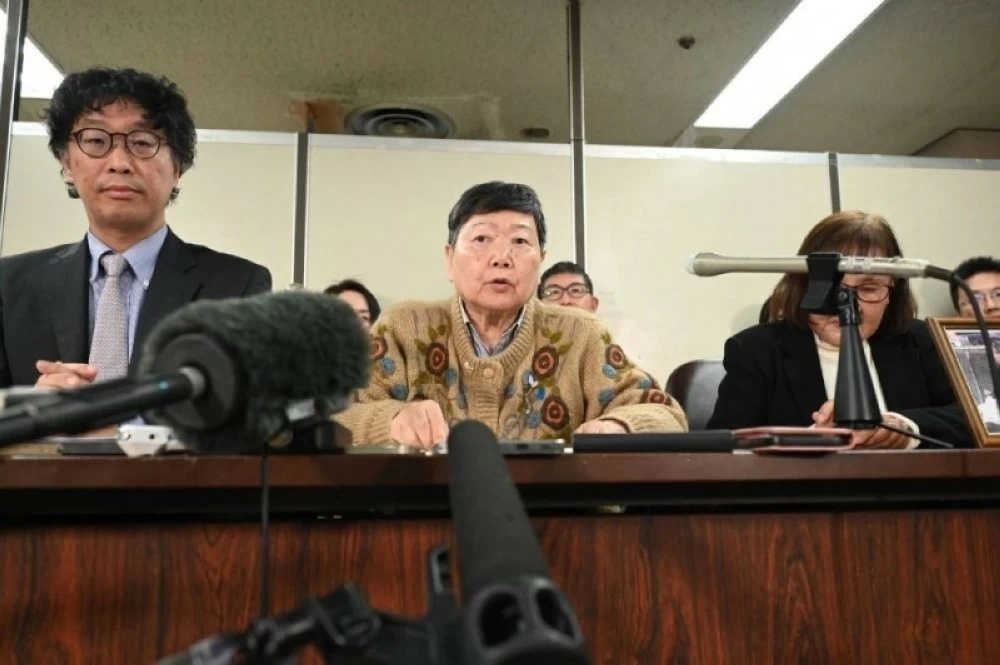
Among the plaintiffs is 83-year-old Eiko Kawasaki, who migrated to North Korea as a teenager in 1960 and spent 43 years there before managing to escape. “I’m overwhelmed with emotion,” Kawasaki told reporters after the verdict, though she acknowledged the practical limitations of the ruling.
“I’m sure the North Korean government will just ignore the court order,” she said.
The legal case took an unusual approach by symbolically summoning North Korean leader Kim Jong Un to court, though he never appeared. The district court initially dismissed the suit in 2022, ruling that Japanese courts lacked jurisdiction over North Korea, but an appeals court overturned that decision last year, sending the case back for review.
Atsushi Shiraki, one of the lawyers representing the plaintiffs, called Monday’s ruling “historic,” noting it was the first time “a Japanese court exercised its sovereignty against North Korea to recognize its malpractice.”
Kenji Fukuda, the chief lawyer for the case, suggested that confiscating North Korean assets and property in Japan might be the most realistic path to recovering the compensation, though such actions would face significant diplomatic and practical hurdles.
The repatriation program, now widely criticized as a form of state-sponsored deception, occurred against the backdrop of complex historical relations between Japan and Korea. During Japan’s colonial rule of the Korean peninsula from 1910 to 1945, millions of Koreans were moved to Japan, many forcibly as laborers. When World War II ended, hundreds of thousands remained in Japan, reluctant to return to their war-ravaged homeland.
Human rights organizations have documented the severe consequences for those who migrated to North Korea. According to Human Rights Watch, individuals suspected of disloyalty “faced severe punishment, including imprisonment with forced labor or as political prisoners.”
Kanae Doi, Japan director of Human Rights Watch, praised the court’s decision as “one very important, successful example of attempts to hold North Korea accountable” for its international crimes.
The ruling comes amid ongoing tensions on the Korean peninsula and reflects broader international efforts to address North Korea’s human rights record. While primarily symbolic, the case highlights the lasting impact of historical political decisions and the ongoing struggle for justice by those who managed to escape North Korea’s repressive regime.
For the plaintiffs, many now elderly, the ruling represents a form of vindication after decades of suffering, even if material compensation remains unlikely. The case also serves as a reminder of a dark chapter in Japan-North Korea relations that continues to affect survivors to this day.
Fact Checker
Verify the accuracy of this article using The Disinformation Commission analysis and real-time sources.

9 Comments
This is a tragic case of North Korean propaganda deceiving vulnerable people. I hope the compensation provides some measure of justice and closure for the victims, even if full enforcement is unlikely.
You’re right, the scale of human rights abuses and deprivation these migrants faced is truly appalling. It’s good to see the Japanese courts recognize their suffering.
This is a sobering story that highlights the importance of transparency, rule of law, and accountability – values that North Korea’s regime clearly lacks. I hope this ruling spurs further efforts to protect vulnerable migrants worldwide.
This is a disturbing reminder of the dangerous lengths authoritarian regimes will go to control their populations and sow disinformation. Kudos to the Japanese court for standing up for the rights of these exploited migrants.
Absolutely. The North Korean government’s callous disregard for human life is truly shocking. This ruling, while just a small step, is a meaningful rebuke of their inhumane actions.
Wow, over 90,000 people were lured to North Korea under this false repatriation program? That’s a staggering scale of deception and exploitation. Glad the court ruling at least acknowledges the victims’ plight.
Agreed, the court’s decision, while limited in enforcement, is an important symbolic statement against North Korea’s propaganda and human rights violations. Hopefully it brings some closure to the victims.
As a mining investor, I’m concerned about the broader implications for North Korea’s economic ties and access to global commodity markets given this ruling. Hopefully it leads to greater scrutiny of their regime.
Good point. Any steps that increase pressure on North Korea’s authoritarian leadership and their propaganda machine are positive, even if the direct enforcement is limited. Upholding human rights should be a priority.