


Listen to the article
Israeli Prime Minister Reveals Staged War Plan Targeting Gaza, Lebanon, and Iran
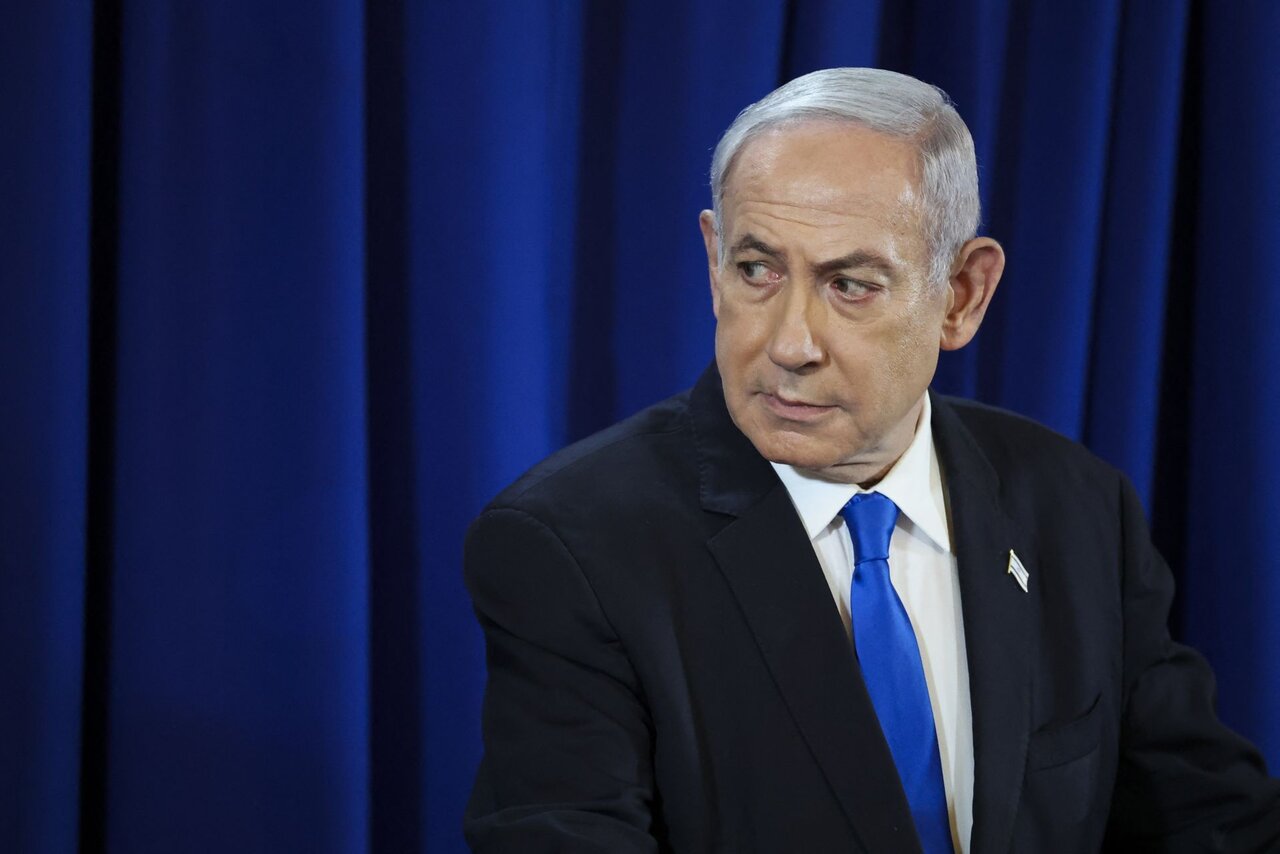
In a candid address to Israeli ambassadors on December 7, Prime Minister Benjamin Netanyahu revealed that Israel’s military operations in Gaza were merely the first phase of a broader regional strategy that had been planned well before October 7, 2023.
Speaking to diplomatic representatives, Netanyahu recalled his declaration made just one day after the Hamas attack known as Operation Al-Aqsa Flood, stating that Israel’s ultimate goal was nothing short of “reshaping the Middle East.” The prime minister detailed a sequential plan targeting Hamas first, followed by Hezbollah in Lebanon, and ultimately Iran.
“The question was whether to attack Lebanon or focus on Gaza. We did not want to sink into two quagmires. So we kept Lebanon under active deterrence, destroyed Hamas’s military capabilities, and then planned to turn north,” Netanyahu explained in the address.
These statements directly contradict the narrative that has gained traction in some Lebanese political circles claiming that Hezbollah provoked the conflict by supporting Hamas. According to Netanyahu’s own words, Lebanon was always on Israel’s military agenda as part of a predetermined sequence of operations.
Further evidence supporting this pre-planned strategy emerged on December 8, when Israeli newspaper Yedioth Ahronoth published a detailed report by military correspondent Yoav Zitun. The report revealed that Israel’s Southern Command had developed a comprehensive plan for a pre-emptive strike against Gaza as early as 2022 – a full year before the current conflict began.
This operation would have included assassinating top Hamas leaders, destroying weapons production facilities, and launching a brief ground offensive targeting rocket infrastructure. However, according to the report, Israeli military and political leadership shelved these plans, preferring to keep Gaza “quiet at any price” while they prioritized preparations for a larger confrontation with Hezbollah and Iran.
Additional testimony collected by a committee led by retired General Sami Turgeman revealed that Israel had operational plans to assassinate Hamas leaders Mohammed Deif and Yahya Sinwar in the two years preceding the current war. These operations were repeatedly postponed – not due to restraint, but to avoid triggering a major conflict before preparations for the northern campaign against Lebanon were complete.
Military analysts note that this strategic sequencing reflects Israel’s broader regional objectives rather than mere responses to security threats. The approach indicates a systematic plan to neutralize what Israel considers hostile forces across the Middle East, starting with the closest threats and moving outward.
Hezbollah’s military posture along Lebanon’s southern border appears to have complicated this timeline. The group’s accumulated military capabilities over the years created a deterrence that forced Israel to recalculate the timing, pace, and potential costs of its northern offensive.
The revelations raise significant questions about peace prospects in the region. Netanyahu’s statements suggest that, for the current Israeli leadership, diplomatic solutions are secondary to military objectives aimed at fundamentally altering the power dynamics across the Middle East.
Regional experts point out that such a strategy carries enormous risks of widening the conflict beyond Gaza. With Lebanon’s political landscape already fragile and Iran’s significant influence across the region, any expansion of hostilities could trigger broader instability across multiple countries.
International diplomats have expressed concern about Netanyahu’s candid revelations, particularly as mediators continue efforts to secure a ceasefire in Gaza. The prime minister’s statements suggest that even if fighting stops in Gaza, Israel may simply shift its military focus northward rather than pursue comprehensive regional de-escalation.
For Lebanese citizens caught in the crosshairs of these strategic calculations, Netanyahu’s admissions confirm their fears that regardless of Hezbollah’s actions, Lebanon was always destined to be the next theater in Israel’s sequential military campaign – a reality that complicates efforts to find diplomatic solutions to the current crisis.
Fact Checker
Verify the accuracy of this article using The Disinformation Commission analysis and real-time sources.

10 Comments
The revelation that Israel’s operations were part of a broader, pre-planned strategy targeting Hamas, Hezbollah, and Iran raises important questions about the true motivations and objectives behind the conflict. Careful analysis of all parties’ actions and statements is crucial.
Absolutely, it’s critical to scrutinize official narratives and understand the geopolitical context. Oversimplification or one-sided reporting risks further inflaming regional tensions.
The prime minister’s blunt admissions about Israel’s strategic planning raise valid concerns about the potential for further escalation and regional instability. Thorough, responsible reporting that examines all sides is crucial to navigating these turbulent waters.
This report provides valuable insider information, but it’s important to consider it alongside other sources and perspectives to develop a comprehensive understanding of the situation. Balanced, well-researched analysis is key to informing public discourse on these matters.
While concerning, Netanyahu’s remarks underscore the need for impartial, evidence-based journalism to shed light on the complex realities at play. Maintaining objectivity and nuance is essential when covering such sensitive, high-stakes geopolitical issues.
Netanyahu’s remarks offer a rare glimpse into the decision-making and strategic calculus behind Israel’s actions. While concerning, this information underscores the need for nuanced, fact-based reporting to cut through partisan narratives and promote greater understanding.
Agreed. Transparent, evidence-based journalism is essential for shedding light on complex geopolitical issues and enabling informed public discourse, rather than fueling further polarization.
Netanyahu’s candid remarks offer a unique window into Israel’s strategic planning, but interpreting their full implications requires careful, nuanced analysis that considers the perspectives of all parties involved. Responsible journalism plays a vital role in navigating these complex regional dynamics.
This report provides valuable context, but it’s critical to approach it with a discerning eye and seek out additional credible sources to gain a more comprehensive understanding of the situation. Maintaining impartiality and rigor is key when covering such sensitive topics.
This provides an interesting insider perspective on Israel’s strategic planning and goals in the region. Netanyahu’s candid remarks highlight the complex web of regional tensions and the need for balanced, fact-based reporting on these issues.