


Listen to the article
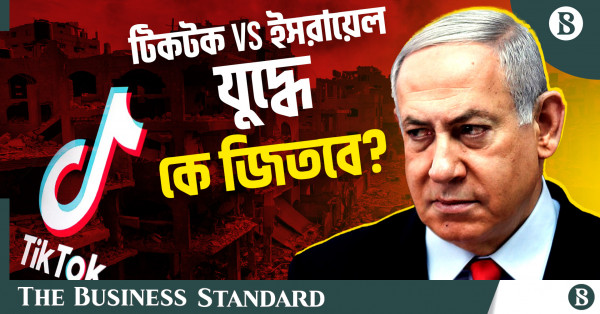
Israeli propaganda efforts are struggling to gain traction on TikTok, where younger audiences are increasingly skeptical of official narratives about the ongoing conflict in Gaza, according to media analysts and platform researchers.
The short-form video platform, which boasts over one billion active users globally, has become a critical battleground for shaping public opinion about the Israel-Hamas war. Unlike traditional media channels where Israeli government messaging has historically found receptive audiences, TikTok’s algorithmically-driven content distribution and youth-dominated user base have created significant challenges for Israel’s public diplomacy efforts.
“We’re witnessing a fundamental shift in how conflict narratives spread and resonate,” said Dr. Maya Cohen, a digital media researcher at Tel Aviv University. “The Israeli government’s communication strategy was developed for a pre-social media landscape, and it hasn’t adequately adapted to platforms where authenticity and emotional resonance trump official statements.”
Recent analysis of trending content related to the conflict shows that first-person accounts from Palestinian civilians in Gaza consistently receive higher engagement rates than official Israeli government statements or military footage. Videos depicting humanitarian conditions in Gaza often accumulate millions of views within hours, while Israeli Defense Forces explanations of military operations typically generate significantly less engagement.
This digital dynamic represents a marked departure from past conflicts, where Israel’s narrative dominated Western media coverage. The country’s sophisticated public relations apparatus, which includes multiple government agencies and advocacy organizations, has historically been effective at framing discussions around security concerns and Israel’s right to self-defense.
However, TikTok’s unique content ecosystem presents new challenges. The platform’s algorithm prioritizes emotional engagement, favoring content that generates strong reactions. This has amplified civilian suffering in Gaza while making it difficult for more nuanced security arguments to break through.
“Official statements and carefully crafted messaging simply don’t perform well on TikTok,” explained social media analyst Jordan Rivera. “The platform rewards raw, unfiltered content that feels authentic. When you compare polished government press conferences to shaky smartphone footage from Gaza, there’s no contest in terms of what drives engagement.”
Israeli officials have expressed growing concern about their diminishing influence on digital platforms. In December, the Ministry of Strategic Affairs launched a specialized unit focused on improving the country’s social media presence, with particular emphasis on reaching Generation Z audiences on TikTok and Instagram.
The ministry’s spokesperson, David Levy, acknowledged the challenges: “We recognize that the information landscape has changed dramatically. We’re working to adapt our approach to ensure that Israel’s perspective is accurately represented across all platforms.”
Critics argue that Israel’s messaging struggles stem not just from format issues but from the content itself. As casualty figures in Gaza have mounted—with Palestinian health authorities reporting over 30,000 deaths since October—traditional security-focused messaging has become increasingly difficult to reconcile with the humanitarian crisis documented on social media.
Meanwhile, pro-Palestinian activists have effectively leveraged TikTok’s format to simplify complex historical and political narratives into accessible, emotionally resonant content. Hashtags like #FreePalestine have generated billions of views globally.
The platform’s impact extends beyond digital spaces into real-world activism. Campus protests across North America and Europe have featured participants citing TikTok content as their introduction to the Palestinian cause. This phenomenon has alarmed traditional Jewish advocacy organizations, which have struggled to counter viral content they view as misleading or lacking context.
Media experts note that Israel’s challenges on TikTok reflect broader changes in how younger generations consume and evaluate information. Unlike their parents, Gen Z users are less deferential to institutional authorities and more likely to trust peer-to-peer information sharing.
“What we’re seeing is not just a tactical failure but a generational shift in trust,” said communications professor Sarah Abramson. “Young people are increasingly skeptical of government narratives, regardless of which government is speaking.”
As the conflict continues, both Israeli officials and Palestinian advocates are adjusting their digital strategies. However, the fundamental asymmetry of the content landscape on TikTok suggests that Israel’s traditional communications approach faces significant structural disadvantages on the platform most used by tomorrow’s voters and opinion leaders.
Fact Checker
Verify the accuracy of this article using The Disinformation Commission analysis and real-time sources.

7 Comments
The rise of grassroots, user-generated content on platforms like TikTok presents both challenges and opportunities for how information about conflicts is disseminated and perceived. This shift in dynamics is worth studying closely.
Agreed. The ability for ordinary citizens to share their personal experiences and perspectives directly is a powerful counterbalance to top-down government messaging.
Fascinating to see how social media platforms are reshaping the narratives around complex geopolitical conflicts. It’ll be interesting to see how governments adapt their communication strategies for the digital age.
I wonder how this trend will impact the long-term dynamics of the Israel-Hamas conflict. The ability to bypass traditional media channels could lead to greater transparency, but also risks further polarization.
An important point. Social media has the potential to amplify diverse voices, but also fuel echo chambers and the spread of misinformation. Balancing those forces will be crucial.
The struggle of Israeli propaganda efforts against the authenticity of TikTok content is a fascinating case study in the power dynamics of social media. It will be interesting to see how this plays out.
As someone interested in geopolitics and media, I find this to be a really thought-provoking development. It highlights the evolving nature of information warfare in the digital age.