


Listen to the article
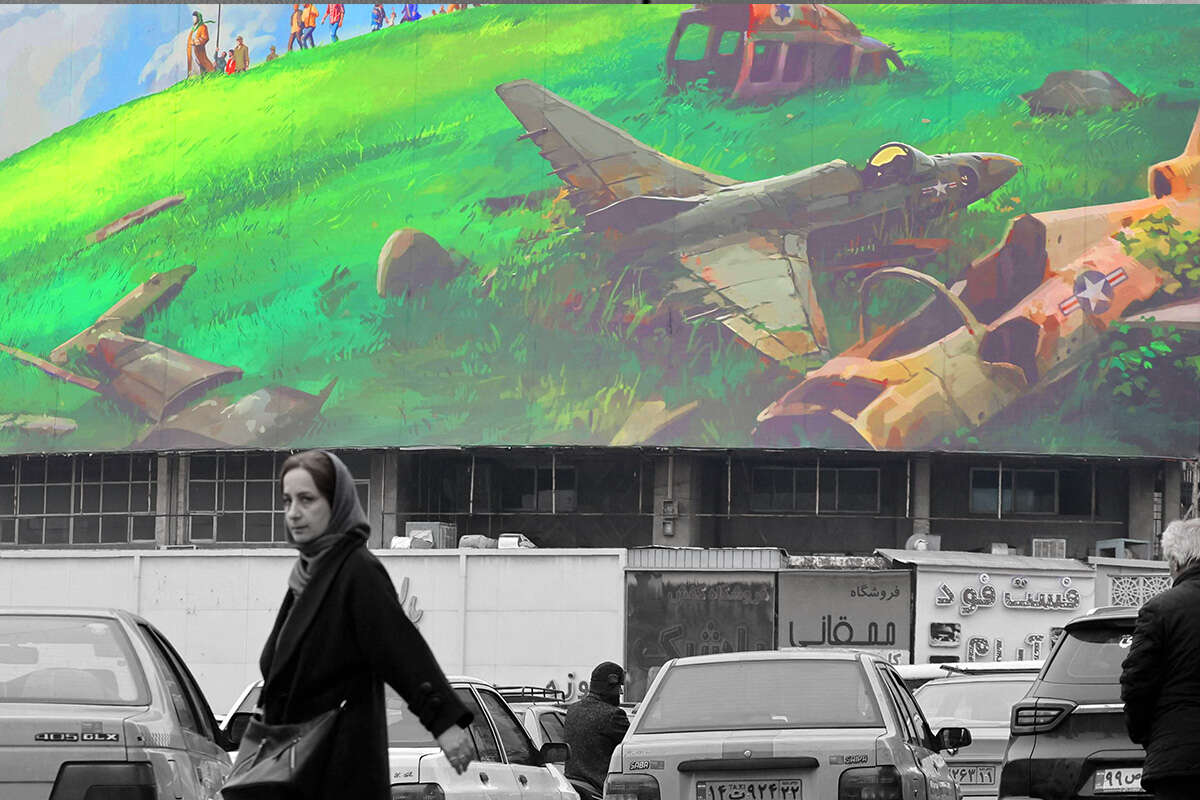
As Iran’s public perception campaign intensifies alongside the military conflict, experts warn that Tehran is waging a sophisticated information war targeting diverse global audiences through contradictory narratives of both strength and victimhood.
According to a new report from the International Institute for Counter-Terrorism at Reichman University, Iran has significantly escalated its psychological warfare operations since the start of Operation Iron Swords, particularly in relation to the recent Operation Rising Lion confrontation with Israel.
“In recent years, and especially since the Iron Swords war, we have seen growing use of psychological warfare and influence strategies by terrorist organizations such as Hezbollah and Hamas, and also by Iran, which is leading the resistance axis strategy not only on the military battlefield but also in the cognitive front,” explained Danielle Haberfeld, a senior researcher who co-authored the report with Dr. Eitan Azani, the institute’s acting director general.
Their analysis reveals how Iran is simultaneously promoting two seemingly contradictory narratives. “Iran is playing on two fields at the same time,” Haberfeld noted. “On one hand, it projects a narrative of victory in order to deter and display power, and on the other it presents itself as the victim of what it calls ‘disproportionate attacks’ by the US and Israel, in order to gain international legitimacy and apply political pressure to stop the war.”
For international audiences, Iran claims it did not initiate hostilities and is merely responding to Israeli-American aggression against civilian infrastructure. This messaging directly contradicts reality, as Iranian strikes have targeted hospitals, residential buildings, and public institutions in Israel.
The researchers point out that this dual messaging strategy is deeply rooted in Shiite religious consciousness. “The Battle of Karbala and the death of Imam Hussein became symbols of sacrifice and struggle in Shiite consciousness. Since the Islamic Revolution in Iran, there has been an effort to turn that narrative into one of active resistance,” they explain. This cultural foundation helps Iran maintain seemingly contradictory positions of victory and victimhood simultaneously.
Recent Iranian propaganda has labeled attacks on its oil facilities as “deliberate chemical warfare,” while regime-affiliated social media accounts have circulated visuals reminiscent of Hamas’ media tactics during the Gaza conflict—exploiting graphic imagery to influence global opinion.
The report documents how Iranian operatives have repurposed authentic footage from Israel, applying simple editing techniques to alter the narrative. In some cases, they have muted original audio from videos of impact sites in Israel and inserted fabricated Hebrew voices of civilians supposedly pleading with Iran to stop attacks. Similar tactics have been employed against U.S. allies, with Iran spreading numerous false reports about missile strikes against American forces, including fake footage of captured soldiers.
“These are recordings that sometimes have no basis in reality, and often they are created using artificial intelligence,” the researchers note. “Its use gives the Iranians a significant advantage in the battle for public perception, allowing them to quickly and easily generate large quantities of content, sometimes by reframing real events in a way that serves their narrative.”
The distribution of this content on platforms like TikTok leverages algorithms that amplify exposure. “This is not something especially complex, but rather relatively simple methods that do not require a high level of expertise,” Haberfeld explains. “That is why they are used both by the Iranian regime and by supporters of the regime and the resistance axis, at times even without direct guidance.”
According to Haberfeld, psychological operations have evolved from a secondary concern to “a central part of the modern battlefield.” For Iran specifically, these tactics help “compensate for operational weakness” through a coordinated cross-border effort involving Hamas in Gaza and Hezbollah in Lebanon.
While Israel attempts to counter with its own messaging through IDF and Foreign Ministry channels, experts suggest these efforts may be insufficient against what they describe as “the well-oiled machine of the axis of evil.” The IDF does maintain an Influence Department dedicated to psychological operations, and sources familiar with Israel’s preparation for operations against Iran confirmed that deception and influence tactics were key components of their planning.
“I hope we learn to focus on this essential front as well,” Haberfeld concluded. “It is no less important than the other fronts.”
Fact Checker
Verify the accuracy of this article using The Disinformation Commission analysis and real-time sources.

20 Comments
This report provides valuable insights into Iran’s sophisticated information warfare tactics. The use of contradictory narratives to manipulate global opinion is concerning and highlights the need for vigilance in identifying and addressing disinformation campaigns.
Interesting to learn about Iran’s propaganda tactics. Seems like they’re trying to project both strength and victimhood to manipulate global audiences. I wonder how effective these contradictory narratives are in practice.
You’re right, the dual narratives are quite puzzling. I imagine it must be challenging to maintain credibility while pushing such opposing messages.
The report’s insights into Iran’s sophisticated information warfare tactics are quite concerning. The use of contradictory narratives to project both strength and victimhood is a classic propaganda tactic that warrants close monitoring and analysis.
Iran’s propaganda tactics, as outlined in this report, are clearly designed to manipulate global audiences through the use of contradictory messaging. It will be important for the international community to remain vigilant in identifying and countering these influence operations.
Absolutely. Maintaining transparency and fact-based reporting is essential to exposing and undermining Iran’s disinformation campaigns.
This report provides a fascinating and concerning look into Iran’s propaganda machine and its use of contradictory messaging to manipulate global perceptions. The ability to simultaneously project strength and victimhood is a testament to the complex psychological warfare tactics being employed.
Absolutely. Maintaining transparency and fact-based reporting will be crucial to exposing and undermining Iran’s disinformation campaigns. Vigilance and critical analysis are essential.
The use of contradictory narratives by Iran to project both strength and victimhood is a classic propaganda tactic. It will be important to closely monitor how these messages are being disseminated and their impact on public perception.
Iran’s propaganda machine is clearly operating at a high level, leveraging psychological warfare techniques to sway public perception. The contradictory messaging of strength and victimhood is a particularly interesting tactic that warrants further scrutiny.
Agreed. Closely analyzing these influence operations and their intended effects will be crucial for developing effective countermeasures against Iran’s disinformation efforts.
The insights into Iran’s sophisticated information warfare tactics, as outlined in this report, are quite alarming. The use of contradictory narratives to project both strength and victimhood is a classic propaganda tactic that warrants close monitoring and rigorous analysis by the international community.
The report’s findings on Iran’s use of contradictory narratives to project both strength and victimhood are deeply troubling. This type of sophisticated psychological warfare highlights the urgent need for robust media literacy and fact-checking efforts to combat the spread of disinformation.
This report sheds light on the sophisticated information warfare Iran is waging. Leveraging psychological tactics to sway global opinion is concerning, especially when tied to military conflict. I hope objective analysis can help counter these influence operations.
I agree, it’s critical to understand and expose these manipulative tactics. Maintaining transparency and fact-based reporting is key to preventing the spread of disinformation.
Iran’s dual messaging strategy of simultaneously portraying strength and victimhood is quite fascinating from a psychological warfare perspective. It will be important to analyze the intended audience and desired outcomes for these influence operations.
You raise a good point. Understanding the targeted audiences and intended effects is crucial to countering Iran’s propaganda efforts effectively.
This report provides a fascinating look into Iran’s propaganda machine and its use of contradictory messaging to manipulate global perceptions. The ability to simultaneously project strength and victimhood is a testament to the complex psychological warfare tactics being employed.
You’re right, the nuance and complexity of Iran’s information operations are quite remarkable. Careful analysis and fact-checking will be essential to countering these influence campaigns effectively.
The report’s findings on Iran’s use of contradictory narratives to project both strength and victimhood are quite troubling. This type of sophisticated psychological warfare highlights the need for robust fact-checking and media literacy efforts to combat the spread of disinformation.