


Listen to the article
Iran’s Information Blackout: Citizens Navigate Daily Life Under Restrictions and War
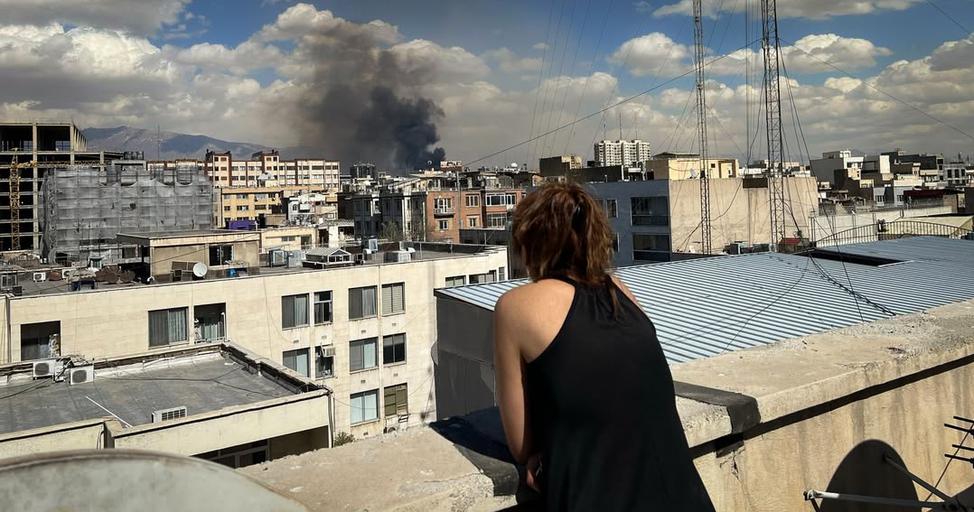
Iranians are experiencing unprecedented isolation as they grapple with both the threat of war and severe information restrictions imposed by authorities. The combination of internet blackouts, media censorship, and heightened security presence has created what many describe as an information desert during a time when access to reliable news is most critical.
In Karaj, just west of Tehran, a resident named Keyvan told IranWire that even following the death of Supreme Leader Ali Khamenei, citizens couldn’t openly express their true feelings. “People were celebrating it secretly among themselves,” he said, highlighting the climate of fear that permeates daily life.
The state-controlled Islamic Republic of Iran Broadcasting (IRIB) has intensified its one-sided coverage since the conflict began. According to Keyvan, the propaganda falls into four distinct categories: content recruiting teenagers for military service, filler programming, narratives justifying Iran’s position in the war, and direct messaging aimed at U.S. and Israeli officials.
“Most channels broadcast one-sided narratives of the war, all agreeing on the principle that the bigger the lie, the more believable it is,” Keyvan explained. “However, the people moved away from this atmosphere years ago.”
For many Iranians, international and social media platforms have become vital information sources in recent years. But these lifelines have been systematically cut. Sheila, a resident of Mashhad in northeastern Iran, reports that severe internet restrictions have eliminated access to independent news sources.
“Many of us do not have access to satellite channels independent of the Islamic Republic and receive news through word-of-mouth directly from those around us,” she said. The situation is compounded by disruptions to both mobile and landline telephone services, with many citizens avoiding sensitive topics on calls due to fears of surveillance.
Even satellite television frequencies, once a reliable alternative to state media, are regularly jammed. Sheila, who works in a hospital, noted that people now exchange information face-to-face during hospital visits, reverting to pre-digital forms of communication.
The internet restrictions have created a two-tier information system. Mani, another Iranian citizen, explained that accessing global internet now requires “special configurations” (VPNs or proxies) that cost approximately one million tomans per gigabyte—an astronomical sum beyond reach for most Iranians. He also pointed out that certain privileged individuals with “White SIM cards” providing unfiltered internet access continue to use social media, projecting a specific, often misleading image of conditions inside the country.
The physical presence of security forces has transformed daily life in urban areas. “The city has taken on the feel of martial law,” Sheila described. “People advise each other to be careful and not to leave their homes at night. Plainclothes patrols are everywhere in the alleys and streets, checking people for no reason and searching their phones.”
These random checks often lead to arrests based on content found on personal devices. Security forces reportedly move in groups, apparently concerned about their own safety amid growing public discontent.
Despite these conditions, Sheila noted that public morale regarding the war isn’t entirely negative. Many citizens still harbor resentment over the violent suppression of protests in January, creating complex attitudes toward the current conflict.
For some Iranians, the possibility of a ceasefire without regime change represents a concerning scenario. Mani expressed that he and his acquaintances fear being left alone with what he termed “the mad dog of the Islamic Republic” if hostilities cease without internal political change.
The information crackdown has intensified since Mojtaba Khamenei was introduced as the new Supreme Leader, with access to global internet becoming increasingly difficult. This tightening of restrictions signals to many citizens that the regime may be preparing for even greater repression in the coming months.
Fact Checker
Verify the accuracy of this article using The Disinformation Commission analysis and real-time sources.

11 Comments
It’s appalling that even the death of Iran’s Supreme Leader couldn’t be openly discussed due to the climate of fear. Restricting information access and censoring media is a hallmark of authoritarian regimes trying to maintain control.
Agreed, the lack of freedom of expression is extremely troubling. Residents living in fear and unable to openly mourn or celebrate significant events speaks volumes about the regime’s priorities.
This article sheds light on the Iranian regime’s tactics to stifle dissent through information control. Cutting off internet access and flooding state media with propaganda are classic authoritarian moves to suppress free speech and shape public opinion.
Troubling to see the Iranian regime using internet blackouts and propaganda to stifle dissent. Citizens deserve access to reliable information, especially during times of crisis. This appears to be an attempt to control the narrative and suppress free expression.
This article paints a troubling picture of life in Iran, where citizens are navigating daily existence under severe information restrictions and the threat of war. The regime’s tactics of internet blackouts and state-controlled media are deeply troubling and must be condemned.
The report highlights how Iranians are experiencing unprecedented isolation due to the combination of internet blackouts, censorship, and heightened security. This information desert during a crisis is deeply concerning and deprives citizens of their basic rights.
The use of state-controlled media to justify Iran’s position in the war and spread disinformation is deeply concerning. Propaganda that targets the public and foreign officials is a dangerous tactic to influence opinions and sway support.
You’re right, this propaganda approach seems aimed at rallying domestic support and swaying international opinion, rather than informing citizens. Worrying trend that undermines transparency and accountability.
It’s alarming to see how the Iranian regime is exploiting information blackouts and propaganda to maintain its grip on power. Restricting access to the truth and coercing public support through fear is a hallmark of authoritarian rule that should be condemned.
Absolutely. This report highlights the lengths the Iranian regime will go to suppress dissent and control the narrative. Cutting off internet access and flooding the airwaves with one-sided propaganda is a blatant attack on democratic freedoms.
The regime’s use of state-controlled media to recruit teenagers for military service, spread narratives justifying Iran’s position, and target foreign officials is a disturbing abuse of power. Depriving citizens of reliable information is a dangerous affront to democracy.