


Listen to the article
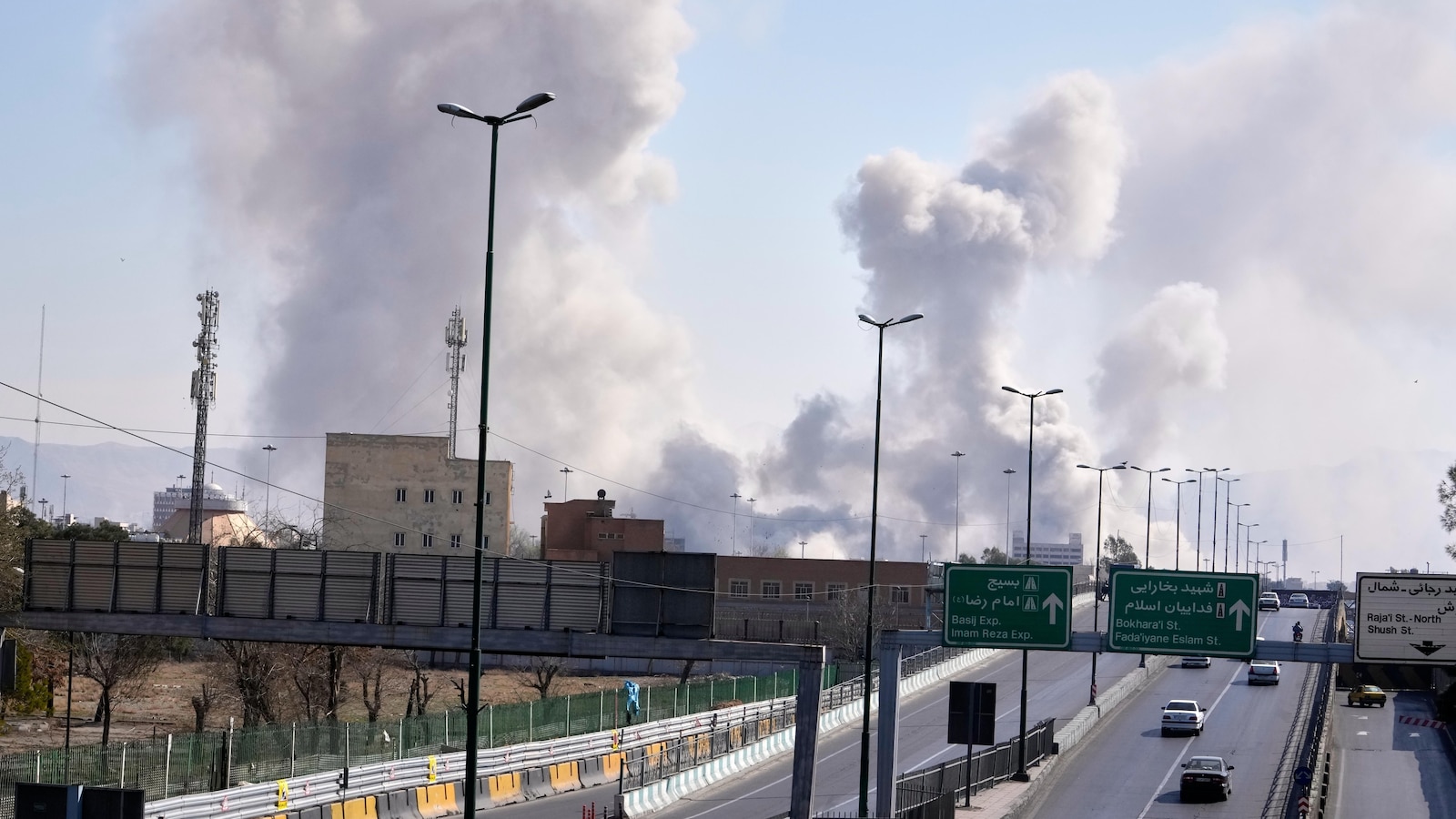
In the fog of war that has descended following U.S. and Israeli strikes against Iran, an insidious battle is being waged in the digital realm. Social media platforms have become flooded with deceptive content, as government actors and opportunists alike deploy artificial intelligence to shape narratives around the conflict.
A striking example emerged recently when footage purporting to show an Iranian missile strike on a Bahraini high-rise building spread rapidly across social media. The video depicted crowds gazing upward at flames and smoke billowing from a skyscraper. While Iranian missiles have indeed struck targets in Bahrain during the ongoing conflict, this particular video was entirely fabricated using AI technology.
Telltale signs of the forgery were visible upon closer inspection: two cars appeared fused together on the left side of the frame, while a man’s elbow impossibly passed through a backpack in the bottom-right corner. Analysis revealed the video had been circulated by accounts with ties to the Iranian government, part of a coordinated effort to exaggerate Iran’s military successes.
“The content that’s coming from state actors tends to be a little better targeted,” explained Melanie Smith, senior director of policy and research on information operations at the Institute for Strategic Dialogue. “They have a very clear kind of narrative structure and the videos are just used to support some kind of statement they want to make about the conflict and about the kind of geopolitical situation writ large.”
Pro-Iranian social media accounts have consistently pushed narratives that magnify the destruction and casualties caused by Iranian military actions – narratives that align with and are reinforced by Iranian state media reporting. This propaganda effort has generated numerous AI-created videos of purported airstrikes, including the falsified Bahraini high-rise incident.
Complicating matters further, a Russia-aligned influence operation known as Operation Overload (also called Matryoshka or Storm-1679) has been actively producing videos that impersonate intelligence agencies and news outlets. One example involved a fabricated warning falsely attributed to Israeli intelligence, advising Israelis in Germany and the United States to avoid public spaces or remain indoors entirely. This campaign aims to undermine public confidence and security, a tactic previously employed during election periods.
While misinformation has been present in other recent conflicts such as Russia-Ukraine and Israel-Hamas, experts note a critical difference in the current situation: widespread internet shutdowns and censorship within Iran have eliminated many authentic local perspectives that might otherwise provide counterbalancing information.
“In Ukraine, that message was so full-throated it really changed the entire dynamic of the conflict because the world really aligned with the perspective of Ukrainians facing the attacks and showing resilience in light of the attacks, but we’re sort of missing that story from Iran,” observed Todd Helmus, a senior behavioral scientist at RAND who specializes in irregular warfare and information operations.
Beyond state-sponsored disinformation, individual social media users seeking engagement and attention have contributed significantly to the spread of false information. These actors recycle footage from previous conflicts, present video game clips as authentic combat footage, and create their own AI-generated content.
The rise of accessible AI tools has dramatically altered the misinformation landscape compared to conflicts from just a few years ago. When combined with state-directed propaganda and censorship, this creates a profound information vacuum where truth becomes increasingly difficult to discern.
“The volume of AI content is starting to just pollute the information environment in these kinds of crisis settings to a really terrifying degree,” Smith warned. “The inability to get access to verified and credible information in times like this — it’s getting harder and harder to do that.”
In response to these challenges, social media platforms have begun implementing countermeasures. Nikita Bier, X’s head of product, announced that users who post AI-generated content from conflict zones without proper disclosure will face suspension from the platform’s revenue-sharing program – 90 days for first offenses and permanent bans for repeat violations.
Emerson Brooking, director of strategy at the Atlantic Council’s Digital Forensic Research Lab, cautions that social media has become an extension of modern warfare, and users should recognize their vulnerability to manipulation by state actors regardless of their physical distance from the conflict.
“If you’re in these spaces, just understand that this is an extension of the physical battle space,” Brooking said. “That there are actors on all sides of the conflict that are actively trying to spread propaganda and disinformation to convince you that certain things are true that aren’t. That your eyeballs and your attention are an asset.”
Fact Checker
Verify the accuracy of this article using The Disinformation Commission analysis and real-time sources.

16 Comments
Disturbing to see the lengths state actors will go to in order to shape the narrative around this conflict. We must redouble our efforts to uphold journalistic integrity and combat the spread of falsehoods online.
Agreed. Maintaining a critical eye and verifying information from credible sources is essential to ensuring the public has access to accurate, unbiased reporting during these volatile times.
The revelations about manipulated visuals are deeply concerning. It’s a stark reminder that we must approach all online content, especially regarding conflicts, with a healthy dose of skepticism and a commitment to verifying information from credible sources.
Well said. Maintaining objectivity and rigor in our analysis of these events is crucial to avoiding the pitfalls of disinformation and propaganda.
Disappointing to see state actors leveraging technology to spread disinformation. This serves as a wake-up call for all of us to be more discerning consumers of online content, especially around sensitive geopolitical issues.
The use of AI to create fabricated footage is a worrying development. We must be vigilant in our fact-checking and resist the temptation to spread unverified content, even if it aligns with our preconceptions.
The use of AI to create convincing yet fabricated visuals is a troubling development. This underscores the need for media outlets and social platforms to invest heavily in verification and authentication capabilities.
Agreed. Proactive steps to identify and remove manipulated content are essential to maintaining an informed and engaged public during these volatile times.
Very troubling to see this level of disinformation weaponized during an active conflict. We must be vigilant in verifying information from credible sources, not falling for manipulated visuals or state propaganda narratives.
Agreed. It’s crucial that the public has access to accurate, unbiased reporting during these tense situations. Fact-checking and media literacy are vital skills.
Deeply troubling to see state actors leveraging AI to manipulate public perception of events. This underscores the urgent need for robust media literacy education and fact-checking safeguards.
Absolutely. We cannot allow ourselves to be misled by visually compelling yet fabricated content, no matter how plausible it may seem. Maintaining a healthy skepticism is crucial.
While the conflict itself is concerning, the revelation of this coordinated disinformation campaign is equally alarming. We must redouble our efforts to uphold journalistic integrity and combat the spread of falsehoods.
The use of AI-generated fake footage to exaggerate military capabilities is a concerning new tactic. I hope investigators can trace the source and hold those responsible accountable.
Me too. Disinformation erodes public trust and makes it harder to resolve conflicts through diplomacy. Transparency and integrity in reporting are needed now more than ever.
This is a stark reminder of the importance of scrutinizing online content, especially regarding ongoing geopolitical tensions. We must be careful not to inadvertently spread false narratives, even if they align with our preconceptions.